

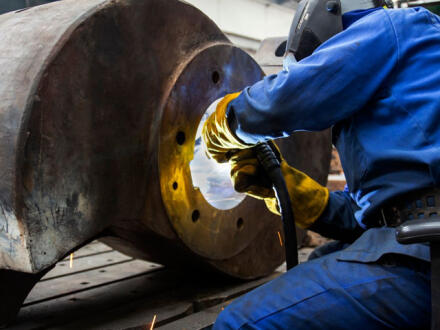
Training for tool and die, CNC, or precision machining can cost less than many students expect. In Nevada, a student can often stack state aid, school awards, local scholarships, and employer support to cut a large share of tuition, fees, books, and even tools.
That matters because manufacturing training leads to real earnings. According to the U.S. Bureau of Labor Statistics, tool and die makers earn a median pay of $60,470, and machinists and tool and die makers combined hold more than 367,000 jobs nationwide. For a student who likes hands-on work, metal, measurement, and machine setup, that makes the math worth doing.
This guide breaks down Nevada Tool and Die Technician Scholarships into 10 practical paths. It covers options for recent high school graduates, college students, university students, first-year students, and adults who want short-term job training.
The goal is simple: help students find money they can actually use. Some awards are based on grades. Others focus on income, county of residence, career goals, or enrollment in a technical program. And some funding does not even use the word "scholarship," even though it lowers the bill just the same.
Students who stay organized, apply early, and mix more than one funding source often save the most. A student with a Pell Grant, one local award, one campus scholarship, and employer tuition help can sometimes reduce a $4,500 training bill to a few hundred dollars.
1. Nevada Promise And Other Last-Dollar Programs for Recent High School Graduates
For recent graduates, last-dollar aid is often the first place to look. These programs pay remaining eligible tuition and mandatory fees after other grants are applied, which can make a community college pathway far cheaper.
Nevada Promise is the best-known example. The Nevada Promise details explain the structure well: students usually must attend an eligible institution, meet deadlines, complete the FAFSA, and finish service or mentoring steps. A common service requirement is 8 hours, which is very manageable for most seniors.
A student interested in tool and die training may not find a program named exactly that at every campus. But many related tracks fit, including:
- CNC machining
- manufacturing technology
- industrial skills
- mechanical drafting
- mechatronics
The bigger system matters too. Nevada's public colleges operate under the state higher education system, which gives students multiple points of entry at lower tuition levels than many private schools.
For a student whose tuition bill is $3,200 and whose Pell Grant covers $2,600, a last-dollar program may close the remaining $600 gap. That is why Nevada Tool and Die Technician Scholarships for High School Students should always include this category, even when the aid is not labeled as a machining scholarship.
2. Career and Technical Education Scholarships for Nevada Tool and Die Technician Scholarships for High School Students
High school students should not wait until graduation to start applying. Many career and technical education scholarships reward students who already show interest in shop classes, manufacturing labs, robotics, welding, or automotive pathways.
These awards often ask for concrete proof, not just interest. A strong file might include:
- a transcript with algebra, geometry, or drafting
- a teacher recommendation from a CTE instructor
- photos of projects such as machined parts or CAD work
- a short essay on why precision manufacturing fits the student
Nevada also promotes CTE through statewide education efforts, and the state education department tracks career pathways and technical programs across school districts. That matters because scholarship reviewers like students whose plans connect to real coursework.
One useful example is the trade school award listing, which shows how technical students can find funding outside the standard four-year path. If a student has a 3.2 GPA, 40 volunteer hours, and a machining instructor who can describe safe mill operation, that student already has a better application than someone who submits only a generic essay.
For Nevada Tool and Die Technician Scholarships for High School Students, specificity wins. A sentence like "they measured a steel block to ±0.001 inch in class and loved the precision" lands much harder than "they enjoy working with tools."
3. Community College Awards That Fit Nevada Tool and Die Technician Scholarships for College
Community colleges are often the most practical home for Nevada Tool and Die Technician Scholarships for College. Tuition is lower, class sizes are often smaller, and students can finish a certificate quickly or build toward an associate degree.
Schools may offer department awards, foundation scholarships, and need-based grants. Western Nevada College is one example of a public option where students can start affordably through Western Nevada College. Even when a college does not advertise a "tool and die scholarship," manufacturing, industrial technology, and workforce awards can still apply.
Students should ask three direct questions:
- Does the campus offer awards for technical majors?
- Can certificate students qualify, or only degree students?
- Are tool costs, safety gear, or lab fees included?
This matters because small charges add up fast. A student might face $900 in tuition, $420 in fees, $310 in books, and $185 in measuring tools for one term. A modest $1,000 campus award can erase nearly all of that.
Nevada Tool and Die Technician Scholarships for College also work better when students file early. Some campus funds run out months before classes start. And students who write clearly about production, tolerances, shop math, and CNC interest often stand out more than applicants who send broad essays that could fit any major.
4. University-Based Manufacturing and Engineering Aid for Nevada Tool and Die Technician Scholarships for University
University aid matters most for students who plan to move beyond shop-floor training into manufacturing engineering, industrial engineering, materials, or design for production. That route can fit a student who likes the tool and die side of work but also wants advanced CAD, process planning, or plant leadership later.
Nevada Tool and Die Technician Scholarships for University may appear under broader categories such as engineering scholarships, STEM awards, transfer scholarships, or college-specific donor funds. At large campuses, students should search by both major and skill area, not just by the exact phrase "tool and die."
A good starting point is the set of campus aid resources at UNR financial aid. Many university scholarships ask for a minimum GPA such as 3.0 or 3.25, plus full-time enrollment and a declared program.
Here is where students can make a smart case in their essay:
- tool design supports production speed
- precision parts reduce scrap rates
- manufacturing needs both technicians and engineers
- hands-on shop experience improves design judgment
A transfer student who completed 24 credits in machining or drafting and now wants a bachelor's degree has a strong story. Reviewers like applicants who can connect a micrometer, a CNC setup sheet, and a long-term career plan in one clean narrative.
5. First-Year Merit Awards for Students Entering Machining, Tooling, and Advanced Manufacturing Programs
First-year students often miss easy money because they assume only seniors or returning students qualify. In reality, many schools and outside groups set aside merit awards for incoming students who show good grades, attendance, and a clear training plan.
For Nevada Tool and Die Technician Scholarships for first-year students, the most common screening points are GPA, placement, enrollment intensity, and whether the student enters a high-demand technical field. A first-year applicant with a 3.5 GPA, dual-credit drafting, and a short essay about CNC work may beat a student with a higher GPA but no direction.
Students should also look sideways at related technical awards. For example, the automotive technician scholarship listing shows how employers and industry groups often fund skilled-trades students whose work is hands-on and equipment-based.
h3: Eligibility Factors First-Year Students Should Check Before Applying
Small details decide a lot of first-year awards. Students should confirm these items before spending an hour on an application:
- Residency rules: some awards require Nevada residency for 12 months
- Enrollment level: many require at least 6 or 12 credits
- Program match: machining, manufacturing, drafting, or industrial tech may all qualify
- FAFSA status: some merit awards still require a completed aid file
- Deadline timing: one missed date can cost $500 to $2,500
A clean spreadsheet with 10 applications, 10 deadlines, and 10 document checkboxes can prevent expensive mistakes.
6. Nevada Tool and Die Technician Association Scholarships and Trade-Group Opportunities
Trade groups can be gold for students because the applicant pool is often smaller than for big national scholarships. That means better odds for students who can explain why precision manufacturing fits their skills.
Nevada Tool and Die Technician Association Scholarships may not always appear under that exact public title. Students should search for state manufacturing associations, machining societies, local chapters, workforce councils, and supplier-supported foundations.
An interesting comparison comes from the technician scholarship example, which shows how dealer or technician foundations support skilled-trades education in other states. Nevada students can use that model when searching local industry groups tied to metalworking, fabrication, maintenance, and production.
Trade-group awards often value proof of fit more than flashy writing. Helpful evidence includes:
- NIMS-related coursework or machining lab work
- OSHA safety training
- SkillsUSA participation
- part-time work in a shop or warehouse
- a faculty note confirming reliability and attendance
Even a $750 award matters when a student needs calipers, steel-toe boots, safety glasses, and a textbook packet. And because fewer students apply to niche trade awards, a focused application can go a long way.
7. Apprenticeship-Linked Scholarships and Employer Tuition Support in Nevada Manufacturing
Some of the best funding never shows up in a scholarship search bar. Employers may cover tuition, reimburse books, or pay workers more as they complete training tied to machining, maintenance, or production setup.
That path works especially well for students who need income now. A small manufacturer may offer $1,500 per term in tuition help, plus a wage of $18 to $24 per hour for entry-level production or machine operation, if the employee stays enrolled and passes classes.
Students should ask local employers direct questions:
- Do they reimburse technical classes?
- Is CNC or machining training part of promotion plans?
- Will they pay for credentials, tools, or safety gear?
- Is there a work schedule that fits evening labs?
Apprenticeship-linked support can also reduce debt because the student earns while learning. A person working 20 hours per week at $20 per hour brings in $1,600 over four weeks before taxes, which can cover transportation, food, and part of tuition.
For a student who learns best by doing, this is often the strongest route. The shop floor becomes the classroom, and each shift adds examples for essays, interviews, and later scholarship applications.
8. Workforce Development Grants for Short-Term Tool, Die, CNC, and Precision Machining Training
Not every future tool and die technician needs a two-year or four-year plan first. Many students need short-term training that leads to a job fast, especially if they are changing careers or supporting a family.
That is where workforce grants matter. These programs may fund boot-camp style CNC training, short certificates, or customized manufacturing classes through colleges and workforce partners. Some cover tuition only, while others may also help with testing fees, supplies, or transportation.
A short-term award can have a big effect. If a 12-week CNC course costs $2,850, a workforce grant that pays even 70% cuts the student share to $855.
Students should look for programs connected to:
- local workforce boards
- public colleges
- dislocated worker aid
- WIOA-funded training tracks
- employer partnership programs
The strongest applicants usually show three things: job demand, a realistic plan, and readiness to finish. A clear statement like "they can attend Monday through Thursday from 6 to 9 p.m., have child care arranged, and can start work within 30 days of completion" is much stronger than a vague promise.
This route is especially useful for adults who do not fit classic scholarship boxes but still need Nevada Tool and Die Technician Scholarships-style support to get moving.
9. Local Foundation and Regional Scholarship Programs That Can Stack With Trade School Aid
Local money is often the most overlooked money. Regional foundations, women's funds, county donors, employer family funds, and community trusts may offer awards that stack with Pell Grants, campus aid, and trade school scholarships.
One example is the Nevada Women's Fund listing, which can matter for women entering technical or nontraditional career fields. Broader regional philanthropy also exists through groups such as the Nevada Fund network, where local giving supports education and community outcomes.
These awards often range from $500 to $5,000. That size is perfect for books, commuting costs, lab fees, and the tool kit students usually have to buy separately.
Students should search by:
- county name
- city name
- high school alumni fund
- community foundation
- women in trades
- memorial scholarship
h3: How to Combine Local Awards With State, Federal, and School-Based Funding
Stacking works best when the student understands which aid reduces tuition and which aid can cover extras. A simple order looks like this:
- Federal aid first: Pell or other grants reduce the main tuition bill
- State or school aid next: campus awards fill remaining tuition and fee gaps
- Local scholarships last: these often cover books, tools, gas, or balances
Example: tuition and fees total $3,900. A Pell Grant covers $2,600, a school award adds $800, and a local foundation gives $1,000. The student now has $500 beyond the direct bill, which may help pay for boots, print fees, and a dial indicator set.
10. Scholarship Search Platforms and Application Strategies That Improve Your Odds in Nevada
A strong search process beats random applying. Students who use filters, keep deadlines in one place, and reuse core essay material usually submit more polished applications in less time.
This is where platforms can help. On Studentscholarships.org, students can sort by trade school, technical majors, state matches, and career interests instead of hunting through hundreds of unrelated awards one by one.
A practical system looks like this:
- apply to 3 high-value awards worth $2,000 or more
- apply to 5 mid-range awards worth $500 to $1,500
- apply to 8 niche awards tied to trade, county, gender, or first-generation status
That gives a student 16 total applications, which is a realistic target over several weeks. If just 2 mid-range awards hit at $1,000 each, that is $2,000 earned.
Students improve their odds when they:
- use one master resume
- keep one 250-word essay and one 500-word essay ready
- ask for 2 recommendation letters early
- save transcripts as PDFs
- track every requirement in a sheet
The best essays sound specific. "They spent 14 hours machining an aluminum practice part and learned why 0.002 inch matters" beats generic lines every time.
For Nevada Tool and Die Technician Scholarships, focus and volume both matter. Ten well-matched applications usually outperform 30 rushed ones.
Nevada Tool and Die Technician Scholarships - Frequently Asked Questions
What types of scholarships are available for Nevada students pursuing tool and die technician training?
Nevada students can access various scholarships including last-dollar programs like Nevada Promise, career and technical education awards, community college and university scholarships, trade group scholarships, and workforce development grants tailored for tool and die training.
How can recent high school graduates in Nevada reduce the cost of tool and die technician training?
Recent graduates can benefit from last-dollar programs such as the Nevada Promise Scholarship, which covers remaining tuition after grants, along with CTE scholarships based on technical coursework, local scholarships, and employer tuition support, substantially lowering training expenses.
Are there scholarships for adults seeking short-term tool, die, or CNC training in Nevada?
Yes, workforce development grants and employer tuition support offer funding for short-term CNC and precision machining training, helping adult learners quickly gain job-ready skills while reducing out-of-pocket costs.
What is the role of community colleges in providing scholarships for tool and die technician students in Nevada?
Community colleges in Nevada, like Western Nevada College, offer affordable tuition and various awards including department scholarships and need-based grants that can cover tuition, fees, books, and tool costs for tool and die training programs.
Can students pursuing manufacturing engineering at a university in Nevada qualify for scholarships related to tool and die technician fields?
Yes, university students focusing on manufacturing or industrial engineering can apply for scholarships under broader STEM or engineering categories, especially if they demonstrate relevant machining experience and maintain strong academic performance.
How can students maximize their chances of receiving multiple scholarships for tool and die programs in Nevada?
Students should apply early to diverse funding sources including state aid, campus awards, local foundations, and trade associations, maintain organized records of deadlines and documents, and tailor applications to highlight their machining skills and career goals.









