

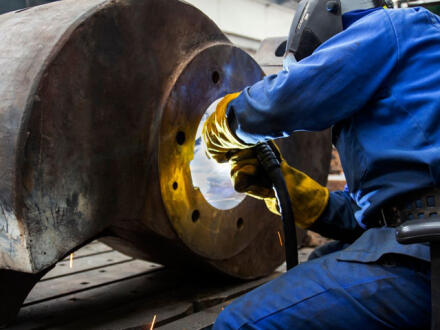
Tool and die training is one of those career paths that can lead to solid pay, hands-on work, and real demand from employers. But tuition, tools, transportation, and living costs can still hit hard. For a student in Montana, even a one-year certificate or two-year machining program can mean several thousand dollars in expenses before the first paycheck arrives.
That's why Montana Tool and Die Technician Scholarships matter. They can come from high schools, colleges, unions, community foundations, employers, and state aid programs. Some awards are built for seniors heading into precision machining. Others help first-year students, current college students, or transfer students moving into engineering and manufacturing tracks.
A smart scholarship search works best when students look beyond one obvious award. A senior in Billings might stack a local vocational scholarship with federal aid. A machining student in Butte might combine campus awards with employer reimbursement. A transfer student could pair merit aid with foundation support and cut borrowing by $2,000 to $6,000.
The ten paths below show where students can start, what each route usually rewards, and how to improve their odds. The focus stays practical: where to look, what to say, and how to build a stronger application without wasting weekends on dead-end forms.
1. Montana CTE Scholarships For High School Seniors Entering Tool And Die Or Precision Machining Programs
For many students, the first strong path starts with career and technical education funding during senior year. Montana high schools and regional CTE networks often steer money toward students entering welding, machining, manufacturing, diesel, and industrial technology programs.
The big advantage is timing. A senior can apply before graduation and often use the award for tuition, books, safety gear, or program fees in the first term.
Strong places to ask include:
- High school counseling offices
- District CTE coordinators
- Regional career centers
- State-supported career program pages through the Montana Office of Public Instruction
Students entering tool and die or precision machining should make their career goal specific. "I want to work in advanced manufacturing" is fine. "I plan to complete CNC coursework and move into toolroom setup work" is better.
A sharper application usually includes:
- Attendance and shop performance data
- A teacher letter from metals, drafting, or industrial arts
- A short statement tied to Montana employers
- Evidence of safety training or hands-on projects
This is one of the best routes for Montana Tool and Die Technician Scholarships for High School Students because local reviewers often know the labor market. If a student can show a concrete path from classroom to shop floor, that story lands harder than a generic college essay.
2. Montana Tool And Die Technician Scholarships For High School Students Through Skills Competitions And Career Programs
Skills competitions can do more than fill a trophy case. They can lead to scholarship offers, equipment awards, and recruiter attention from colleges and employers.
Students in machining, CAD, robotics, manufacturing, and trade-related events often stand out because competition results prove more than interest. They show measured skill under pressure. A student who places in a timed contest has already shown discipline, accuracy, and problem-solving.
Common scholarship-friendly activities include:
- SkillsUSA contests
- TSA or engineering design events
- School machining showcases
- Career fairs with employer-sponsored awards
Even a non-winning result can help. If a student spent 14 hours preparing a CNC programming project, documented tolerances, and improved from practice round to final round, that gives an application real texture.
Students should also use scholarship platforms that gather trade-related opportunities in one place. On Studentscholarships.org, a student may find regionally relevant awards such as the Associated Trades award alongside broader vocational options.
This path works especially well for Montana Tool and Die Technician Scholarships for High School Students because reviewers love proof. A medal helps, but so does a portfolio with machine drawings, parts photos, and a one-page note explaining what went wrong and how the student fixed it.
3. First-Year Student Scholarships At Montana Community And Technical Colleges
First-year awards at community and technical colleges are often the most direct fit for machining students. These schools train students for immediate work, so they regularly offer aid tied to workforce demand.
A first-year student should look at colleges that run manufacturing, machining, industrial, or related technical programs. In Montana and nearby pathways, campus aid offices often package merit aid, need-based grants, and department scholarships together.
What first-year students should ask about:
- Program-specific awards for machining or manufacturing
- One-time entry scholarships for new students
- Tool or textbook stipends
- Work-study jobs in labs or maintenance shops
At schools with strong technical focus, first-year awards can matter fast. A $1,000 scholarship may cover several credit hours, while another $600 can wipe out required books and measuring tools.
Students exploring technical campuses should review scholarship and aid pages from schools such as Montana Tech and compare them with local community college options, including programs at Fort Peck Community College.
This route is central for Montana Tool and Die Technician Scholarships for first-year students because colleges want to improve retention. A student who submits FAFSA early, applies before priority deadlines, and emails the department chair with clear career goals often gets more attention than someone who only fills out the general admissions form.
4. Montana Tool And Die Technician Scholarships For College Students Already Enrolled In Manufacturing Programs
Once a student is already enrolled, new scholarship doors open. Departments can now judge actual performance instead of potential. That helps students who were average in high school but are now pulling a 3.4 GPA in machining labs.
These awards often come from:
- Manufacturing departments
- Campus foundations
- Alumni funds
- Faculty nominations
- Trade-related memorial scholarships
A current student should keep a file with exact numbers and proof points. For example: 96% attendance, 3.5 GPA, 2 lab certifications, and 48 volunteer hours helping at a school manufacturing event. Those details beat broad claims every time.
Students can also widen the search through campus and state-related awards. A Montana student with technical or STEM overlap may fit options like Montana's STEM program or statewide merit routes such as the MUS Honor award, depending on eligibility.
This is a major lane for Montana Tool and Die Technician Scholarships for College because persistence counts. Instructors notice who resets machines carefully, helps classmates read prints, and turns in accurate work. Those quiet habits often turn into recommendation letters that move an application from "maybe" to funded.
5. Montana Tool And Die Technician Scholarships For University Transfer Students In Engineering And Manufacturing Pathways
Some students start with a certificate or associate degree, then transfer into engineering technology, manufacturing systems, or a related university program. That move can raise costs fast, but it also creates a new batch of scholarship options.
Transfer students should search in two buckets:
- University transfer scholarships
- Department awards tied to engineering, STEM, or applied technology
This matters because tool and die work overlaps with design, materials, CAD, metrology, and production planning. A student moving from manual machining into manufacturing engineering technology is not leaving the field. They are building on it.
At larger campuses, aid offices often publish transfer requirements, GPA cutoffs, and deadline charts. Resources from the Montana State aid office and university-wide information at Montana State University can help students map the process.
Students should also search platform databases for Montana-specific merit options. Awards like the Presidential leadership route may not be tool-and-die-exclusive, but they can still reduce the total bill.
For Montana Tool and Die Technician Scholarships for University applicants, the strongest transfer essay usually explains one thing clearly: how shop-floor experience shaped the student's long-term goal. A reviewer remembers that more than a generic statement about "loving STEM."
6. Montana Tool And Die Technician Association Scholarships And Industry Foundation Awards
Association and foundation awards are easy to miss because they are scattered across trade groups, memorial funds, and workforce organizations. But they can be some of the best-fit money for a student headed into precision work.
Industry groups like manufacturing associations, contractor divisions, dealership foundations, and regional trade organizations often prefer applicants with a clear vocational path. That makes them useful for students who may not fit a traditional academic scholarship profile.
A trade-based application should highlight:
- Specific machinery or software experience
- Industry certifications or OSHA-related training
- Employer references from part-time shop work
- A defined career target, such as CNC setup or die repair
A broader scholarship database can surface less obvious options. For example, a student researching Montana Tool and Die Technician Association Scholarships might also compare vocational trade awards with similar technician-focused models, such as the technician scholarship example, to understand what reviewers value.
Many association awards are smaller, often $500 to $2,500, but stacking two or three can cover a semester's tools, rent, or transportation.
Where To Look For Association-Based Opportunities
Students should not wait for these awards to appear on a school bulletin board. Many are posted in narrow circles and disappear after a short application window.
Good search points include:
- State manufacturing associations
- Building and trades divisions
- Equipment dealer foundations
- Community college foundation pages
- Scholarship platforms that sort by state and trade
Students can also ask instructors a blunt question: "Which award did last year's machining students miss?" That one question can uncover a local memorial fund or employer-backed trade scholarship not indexed on big search engines.
A concrete example helps here. If a student logs 120 hours in a family machine shop, runs inspection reports, and writes a one-page essay about reducing scrap on aluminum parts, that profile fits association reviewers far better than a broad leadership essay. Specific trade language shows readiness.
7. Employer-Sponsored Scholarships From Montana Manufacturers, Machine Shops, And Apprenticeship Partners
Employer-backed scholarships are one of the most practical options on this list. A local manufacturer may offer tuition help because it needs workers who can read blueprints, hold tolerances, and show up on time.
These programs can take several forms:
- Direct scholarships for graduating seniors
- Tuition reimbursement for part-time employees
- Paid apprenticeships with class support
- Sponsorships tied to a work commitment after graduation
This kind of support can be worth more than the posted amount. A $2,000 scholarship plus a paid summer position at $18 per hour over 10 weeks adds up to roughly $9,200 before taxes when wages are included.
Students should ask machine shops, aerospace suppliers, fabrication companies, and maintenance-heavy manufacturers about workforce pipelines. A plant manager may not use the word "scholarship," but they might offer boot reimbursement, paid lab time, or a school-work schedule.
For students using Studentscholarships.org, regional awards such as the Bud Daniels memorial option can complement employer aid.
This path works best for students who can prove reliability. A supervisor letter that says a student arrived for every 6:30 a.m. shift during summer production is often stronger than a polished but vague essay.
8. State Grants And Need-Based Aid That Can Supplement Tool And Die Scholarships
Not every dollar has to come from a scholarship. State grants, Pell funding, institutional aid, and need-based packages can fill the gap and make a tool and die program realistic.
This matters because many students chase private awards while leaving easier money on the table. Filing FAFSA on time can unlock federal grants, work-study, and school-based funds that do not need to be repaid.
A student should ask each campus for a full aid picture that includes:
- Federal Pell Grant eligibility
- State grant options
- Institutional need-based aid
- Emergency completion funds
- Work-study in technical departments
Financial aid offices often show cost-of-attendance numbers that include more than tuition. Housing, transport, and supplies can add thousands. At the University of Montana, student financial services outlines aid categories that help students understand the full bill instead of guessing.
For a student with high need, stacking aid can be dramatic. A Pell Grant, a $1,000 local scholarship, and a $1,500 college award can reduce direct education costs by several thousand dollars in one year.
How To Combine Scholarships With FAFSA-Based Aid
The goal is simple: layer money without losing track of deadlines.
A practical order looks like this:
- File FAFSA as early as possible.
- Apply to the college and the department scholarship form.
- Add local and trade-specific scholarships.
- Report outside awards to the financial aid office.
- Ask how each award affects grants, loans, and work-study.
Students should keep a spreadsheet with deadline dates, login links, essay versions, and award amounts. Even a basic tracker can prevent missed forms. Missing one priority date can cost more than 10 hours of application work would have saved.
Students with broad Montana ties may also find supplemental local awards such as the Montana Advocates scholarship helpful when the major-specific pool is thin.
The key rule is accuracy. If a student reports family income, enrollment status, or outside awards incorrectly, the package can shift later. Clean paperwork protects aid.
9. Local Community Foundation Scholarships In Montana’s Regional Manufacturing Hubs
Community foundations are often the quiet giants of local scholarship money. They collect donor funds, manage memorial awards, and support students from specific counties, towns, or school districts.
For tool and die students, this matters because many foundation awards do not require the major to match the donor's exact field. A student from a manufacturing town may qualify based on geography, financial need, work ethic, or vocational goals.
Regional manufacturing hubs and nearby communities often have scholarships tied to:
- County residency
n- High school graduation location
- Trade school enrollment
- Family background or community service
Montana students should pay close attention to local foundations and school-area funds. The Montana Community Foundation supports a wide range of scholarship activity, and students may also locate application routes such as the community foundation listing.
A very practical move is to search by hometown, not just by major. A student from Havre, Great Falls, or Kalispell may find one $750 county award, one $1,000 memorial award, and one trade-support grant. Together, that can cover books, fees, and part of rent for a term.
10. Program-Specific Application Strategies That Improve Your Odds Of Winning
A good scholarship strategy is less about writing one perfect essay and more about matching the right proof to the right award. Students applying for Montana Tool and Die Technician Scholarships for College, high school, or transfer study should build a reusable application kit.
That kit should include:
- A 150-word career goal statement
- A 350-word vocational essay
- Resume with hours, jobs, and certifications
- Transcript and current GPA
- Two recommendation contacts
- Photos or brief notes on projects completed
Program-specific applications get stronger when they sound like the trade. Instead of saying "they enjoy building things," a student should write: "They completed a 0.002-inch tolerance project in aluminum and adjusted feed rate after chatter marks appeared." That sounds real because it is real.
Students should also use efficient scholarship search tools. A free match platform can cut wasted time by pushing relevant opportunities instead of random national contests. On Studentscholarships.org, options like the Elks vocational award can fit students pursuing hands-on training.
One last edge: ask recommenders for details. A letter that mentions a student stayed after lab for 11 extra hours to finish inspection work will beat a bland paragraph about being "hardworking."
Montana Tool and Die Technician Scholarships - Frequently Asked Questions
What types of scholarships are available for Montana high school seniors entering tool and die programs?
Montana high school seniors can apply for Career and Technical Education (CTE) scholarships that support tuition, books, and safety gear. These are often offered through high schools, regional CTE coordinators, and state career programs like those at the Montana Office of Public Instruction.
How can skills competitions help Montana students earn tool and die scholarships?
Participating in skills competitions such as SkillsUSA or robotics events demonstrates real machining ability and can lead to scholarships, equipment awards, and employer recruiter attention. Documenting contest projects enhances applications even without winning.
Which Montana colleges offer first-year scholarships for machining and tool and die students?
Community and technical colleges in Montana, including Montana Tech and Fort Peck Community College, frequently provide program-specific scholarships, tool stipends, and work-study positions to first-year machining students to support workforce demand.
What strategies improve chances of winning Montana tool and die scholarships?
Students should build an application kit with a clear career goal, vocational essays, resume, grades, and recommendation contacts. Using specific machining language and detailing hands-on projects or precision tasks strengthens applications significantly.
Are there employer-sponsored scholarships for tool and die students in Montana?
Yes, many local manufacturers and machine shops offer scholarships, tuition reimbursement, paid apprenticeships, or sponsorships in exchange for work commitments. These support students ready to work in precision manufacturing fields.
How can Montana tool and die students combine scholarships with state grants and federal aid?
Students should file FAFSA early to unlock Pell Grants, state aid, and work-study opportunities. Layering scholarships with need-based aid, like those from financial aid offices at the University of Montana, can substantially reduce education costs.






