

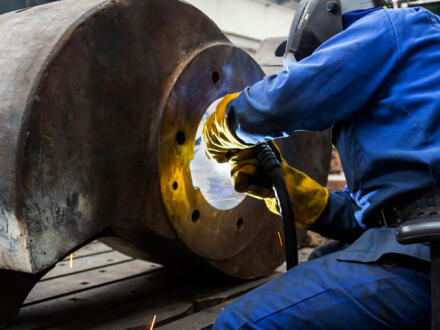
College costs can hit hard, especially for students headed into machining, power systems, engineering technology, or other skilled trade paths. Tuition, tools, safety gear, books, and transportation can add up fast. The average published tuition and fees at public four-year schools sits in the thousands per year, and even many certificate and technical programs bring extra equipment costs that families feel right away.
That's why Ohio Power Machinist Scholarships matter. They can reduce out-of-pocket costs, lower the need for loans, and help students stay focused on training instead of scrambling for money each semester. For a student learning to read precision instruments, operate CNC equipment, or prepare for plant and maintenance work, even a $1,000 award can cover textbooks, boots, and lab fees.
This guide breaks down 10 practical scholarship paths and application tips for high school students, first-year students, current college students, and university students in Ohio. It also explains what eligibility rules to check, which application materials can raise the odds, and where to find more funding beyond one award.
The goal is simple: help students and families make Ohio Power Machinist Association Scholarships and related trade-focused funding easier to understand, easier to compare, and easier to apply for on time.
1. Ohio Power Machinist Association Scholarships: What They Are And Who Should Apply
Ohio Power Machinist Association Scholarships usually refer to funding aimed at students connected to machining, power generation, maintenance, manufacturing, industrial technology, and nearby technical fields. Some awards come from trade groups. Others come from local chapters, workforce groups, foundations, or schools that support the same career path.
The best applicants often fall into one of these groups:
- High school seniors planning trade or college study
- First-year students entering a machining or power-related program
- Current college students in technical or engineering tracks
- University students preparing for long-term industry careers
A strong fit matters. If a scholarship asks for interest in mechanical systems, hands-on training, or Ohio workforce goals, students should make that link clear in every answer.
For example, a student who spent 180 hours in a school machine lab and earned OSHA safety training has a sharper case than someone who only says they "like working with tools." Specifics win.
Students should also remember that scholarship names vary. A fund may not say "power machinist" in the title, but still support the same path. An award such as the operations and power award can fit students preparing for industrial and utility-related roles. That wider search often turns one possible application into five or six.
2. Ohio Power Machinist Scholarships For High School Students Planning Their Next Step
Ohio Power Machinist Scholarships for High School Students are often the easiest place to start because many programs want to support students before they enroll. That means seniors can apply while finalizing school choices, and sometimes even juniors can prepare materials early.
Good targets include:
- Trade scholarships for welding, machining, maintenance, or industrial programs
- Community scholarships tied to Ohio counties or local employers
- Technical school awards for students entering career training
- Foundation awards for students with clear workforce goals
A student interested in technical education might compare options at places like Butler Tech, where career training includes hands-on pathways for Ohio students. That kind of program alignment can strengthen a scholarship essay because it shows a real plan, not just a vague interest.
Students should look for awards based on:
- GPA thresholds such as 2.5 or 3.0
- Financial need
- Community service hours
- Technical program enrollment
- Ohio residency
One practical move is pairing broad trade awards with niche ones. A student can apply for the Ohio trade award while also searching for local machinist-friendly funds. Filing 8 to 12 applications usually gives better odds than pinning everything on one big scholarship.
3. Ohio Power Machinist Scholarships For First-Year Students Starting College Strong
Ohio Power Machinist Scholarships for first-year students matter because many students miss funding after high school graduation. Once classes begin, bills become real fast: tuition deposits, parking permits, tools, and course materials often land in the first 30 to 45 days.
First-year students should search by enrollment status. Many scholarships specifically say "incoming freshman," "new postsecondary student," or "first-year trade student." Those details matter because some awards close eligibility after a student completes even one semester.
Strong first-year options often reward:
- A clear major or program goal
- Early academic momentum
- Attendance in Ohio schools
- Good recommendation letters from teachers or shop instructors
Students entering college from high school may also benefit from scholarships built for new campus transitions, such as the Greater Cleveland freshman award. Even if it is not machinist-specific, it can still lower the total bill.
This is also the stage to ask the financial aid office about departmental awards. According to many campus aid offices, institutional scholarships often go unclaimed when students fail to submit one short supplemental form. Missing a 10-minute form can cost $1,500 or more. That stings.
4. Ohio Power Machinist Scholarships For College Students In Trade, Technical, And Academic Programs
For current students, Ohio Power Machinist Scholarships for College can come from more places than they expect. Trade schools, community colleges, technical institutes, and four-year colleges may all offer awards tied to industrial work, engineering support, maintenance, energy systems, or manufacturing.
That range matters because power machinist work overlaps with many programs:
- Precision machining
n- Mechatronics
- Industrial maintenance
- Mechanical engineering technology
- Manufacturing engineering
- Power plant or utility operations
Students in technical programs can also compare schools with strong hands-on training, such as Ohio Technical College, when building their funding plan. A scholarship committee likes to see that a student understands the training path and job outcome.
Current college students should focus on performance signals. For example:
- A 3.2 GPA after two terms
- Perfect attendance in lab courses
- A supervisor letter from a co-op or part-time industrial job
- Evidence of tool certifications or safety training
Students in broader STEM fields should not ignore nearby categories. The Ohio engineering awards can fit students whose coursework connects to machine systems, mechanical processes, or power equipment. Scholarship committees usually care more about clear relevance than perfect wording in a major title.
5. Ohio Power Machinist Scholarships For University Students Seeking Long-Term Funding
Ohio Power Machinist Scholarships for University students often work differently from entry-level trade awards. They may be larger, more competitive, and more focused on long-term career plans. A university student studying engineering, operations, industrial systems, or manufacturing management may qualify if the application clearly connects that major to power machinist work.
This is where students should think beyond one semester. A renewable scholarship of $2,000 per year for 4 years has a total value of $8,000. That is far more useful than chasing only one-time awards.
University students should highlight:
- Progress toward a technical degree
- Research, internship, or co-op experience
- Leadership in engineering or skills clubs
- Career goals in Ohio industry
A student who completed a paid internship maintaining rotating equipment at a utility plant has a stronger story than a student who writes only about wanting a "good job." Details such as 240 internship hours, one reliability project, or one documented safety improvement make the application feel real.
Students can also widen the field with related Ohio awards. The professional engineers option is a smart example for students whose university path leads toward design, systems, or industrial operations. Long-term funding often goes to the student who shows both technical skill and a clear next step.
6. Eligibility Requirements You Should Check Before Applying
A lot of students waste time on applications they were never eligible for. Before writing one essay, they should read the fine print line by line. Scholarship providers often reject applications for simple misses like wrong residency, missing transcripts, or the wrong program type.
The most common filters include:
- Ohio residency
- U.S. citizenship or lawful status
- GPA minimums
- Full-time or part-time enrollment rules
- Approved major, trade, or technical program
- Deadline compliance
One missed checkbox can end an application in under 60 seconds during the first screening pass. That's harsh, but common.
Academic Standing, Residency, And Program Requirements
Academic standing is usually easy to verify. Many Ohio scholarships ask for a minimum GPA between 2.5 and 3.5. A few also ask students to remain in good standing after the first term if the award renews.
Residency rules can be narrow. Some awards require Ohio residency statewide. Others limit students to one county, one service region, or one school district. A student from Columbus may not qualify for a scholarship centered on the Ohio Valley, while a Belmont County student might.
Program requirements are where many Ohio Power Machinist Association Scholarships get specific. Committees may prefer students in machining, industrial maintenance, engineering technology, utilities, or construction-related fields. The AGC of Ohio funding page shows how related industries often support students whose training feeds real job demand.
Students should make a simple spreadsheet with 6 columns: scholarship name, deadline, GPA, residency, major, and materials. That one sheet can cut repeat mistakes fast.
7. Application Materials That Can Make Your Submission More Competitive
When two students meet the same eligibility rules, the better application packet usually wins. Scholarship committees often sort first by basic fit, then by proof. The student who provides cleaner, stronger evidence stands out.
The most useful materials include:
- An updated transcript
- A focused resume
- One or two recommendation letters
- A short essay with concrete goals
- Proof of financial need if required
- Certificates, awards, or work hours
Numbers help here. Instead of writing "worked a lot," a student should write "worked 22 hours per week while carrying 14 credit hours." That sentence does more work than a whole vague paragraph.
Recommendation letters matter too. A shop teacher who can say a student held tolerances within 0.001 inch in class projects gives the committee something real to remember. A supervisor who notes 97% attendance in a paid internship adds credibility.
Students who want broader backup options can pair trade-specific applications with related local opportunities, including the Northeastern Ohio chapter awards. Building a strong packet once makes it easier to reuse and adapt it across 10 or more applications without starting from scratch each time.
8. How To Write A Strong Scholarship Essay For Machinist And Skilled Trade Awards
A strong essay for machinist and skilled trade scholarships does one thing well: it proves fit. The committee wants to know who the student is, why this path makes sense, and what the money will help them do.
The best essays often follow a simple structure:
- Opening: one real moment or reason the field clicked
- Middle: training, work, class, or project evidence
- Closing: next step and how the scholarship helps
A good opening might describe the smell of coolant in a school lab, the sound of a lathe starting up, or the first time a student measured a part and got the dimension exactly right. Those details stick.
Then the essay needs proof. For example: "They completed 160 shop hours, earned a 3.4 GPA, and helped repair one agricultural pump system used by three local farms." That line says much more than "they work hard."
Students should also avoid three common mistakes:
- Writing a generic essay for every scholarship
- Failing to mention Ohio, the program, or the career goal
- Repeating the resume instead of adding a story
A student in a career college program at East Ohio College or a machining-focused training path at NTMA Machinist Career College can use that program choice as part of the argument: the training path is direct, hands-on, and tied to job placement. That makes the essay feel grounded, not theoretical.
9. Key Deadlines, Selection Timelines, And Follow-Up Steps To Track
Deadlines sink more scholarship applications than weak writing. Students often miss awards because they assume all due dates land in spring. They don't. Some open in fall, close in winter, and pay out before the next academic term starts.
A clean tracking system should include:
- Opening date
- Final deadline
- Recommendation deadline
- Transcript request date
- Interview notice window
- Award decision date
Students should set reminders at 30 days, 14 days, and 3 days before each deadline. That schedule prevents the usual last-minute scramble for signatures, PDFs, and school records.
Selection timelines also vary. One committee may decide in 2 weeks. Another may take 8 to 10 weeks. If an award requires follow-up, students should respond within 48 hours. That includes interview invitations, missing document requests, or acceptance forms.
It also helps to track backup awards at the same time. A student applying for Ohio community-based funding could add the Ohio Valley chapter award to the same calendar. Keeping everything in one place reduces missed chances and lowers stress during busy school months.
10. Where To Find More Ohio Scholarships Beyond Power Machinist Awards
Students should not stop with one niche category. The smartest scholarship strategy mixes Ohio Power Machinist Scholarships with broader Ohio scholarships tied to trades, engineering, community service, environment, and local industry. That wider net often produces better total results.
Good places to search include:
- Technical college financial aid pages
- Community foundations
- Trade associations
- Employer-sponsored workforce programs
- State university aid offices
For students heading to a major campus, the Ohio State aid office shows how universities organize grants, loans, and scholarship processes in one place. That model helps families understand what to expect even outside one school.
Broader field matches can matter too. A student in industrial technology with strong community involvement might qualify for the community involvement award, even if it is not written specifically for machinists.
Using StudentScholarships.org To Expand Your Search Efficiently
This is where a search platform can save time. Instead of hunting across dozens of local pages one by one, students can use a free database that groups scholarships by state, field, and student profile.
On the scholarship database, students can sort through Ohio options faster and build a broader list in one sitting. A focused search session of 45 minutes can produce 15 to 25 leads, which is far more efficient than random browsing.
The key is to search both narrow and broad terms:
- Ohio Power Machinist Scholarships for High School Students
- Ohio Power Machinist Scholarships for College
- Ohio Power Machinist Scholarships for University
- trade scholarships in Ohio
- engineering scholarships in Ohio
That mix gives students more shots at funding, and more chances to cut the final bill.
Ohio Power Machinist Scholarships - Frequently Asked Questions
What are Ohio Power Machinist Scholarships and who can apply?
Ohio Power Machinist Scholarships support students pursuing machining, power generation, or related technical fields in Ohio. Applicants typically include high school seniors, first-year students, current college students, and university students with clear career goals in these areas.
How can high school students find Ohio Power Machinist Scholarships?
High school students in Ohio can access scholarships through local trade groups, community foundations, and technical schools. Programs like Butler Tech offer pathways that strengthen scholarship applications by showing a direct career plan in machining or industrial technology.
What should first-year college students know about applying for these scholarships?
First-year students should look for scholarships labeled for incoming freshmen or new trade students. Submitting completed applications and supplemental forms to institutional aid offices is critical, as many awards require early submission and clear enrollment in Ohio technical programs.
What eligibility requirements are common for Ohio Power Machinist Scholarships?
Most scholarships require Ohio residency, U.S. citizenship or lawful status, a minimum GPA typically between 2.5 and 3.5, enrollment in an approved technical or engineering program, and full-time or part-time status. Meeting deadlines and program alignment is also essential.
How can applicants improve their chances with scholarship essays?
Strong essays clearly connect the applicant's technical training, job experience, and career goals to the scholarship. Specific examples like completing lab hours or internships in Ohio industries make applications stand out, as do mentioning the program and scholarship by name.
Where can students find more Ohio trades and engineering scholarships beyond machinist awards?
Students can explore broader options through technical college financial aid pages, trade associations, community foundations, and employer programs. Resources like studentscholarships.org and financial aid offices at institutions like The Ohio State University provide comprehensive listings.




