

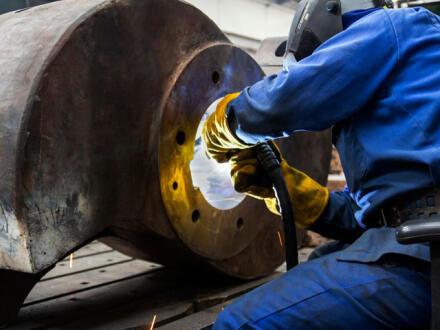
Millwright training can lead to solid pay, steady demand, and work that feels real the minute the shift starts. A student might spend the morning aligning a conveyor system within a tolerance of 0.002 inches and the afternoon replacing a failed bearing in a food plant. That kind of skill takes training, tools, and money.
That is where Ohio millwright scholarships matter. Students looking at apprenticeships, trade schools, community colleges, and engineering programs often assume aid is only for four-year degrees. It isn't. Ohio has union-linked awards, community foundation funds, employer help, FAFSA-based grants, and school-specific scholarships that can lower tuition, tool costs, and even books.
This guide covers 10 practical funding paths for high school students, first-year applicants, current college students, and university students whose studies still connect to millwright work. It also shows where to look when a scholarship does not use the word "millwright" in the title but still fits the trade.
The goal is simple: help students build a shorter list, apply faster, and miss fewer deadlines. For families trying to stretch one paycheck across tuition, gas, steel-toe boots, and application fees, even a $500 local award can cover a semester of books or required safety gear.
1. Ohio Millwright Association Scholarships To Start With First
Students searching for Ohio Millwright Association Scholarships should begin with trade-specific organizations before broad searches. These awards usually fit the student better, which raises the odds of a match.
Millwright groups and related construction associations often value:
- Hands-on experience
- Interest in industrial maintenance
- Mechanical aptitude
- Commitment to apprenticeship or trade education
That matters because fit drives results. If 180 students apply for a general scholarship but only 24 apply for a trade-focused one, the smaller pool can improve the odds fast.
A smart starting point is the Ohio Trade Scholarship application. It is not millwright-only, but it lines up well with students planning skilled-trades training in Ohio.
Students should also look at allied construction groups. The AGC of Ohio scholarship page can fit applicants whose millwright path overlaps with commercial or industrial construction.
A strong first batch of applications usually includes:
- 1 trade-specific application
- 2 construction-related applications
- 2 local foundation applications
- 1 FAFSA submission
That six-part mix gives students more than one path to reduce cost.
2. Union-Affiliated Millwright Training Scholarships In Ohio
Union-affiliated aid deserves close attention because many millwright careers run through apprenticeship systems. In those programs, students often earn while they train, which changes the math in a good way.
A registered apprenticeship can combine:
- Paid job hours
- Classroom instruction
- Employer-backed skill growth
- Lower debt than a traditional college route
The U.S. Department of Labor has reported that registered apprentices earn about $300,000 more over their careers than comparable non-apprentices. That is one reason union-related funding is worth the paperwork.
Students should search for scholarships tied to local chapters, labor-management training funds, and regional member groups. The Ohio Valley Member Chapter scholarship is the kind of listing that can surface when a student broadens the search from "millwright" to "member chapter" and "trade association."
Union-friendly applications usually reward evidence like:
- Shop class or welding lab hours
- OSHA safety training
- Work ethic references from supervisors
- Clear plans to complete training and stay in the field
A student who has logged 120 hours in a school fabrication lab should say so plainly. Specifics beat general enthusiasm every time.
3. Ohio Millwright Scholarships For High School Students Exploring The Trade
Ohio Millwright Scholarships for High School Students often hide inside broader career-tech, skilled-trades, and workforce awards. That is good news for juniors and seniors who already know they prefer machines, plants, and precision work over lecture halls.
Ohio high school students should focus on three lanes first:
- Career center scholarships
- Trade school scholarships
- Community foundation awards for technical education
For example, a student attending a county career center and finishing with a 3.1 GPA, 94% attendance, and one teacher recommendation can be more competitive than a student with a higher GPA but no trade experience.
Some schools with career-oriented pathways, such as Ohio Business College, reflect the kind of technical training environment many applicants are comparing when planning a postsecondary route.
High school students should also scan broad databases with trade filters. On large scholarship boards, filtering by state, skilled trades, and two-year programs can cut a list from 3,000-plus awards to a manageable shortlist in under 15 minutes.
Eligibility Signals That Strengthen A High School Application
Scholarship reviewers often look for proof that the interest is real, not random. A stronger application shows a pattern.
Helpful signals include:
- Career-tech enrollment in machining, welding, industrial maintenance, or electricity
- Attendance above 90%
- GPA of 2.5 or higher when required
- Teacher or shop instructor references
- Part-time work in maintenance, construction, warehousing, or fabrication
- 4-H, SkillsUSA, or FFA participation
The Ohio 4-H scholarship page can matter more than students expect. A student who spent 4 summers repairing equipment on a family farm or leading a project on machinery safety already has a credible story for a millwright-related application.
Good essays also sound concrete. "They rebuilt a go-kart axle with their uncle using a torque wrench and grease-stained service manual" says more than "they like working with tools."
4. Ohio Millwright Scholarships For First-Year Students Entering College Or Apprenticeship
Ohio Millwright Scholarships for first-year students are especially valuable because the first term usually hits families with the most surprise costs. Tuition is only part of it. Books, PPE, work pants, boots, tools, and transportation can add $800 to $2,400 in a hurry.
First-year applicants should target awards that mention:
- Incoming freshmen
n- certificate students
- first-term trade students
- technical education
- apprenticeship intent
A good example of a broad Ohio option is the OMACCS LEADS. scholarship, which can fit students entering career-focused schools.
Students comparing colleges should also pay attention to institutional aid and completion support. Schools such as East Ohio College highlight student support systems that can matter just as much as sticker price when a first-year student is choosing where to enroll.
A first-year strategy works best when students stack aid in layers:
- File FAFSA early.
- Apply for school scholarships.
- Add local or regional trade awards.
- Ask about tool or supply grants.
- Reapply each term if allowed.
Even a modest stack can help. One $1,000 scholarship, one $750 local award, and a Pell Grant can knock down out-of-pocket cost more than most families expect.
5. Ohio Millwright Scholarships For College Students In Skilled Trades Programs
Current students in industrial maintenance, welding, mechatronics, or similar programs should not assume the scholarship window closed after senior year of high school. Ohio Millwright Scholarships for College often open again after a student has completed one term and proved they can stick with the work.
That proof matters. A student who finished 18 credit hours with a 2.9 GPA and perfect lab attendance gives a review committee more confidence than an unknown applicant.
Trade students should search by related field names, including:
- Industrial maintenance
- Mechanical systems
- Advanced manufacturing
- Construction technology
- Electrical maintenance
The Northeastern Ohio member chapter scholarships are a useful example of how local or chapter-based funds can support students who fit the trade culture even when the scholarship title is broad.
Students at technical schools may also compare program costs and aid opportunities with schools such as Ohio Technical College, where hands-on training is central to the student experience.
For renewal or second-year applications, the strongest updates include:
- Exact GPA
- Completed credentials such as OSHA 10
- Instructor comments on shop performance
- Hours worked in a related job
- A short career plan tied to industrial sites, shutdown work, or maintenance teams
That level of detail makes the file feel real, which helps.
6. Ohio Millwright Scholarships For University Students In Related Engineering Fields
Not every future millwright starts in a trade school. Some choose engineering, engineering technology, or applied industrial programs first. Ohio Millwright Scholarships for University applicants can still qualify for funding when their studies connect to machinery installation, maintenance systems, or plant operations.
University students should look at scholarships in:
- Mechanical engineering
- Manufacturing engineering
- Engineering technology
- Industrial systems
- Facilities or process support fields
The Ohio engineering scholarships page and the Ohio Society of Professional Engineers scholarships show how engineering aid can overlap with millwright career goals.
At a large public university, even one $2,000 departmental award can offset lab fees, books, and part of housing. That can reduce the number of hours a student needs to work off campus each week.
When A University Degree Still Aligns With Millwright Career Goals
A university path still fits when the student wants to work close to the equipment, not just behind a desk. Plenty of plant reliability, field service, and maintenance planning roles value both theory and hands-on skill.
Examples include:
- Reliability engineer in a paper mill
- Field service technician for rotating equipment
- Maintenance planner in a food processing plant
- Mechanical systems specialist in a distribution center
Ohio State's student aid office, through student financial aid resources, shows how large universities package grants, scholarships, loans, and work-study. That package approach can make a university route possible for a student whose end goal still involves alignment tools, motors, conveyors, and shutdown schedules.
7. Community Foundation Scholarships Across Ohio With Trade-Friendly Criteria
Community foundations are one of the most overlooked sources of Ohio millwright scholarships. They often support local students, practical career goals, and short applications.
And local money can be easier to win. A county foundation may receive 40 applications for an award, while a statewide program may receive 400. Same essay effort, very different odds.
Trade-friendly criteria often include:
- Residence in a county or township
- Attendance at a local high school
- Enrollment in a certificate, associate, or bachelor's program
- Financial need
- Community service or work history
The Dayton Foundation scholarships can help students in that region find local-fit awards. The Community Foundation for the Ohio Valley scholarship is another example of a geographic route worth checking.
Students should search community foundation websites using these exact terms:
- "technical education"
- "career training"
- "industrial"
- "maintenance"
- "machining"
- "construction"
A millwright-bound student from Belmont, Montgomery, or a small township should not skip local awards just because the title sounds broad. A $1,500 hometown scholarship counts the same as a national one when the tuition bill arrives.
8. Employer-Sponsored And Industry Partner Scholarships For Future Millwrights
Employers sometimes fund the exact kind of student they hope to hire later. That makes employer-sponsored scholarships one of the smartest paths on this list.
Manufacturing plants, contractors, utilities, and industrial service firms may offer aid through:
- Company foundations
- Partner schools
- Workforce pipelines
- Tuition reimbursement plans
- Paid internships that act like indirect aid
A student working 20 hours per week at a plant maintenance helper job may also qualify for reimbursement after one term. Even a repayment of $1,200 per semester can shift the budget fast.
Students should ask three direct questions when speaking with HR or a plant supervisor:
- Does the company offer scholarships for dependents or student workers?
- Is tuition reimbursement available for trade or maintenance programs?
- Are there preferred schools or apprenticeship partners?
Broad scholarship directories can help uncover these listings, including statewide collections like the scholarship search pages, where employer-linked awards sometimes appear beside foundation and school-based options.
Strong targets include food processing companies, steel plants, packaging firms, auto suppliers, and large contractors. These businesses rely on uptime. When one failed motor halts a line producing 300 units per hour, they have a real reason to support future millwright talent.
9. Workforce Grants, FAFSA Aid, And State Programs That Can Supplement Scholarships
Scholarships are only one part of the money picture. Grants, federal aid, state support, and workforce funding can fill the gaps that scholarships miss.
The biggest starting point is FAFSA. Federal Student Aid data has long shown that students who skip the form leave billions of dollars unclaimed nationwide. For an Ohio trade student, that can mean missing Pell Grant money that does not need to be repaid.
Students should look at these funding layers:
- Pell Grants for eligible students
- Federal work-study
- Subsidized loans when needed
- Workforce Innovation and Opportunity Act funding in some regions
- School emergency aid for tools, gas, or short-term need
University financial aid offices often explain the packaging clearly. The University of Oregon's funding your future guidance outlines common aid categories in a simple way, and the same logic applies when Ohio students compare grants, loans, and school aid.
A practical example: a student with a $6,800 Pell Grant, $1,000 local scholarship, and $900 employer reimbursement may cover most direct tuition at a lower-cost program. The scholarship still matters, but the full package matters more.
Students should also ask local workforce boards whether industrial maintenance, mechatronics, or related training appears on approved occupation lists. If it does, the student may have another funding door open.
10. Local Search Strategies To Find Hidden Ohio Millwright Scholarships Before Deadlines
The best scholarship is often the one other students never found. Hidden Ohio millwright scholarships usually appear because the student searched by region, trade cousin, employer name, and county, not just by the word "millwright."
A good local search system takes about 30 minutes each week. That small habit can uncover awards with fewer applicants and later deadlines.
Use search phrases like:
- Ohio industrial maintenance scholarship
- county foundation trade scholarship Ohio
- apprenticeship scholarship Ohio
- mechanical technology scholarship Ohio
- union chapter scholarship Ohio
- manufacturing scholarship near me
Students should also build a tracking sheet with:
- Scholarship name
- Amount
- Deadline
- Required GPA
- Essay length
- Recommendation count
- Submission status
Broad career and scholarship platforms can speed that process. Students who use a matching tool with filters for state, trade, and education level often cut their search time by more than 50% compared with random searching. That fits well with a free search platform built to simplify discovery and quick applications.
One final tip: ask strange-sounding places. Township associations, engineering chapters, local contractors, and education foundations often support technical students. A student who emails 12 local organizations may hear back from only 3, but one "yes" can be worth $2,500.
Ohio Millwright Scholarships: Frequently Asked Questions
What types of scholarships are available specifically for Ohio millwright students?
Ohio millwright students can access trade-specific scholarships like the Ohio Millwright Association Scholarships, union-affiliated aid, community foundation funds, and employer-sponsored scholarships that help cover tuition, tools, and supplies.
How can high school students in Ohio increase their chances of winning a millwright scholarship?
High school students should focus on career center scholarships, maintain good attendance and GPA, gain trade experience like machining or welding, secure strong recommendations, and apply for programs like the Ohio 4-H Scholarships associated with technical education.
Are there scholarship opportunities for first-year students pursuing millwright training or apprenticeships in Ohio?
Yes, first-year students should apply for scholarships targeting incoming freshmen and apprenticeship intent, such as the OMACCS LEADS! Scholarship, and combine FAFSA aid with local and school-based awards to offset startup costs.
Can university students studying engineering fields related to millwright work apply for scholarships in Ohio?
University students in mechanical engineering, industrial systems, or engineering technology can qualify for Ohio Engineering Scholarships and awards from the Ohio Society of Professional Engineers that support millwright-related career paths.
What role do community foundations play in providing scholarships for millwright students in Ohio?
Community foundations offer local scholarships based on residence and career focus, often with fewer applicants, making awards like those from the Dayton Foundation or Community Foundation for the Ohio Valley practical options to reduce costs.
How important is filing the FAFSA for students seeking millwright scholarships and aid in Ohio?
Filing FAFSA is crucial since it unlocks federal grants like the Pell Grant, federal work-study, and subsidized loans, supplementing scholarships and potentially covering a significant portion of trade education expenses.




