

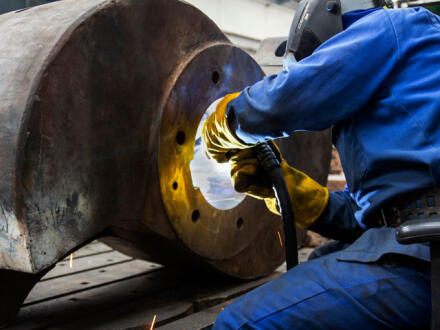
Millwright training can lead to solid pay, steady demand, and hands-on work that fits people who would rather build, install, align, and repair equipment than sit behind a desk all day. According to the U.S. Bureau of Labor Statistics, the median annual wage for millwrights was $65,330. That number gets students' attention fast, but so does the cost of tuition, tools, boots, books, and gas.
That's why Michigan millwright scholarships matter. Students often assume trade funding comes from one source, then stop looking too early. In reality, money can come from trade associations, unions, community colleges, employers, universities, state aid programs, and local foundations.
For high school seniors, first-year trainees, and current college students, the trick is knowing where each scholarship path fits. Some awards are built for students entering millwright or industrial maintenance programs. Others support related fields like mechanical engineering, welding, construction, or advanced manufacturing.
This guide breaks down 10 practical Michigan millwright scholarship paths and explains who they fit best, where to look, and how to stack them. The goal is simple: help students cut out-of-pocket costs, avoid missing deadlines, and find funding sources that actually match skilled-trade career plans.
1. Michigan Millwright Association Scholarships For Students Entering The Trade
Students searching for Michigan Millwright Association Scholarships should start with the trade itself. Association-backed awards often favor applicants who already show clear interest in millwright work, industrial maintenance, welding, or mechanical systems.
That matters because a general scholarship committee may only see grades. A trade association is more likely to value shop class hours, dual enrollment, safety training, FFA or SkillsUSA activity, and part-time plant experience.
A strong applicant usually shows three things:
- A direct plan to enter millwright or related training
- Proof of hands-on interest, such as fabrication, maintenance, or construction work
- Reliability, shown through attendance, references, or work history
For students comparing trade-related options, steel and construction scholarships can overlap with millwright goals. A student focused on plant installation or heavy industry may fit programs like the steel intern award or broader steel scholarship options.
A concrete example: a student from Flint with a 3.1 GPA, 180 hours of welding lab time, and a summer job changing bearings in a packaging plant may look average on a generic application. In a millwright-focused pool, that same student can stand out.
The main takeaway: students entering the trade should not wait for one perfect scholarship. They should apply across association, steel, and construction-adjacent funds that connect to industrial work.
2. Union-Affiliated Millwright Training Scholarships In Michigan
Union-affiliated aid is one of the strongest scholarship paths for future millwrights in Michigan. These programs often connect money with structured training, classroom instruction, and paid apprenticeship routes.
For students who want a clear road map, that combination is huge. Instead of borrowing for all training costs up front, they may enter a system where education and earnings start moving together.
Union-related support can show up in a few forms:
- Direct scholarships for pre-apprentices or new trainees
- Training fund assistance tied to union programs
- Reduced instructional costs through sponsored apprenticeship models
- Tool, PPE, or boot support through local chapters or partner groups
Construction-related scholarships can also support this path. For example, a student comparing open-shop and union-track options may find value in the AGC of Michigan award, especially if the student's long-term goal is industrial construction.
There's a practical reason union pathways attract attention. Registered apprentices in skilled trades can earn while they learn, which changes the math. A trainee making $20 per hour for 40 hours a week earns about $800 weekly before taxes while gaining field experience.
That doesn't mean every union route fits every student. Some programs are competitive, some require travel, and some expect strong math or mechanical aptitude. But for many students, union-affiliated Michigan millwright scholarships lower the biggest barrier: paying for training before the first paycheck arrives.
3. Michigan Millwright Scholarships For High School Students Exploring Skilled Trades
Michigan Millwright Scholarships for High School Students often start before a student ever steps onto a jobsite. The best time to apply is usually senior year, when counselors, CTE instructors, and shop teachers can still help gather transcripts, recommendation letters, and career-plan details.
Students exploring skilled trades should look beyond scholarships that say "millwright" in the title. A student planning to install conveyors, align motors, or maintain production equipment may also qualify for construction, manufacturing, engineering, or workforce awards.
Good places to build a shortlist include:
- High school counseling offices
- CTE and career center staff
- State training resources through the Michigan Department of Education
- Broad scholarship databases that sort awards by trade, location, and program length
A practical example helps. A senior in Grand Rapids with a 2.9 GPA, perfect attendance in a machine trades lab, and 60 volunteer hours may not win a highly academic national scholarship. But that same student can be competitive for local trade awards built for students entering technical training.
Family background can matter too. If a parent was seriously injured or killed in a workplace accident, the Kids' Chance of Michigan support may be relevant.
High school students should apply early, ask for letters at least 30 days before the deadline, and keep a simple spreadsheet with award amount, due date, and required essays. That system prevents missed money.
4. Community College Awards For Millwright And Industrial Maintenance Programs
Community colleges are one of the most practical routes for students seeking Michigan millwright scholarships. Tuition is usually lower than at a four-year school, and many colleges offer program-specific grants, emergency aid, workforce scholarships, and foundation awards.
For millwright and industrial maintenance students, community college support can matter just as much as a named scholarship. Sometimes a $1,200 tool grant, a $900 book award, and a $2,000 foundation scholarship together cut more cost than one larger outside award.
Michigan students should pay close attention to colleges with strong technical and workforce options, including Schoolcraft College and Bay College. Students in southwest Michigan may also find industrial and technical program support through Lake Michigan College.
What to ask the financial aid office:
- Is there department-level aid for industrial maintenance students?
- Are scholarships based on program enrollment rather than GPA alone?
- Is there money for tools, transportation, or safety gear?
- Can students stack college aid with state and outside scholarships?
A concrete scenario: if tuition and fees total $4,600, and a student gets a $2,750 state award plus $1,500 campus aid, the remaining balance drops to $350 before books.
That's why community colleges deserve serious attention. They often combine lower sticker price with multiple small awards that quietly make training affordable.
5. Michigan Millwright Scholarships For First-Year Students Starting Technical Training
Michigan Millwright Scholarships for first-year students fill a specific gap. The first term is when costs pile up fast: admission fees, first-semester tuition, work pants, steel-toe boots, hand tools, notebooks, and maybe a 45-minute commute each way.
First-year awards are useful because they help students get started before wages from part-time work or apprenticeships catch up. Some schools and outside programs even release funds before the second billing cycle, which can prevent dropped classes.
Students starting technical training should target:
- Entry-level skilled trade scholarships
- State aid for recent graduates
- School foundation awards for new enrollees
- Industry scholarships for students entering maintenance, manufacturing, or construction
One of the biggest options to review is the Michigan Achievement award. Students can also search larger match platforms such as the site's scholarship directory to find trade-specific funding with short applications.
A simple numbers example shows why this matters. If a student spends $185 on boots, $240 on tools, $96 on safety glasses and gloves, and $310 on books, that's $831 before regular tuition bills even hit.
First-year students should apply for money that covers both academic and non-academic costs. Getting through the first semester without a payment crisis often decides whether they stay on track.
6. Employer-Sponsored Scholarships From Michigan Manufacturing And Construction Companies
Employer-sponsored scholarships are one of the smartest paths for students who already know they want to work in industry. Michigan manufacturers, contractors, utilities, and heavy construction firms sometimes fund students because hiring skilled workers is hard and expensive.
For an employer, paying $2,000 to $5,000 in scholarship support can be cheaper than leaving a maintenance opening unfilled for months. For a student, that support can turn into a paid internship, summer work, or a job interview before graduation.
Common employer-backed benefits include:
- Tuition help for students in industrial maintenance programs
- Paid internships during school breaks
- Tool reimbursement after successful course completion
- Job-shadowing or mentor access with experienced mechanics
Students interested in metal, fabrication, and plant settings may find adjacent opportunities through the DCA scholarship. Those pursuing broader industrial or engineering tracks may also benefit from company-linked awards such as the GM-connected scholarship.
A useful real-world angle: if a local manufacturer offers a 10-week summer internship at $18 per hour, a student working 35 hours each week earns about $6,300 before taxes. That paycheck can cover the next term better than a small one-time award.
Students should ask local employers, "Do you offer tuition support for maintenance, millwright, welding, or mechanical students?" Many do. They just don't advertise it loudly.
7. Michigan Millwright Scholarships For College Students Continuing Their Education
Michigan Millwright Scholarships for College students often reward persistence. Once a student finishes the first term or first year, more options open up because committees can judge real college performance instead of just high school records.
That helps students who started rough but improved. A student who posted a 2.7 GPA in high school and then earns a 3.4 GPA across 28 college credits tells a much stronger story.
Continuing students should look for:
- Department awards tied to industrial maintenance or manufacturing
- Foundation scholarships for returning students
- Merit-based trade awards based on instructor recommendations
- Transfer and progression scholarships for students moving into higher-level training
State-level aid can still matter here. The Michigan Competitive award is one example students may compare with campus aid packages.
Students should also update their application materials each term. A resume with 480 lab hours, OSHA training, and forklift certification beats the same old one-paragraph statement sent out six months earlier.
The biggest mistake continuing students make is assuming they already missed their chance. In many cases, second-year applicants are exactly who scholarship committees want because they've already shown follow-through.
How To Combine Trade-Specific Aid With General College Scholarships
The best funding plans mix trade-specific awards with broader scholarships based on need, location, veteran status, family background, or academic improvement.
A smart stack might look like this:
- $2,500 trade scholarship for industrial maintenance
- $1,500 local college foundation award
- $1,000 community service scholarship
- $800 tool stipend from a department or employer
That adds up to $5,800 from four different sources.
Students with military family ties may also review the American Legion memorial award. The point is simple: a scholarship does not need "millwright" in the title to pay a millwright student's bill.
8. University-Based Skilled Trades And Engineering Support For Related Degree Paths
Not every future millwright follows the same school path. Some students move from hands-on technical training into a bachelor's degree tied to plant systems, project management, mechanical design, or industrial technology. That's where university-based support enters the picture.
This route fits students who want to stay close to the trade while adding higher-level math, management, or engineering coursework. In Michigan, schools with strong technical and applied programs, including Ferris State University, can make sense for students bridging from shop-floor skills into broader industrial roles.
University support may include:
- Department scholarships in manufacturing or engineering technology
- Transfer awards for community college students
- Industry-sponsored aid from corporate partners
- Research or lab assistant roles that offset costs
A useful example: a student who completed an associate path in maintenance technology may transfer and cut completion time by 60 credits if prior coursework aligns well. That can save thousands in tuition.
Students should ask whether a university accepts technical credits cleanly. If not, the "cheaper" path can turn expensive fast.
Michigan Millwright Scholarships For University Students In Mechanical And Industrial Fields
Michigan Millwright Scholarships for University students usually appear under related labels, not trade labels. Mechanical engineering, industrial engineering technology, manufacturing engineering, and plant operations are common places to look.
Women entering technical fields may find relevant support through the women in technology awards. Students in engineering-heavy programs may also compare options like the professional engineers award.
A student moving from millwright training into mechanical systems coursework might use those funds to cover three-credit lab fees, drafting software, and materials costs. That's often the difference between part-time and full-time enrollment.
9. Regional Foundation And Workforce Development Scholarships Across Michigan
Regional foundations are easy to overlook, and that's a mistake. Local scholarship pools often draw fewer applicants than statewide awards, which can improve the odds for students with clear ties to a county, town, school district, or employer group.
These awards may not mention millwrights directly. Still, they often support career education, technical training, manufacturing, construction, and workforce development. For a student in Alpena, Jackson, Benton Harbor, or Marquette, local money can be more realistic than a huge national scholarship.
Examples of place-based options include the Northeast Michigan foundation awards and the Gateway community awards.
Students should search by:
- County name
- Community foundation name
- Career center or ISD name
- Local employer or trade association
- Rotary, Lions, or chamber-affiliated funds
A precise example: if a foundation offers 12 awards worth $1,000 each and only 46 students apply, the odds are far better than a national contest with thousands of applicants.
Workforce agencies and tribal or regional colleges may also provide local aid or referrals. Students in the Upper Peninsula, for instance, may find useful financial aid information through KBOCC.
Local scholarships rarely look flashy. But a stack of three $1,000 hometown awards can pay a semester bill just as well as one bigger name-brand scholarship.
10. Apprenticeship-Linked Funding That Reduces Out-Of-Pocket Costs
Apprenticeship-linked funding is often the most practical answer for students worried about debt. Instead of paying full price first and hoping aid shows up later, they enter training connected to paid work, structured progression, and sometimes employer or union support.
This is different from a standard scholarship model. The savings may come from reduced tuition, subsidized classes, paid on-the-job training, tool allowances, wage growth, or all five at once.
Why this path works so well:
- Income starts early
- Training matches real job tasks
- Borrowing needs shrink
- Students build hours and references at the same time
Michigan students comparing technical training options may also review state workforce resources such as the Michigan Career and Technical Institute, especially if they need a structured, job-focused setting.
A plain math example makes the point. If an apprentice earns $19 per hour for 2,000 hours, that's $38,000 in gross pay while training progresses. Even after taxes and basic expenses, that income can erase the need for several thousand dollars in student borrowing.
This path does require commitment. Apprenticeships often demand early mornings, physical work, travel, and strict attendance. But for students who want to learn by doing, apprenticeship-linked funding can be the strongest way to keep millwright training affordable.
Michigan Millwright Scholarships FAQ
What types of scholarships are available specifically for Michigan millwright students?
Michigan millwright students can access scholarships from trade associations, unions, community colleges, employers, universities, state aid programs, and local foundations. These include Michigan Millwright Association Scholarships, union-affiliated scholarships, and community college awards geared to industrial maintenance and related trades.
How can union-affiliated millwright scholarships benefit students in Michigan?
Union-affiliated scholarships often combine financial aid with paid apprenticeships and training programs. This allows students to earn wages while learning the trade, reducing upfront costs and gaining practical experience, which lowers financial barriers for Michigan millwright trainees.
When should high school students in Michigan start applying for millwright scholarships?
High school seniors should begin applying in their final year, ideally during the senior year when counselors and instructors can help with transcripts and recommendations. Early applications help prevent missing deadlines and increase chances for awards supporting skilled trade programs.
What community colleges in Michigan offer support to millwright or industrial maintenance students?
Schools like Schoolcraft College, Bay College, and Lake Michigan College provide program-specific scholarships, emergency aid, and tool or equipment grants for millwright and industrial maintenance students, helping reduce tuition and related expenses effectively.
Are there employer-sponsored scholarships available for Michigan millwright students?
Yes, several Michigan manufacturing and construction companies offer employer-sponsored scholarships. These may include tuition support, paid internships, tool reimbursements, and job-shadowing opportunities to help students gain experience and financial assistance simultaneously.
How does apprenticeship-linked funding help reduce costs for millwright trainees in Michigan?
Apprenticeship-linked funding allows trainees to earn income while learning on the job. Paid apprenticeships often cover tuition reductions, tool allowances, and wage growth, minimizing student debt and providing hands-on training aligned with real job tasks in Michigan's industrial sector.






