

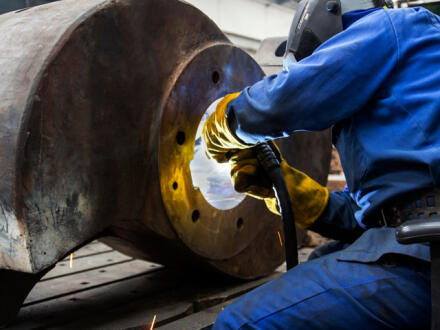
Metal fabrication training can lead to solid pay, hands-on work, and faster entry into the job market than many four-year paths. But tools, tuition, welding gear, and lab fees add up fast. According to the National Center for Education Statistics, the average published tuition and required fees at public two-year schools ran in the low thousands per year, before books, transportation, and living costs. For a student paying out of pocket, even a $1,000 award can cover a term's textbooks, gloves, steel-toe boots, and part of a welding course fee.
Kansas students have more options than they often realize. Some awards come from trade groups. Others come from colleges, national metal industry organizations, workforce programs, or general scholarship platforms that include fabrication-related matches. The trick is not just finding money. It is finding the right scholarships at the right stage: high school, first-year, community college, trade school, or university.
This guide breaks down six practical ways to find and win Kansas Metal Fabrication Scholarships. It shows where students should look, what committees usually want, and how to build an application that feels real, specific, and convincing. The goal is simple: help students spend less time guessing and more time submitting strong applications that actually have a shot.
1. Start With Kansas Metal Fabrication Association Scholarships
Students looking for Kansas Metal Fabrication Association Scholarships should begin with industry-connected awards before they branch into broader searches. That is where the fit is often strongest. A committee tied to metalworking already understands welding classes, CNC coursework, brake press experience, and shop safety certificates.
This matters because specialized scholarships usually reward clear career intent. A student who says, "They want to work in structural welding or sheet metal layout in Kansas," will often stand out more than someone with a vague plan.
A practical first move is to build a short target list with:
- Kansas trade associations
- Fabrication or welding employers with workforce funds
- Local unions and apprenticeship programs
- National metal-industry scholarships that Kansas students can still use
That wider list helps because some Kansas-specific opportunities are small and seasonal. Students who pair local awards with national industry programs increase their odds. For example, a student can stack a state-focused application with options like the sheet metal awards and the AWS scholarship pool, both of which align well with fabrication-related training paths.
Eligibility, Award Types, And Common Requirements
Most fabrication scholarships ask for a short set of proof points. They usually want evidence that the student is serious, trainable, and likely to complete the program.
Common requirements include:
- Kansas residency or attendance at a Kansas school
- Enrollment in welding, manufacturing, drafting, machining, or related training
- A GPA threshold, often 2.5 to 3.0
- A transcript
- One or two recommendation letters
- A short essay on career goals
Award types vary more than students expect. Some scholarships pay a flat $500 to $2,500. Others cover tools, PPE, certification exam costs, or a portion of tuition. A few can be renewed if the student keeps a set GPA.
Students should also watch for "related major" language. A scholarship may not say "metal fabrication" in the title, but still accept students in welding technology, industrial maintenance, manufacturing engineering, or CAD.
What Scholarship Committees Usually Want To See
Committees usually want proof that the student will finish training and use it. Good applications make that easy to picture. They do not just say the student likes working with their hands. They show a real track record.
The strongest applications often include details like:
- 126 hours of shop class over two school years
- OSHA 10 training or welding safety coursework
- A fabricated trailer gate, smoker frame, or FFA project
- Part-time work in a farm shop or small fab shop
- A teacher who can describe punctuality and precision
That specificity matters. In a stack of 80 applications, "They enjoy welding" is forgettable. "They stayed after school for 42 extra shop hours to finish a MIG-welded hay feeder" sticks.
Committees also notice whether the essay sounds grounded. A strong essay might explain how local manufacturing employers need workers who can read blueprints, measure to 1/16 inch accuracy, and follow safety procedures every shift. That sounds like a future fabricator. And that is exactly what these committees want to fund.
2. Focus Early On Kansas Metal Fabrication Scholarships For High School Students
Many students wait until spring of senior year to look for money. That is late. The best strategy for Kansas Metal Fabrication Scholarships for High School Students starts much earlier, often in junior year or even before.
Early starters have three big advantages. They have more time to collect recommendations, more time to build shop experience, and more time to fix weak spots like attendance or grades. A student who begins 8 months earlier can turn a thin application into a credible one.
High school students should keep a simple scholarship file with:
- Unofficial transcripts
- A running activity list
- Photos of projects
- Competition results
- Teacher contact details
- Deadlines in one spreadsheet
That system cuts last-minute stress. It also helps students reuse details across multiple applications without sounding copied.
Students who need broader matches beyond local shop leads often use scholarship databases that sort by trade interest and education level. A free search through a wider scholarship directory can surface fabrication-adjacent awards a school counselor may never mention.
Best High School Classes, Shop Experience, And Activities To Highlight
Committees for Kansas Metal Fabrication Scholarships for High School Students usually care less about fancy wording and more about relevant proof. They want to know whether the student has already chosen a path and started walking it.
The best classes to highlight include:
- Welding I and II
- Manufacturing or industrial tech
- Drafting or CAD
- Geometry and algebra
- Blueprint reading
- Agricultural mechanics
Those classes matter because fabrication is not just sparks and steel. It also uses measurement, angles, layout, tolerances, and problem-solving. According to the U.S. Bureau of Labor Statistics, welders, cutters, solderers, and brazers often need technical training plus skill with blueprints and specifications. That makes shop-plus-math a strong mix.
Activities matter too. Good examples include SkillsUSA, FFA mechanics contests, robotics, job shadowing, and work-based learning. A student who helped build a steel BBQ pit for a county fair fundraiser has a stronger story than one who only lists "interested in fabrication."
Sensory details help here. "They cut, tacked, and ground a 4-foot gate frame until the corners sat square on the table" paints a much clearer picture. Scholarship readers remember images like that.
3. Target Kansas Metal Fabrication Scholarships For First-Year Students Before Freshman Year Starts
A lot of money gets missed in the gap between high school graduation and the first day of college. That is exactly why students should target Kansas Metal Fabrication Scholarships for first-year students before freshman year begins.
This window matters because many awards close in late winter or spring, but the student does not start classes until fall. If they wait until move-in week, the best deadlines are already gone.
A smart first-year search should include:
- Awards for incoming freshmen at technical colleges
- Foundation scholarships at community colleges
- Industry scholarships open to recent graduates
- Trade-specific awards tied to welding or steel
Students should also look at trade-focused awards with national reach. Programs such as the Metal of Honor award and the trade school option can fit applicants entering hands-on training instead of a traditional four-year route.
One simple rule helps: if the student will be enrolled by fall, they should apply now unless the scholarship rules say otherwise.
How To Turn Senior-Year Experience Into A Strong First-Year Application
Senior year gives students useful material, but they need to package it well. Scholarship committees do not automatically know what a capstone weld project, ag mechanics build, or part-time fab work really says about a student.
A strong first-year application translates experience into outcomes. For example:
- "Built a steel workbench" becomes measured, cut, fit, and welded a 72-inch bench that held 600 pounds without racking.
- "Helped in a shop" becomes logged 180 hours assisting with material prep, cleanup, grinder work, and part labeling.
- "Did well in class" becomes earned an A in welding and a 3.4 GPA while working 12 hours a week.
That framing works because it shows reliability, skill growth, and follow-through.
Recommendation letters matter even more for first-year students because they have less college history. The best letters come from someone who watched them work under pressure: a welding instructor, shop teacher, employer, or FFA advisor. A useful letter includes exact details, like the student passing a bend test, showing up at 7:10 a.m. every day, or fixing a warped joint instead of hiding it.
That kind of evidence makes a first-year application feel real. And real wins.
4. Expand Your Search To Kansas Metal Fabrication Scholarships For College Students
Once students are in school, they should not stop searching. Many Kansas Metal Fabrication Scholarships for College open only after a student has completed one term, chosen a program, or shown progress in a trade pathway.
This is where persistence pays off. A student who applies only as a high school senior may miss half the available money. Colleges, workforce funds, private foundations, and industry groups often want proof of attendance and performance before awarding aid.
A good college-stage search should include:
- Departmental scholarships
- Foundation awards at the student's school
- Employer-sponsored training funds
- Union or apprenticeship support
- National steel and welding scholarships
For example, steel-related programs can be a strong fit for fabrication students whose work overlaps with mills, structural products, and manufacturing systems. Options like the Steel Intern awards and AIST funding can support students in programs connected to steel production and use.
Students should re-run their search every semester. New awards open. Eligibility changes. And a 2.1 GPA from first term can become a 3.0 after one strong semester.
Community College, Technical College, And Trade Program Opportunities
Community colleges and technical programs are often the most direct route into fabrication work. They also tend to offer more practical scholarship paths than students expect.
Kansas-area students should look at schools with strong technical and certificate options, plus campus foundations. For example, MCC Kansas City offers more than 120 associate degree and certificate options across multiple campuses, which shows how wide the community college route can be for hands-on career training. Some students also compare specialized training models such as Fab School, where welding, CAD, and machining are built around shop-based instruction.
That comparison helps students ask better questions:
- Does the program include MIG, TIG, and stick welding?
- Are blueprint reading and fabrication layout included?
- What are the tool and lab fees?
- Is there employer placement support?
Students in trade programs should also ask whether scholarships cover non-tuition costs. A first semester can include $300 to $900 in PPE, hand tools, welding jackets, test plates, and consumables. Sometimes a small award has a big impact because it pays for the gear that lets a student stay in the program.
That is why students should think beyond sticker tuition. In fabrication training, hidden costs are often where scholarship money helps most.
5. Include Kansas Metal Fabrication Scholarships For University Students In Related Majors
Not every fabrication career starts in a trade certificate. Some students enter four-year programs tied to design, manufacturing, construction, or industrial systems. That is why Kansas Metal Fabrication Scholarships for University students can still make sense, even if the degree title does not say "metal fabrication."
Committees often support students whose work connects to the field through engineering, production, materials, and manufacturing processes. A university student studying how metal parts are designed, tested, or produced may fit many related scholarships.
This matters in Kansas because manufacturers need more than welders alone. They also need people who can design fixtures, improve production flow, inspect finished parts, and communicate with shop teams.
Students should search by both major and career outcome. A student interested in fabrication should not only search "metal fabrication scholarships." They should also try manufacturing, industrial technology, mechanical engineering technology, and welding engineering-related terms.
Financial aid offices can also reveal awards missed in public searches. School-based resources like KU aid guidance and K-State assistance often point students toward campus funds, timing rules, and forms that do not show up on generic search engines.
Four-Year Degree Paths That Connect To Metal Fabrication Careers
Several university majors connect directly to fabrication work, even if the job setting ends up being a plant, a steel facility, or a custom shop floor.
Strong examples include:
- Mechanical engineering technology
- Industrial engineering technology
- Manufacturing engineering
- Construction management
- Drafting and design technology
- Materials engineering
These majors can lead to roles in process improvement, quality control, production planning, and product design. According to the U.S. Bureau of Labor Statistics, industrial engineers and related manufacturing professionals often work on reducing waste, improving workflow, and raising output. That links closely to fabrication environments where a bad layout or slow setup can cost hours per shift.
A concrete example helps. A university student might use CAD to redesign a steel bracket so it needs 2 fewer weld passes and 12% less material. That kind of project still lives close to fabrication, even if the student wears safety glasses in a design lab instead of striking an arc all day.
Students should make those links explicit in scholarship essays. If the degree supports welding, machining, plant operations, structural steel, or production systems, they should say so in plain words.
6. Build A Winning Application Strategy With Deadlines, Essays, And Trusted Scholarship Tools
Finding scholarships is only half the job. Winning them depends on timing, organization, and sharp applications. Students who treat scholarship season like a shop project usually do better: measure first, cut once, and keep the parts in order.
A simple application system should include:
- One spreadsheet with deadlines
- A folder for transcripts and FAFSA records
- A master resume with dates and hours
- Two essay versions at 250 and 500 words
- A list of recommenders with phone and email details
This system saves time. If a student applies to 12 scholarships and each one takes 45 minutes less because their materials are ready, that saves 9 hours.
Essays should sound like a real person, not a brochure. The best essays explain where the student learned to work, what they built, and why fabrication fits. A line about grinding a bead smooth until sparks bounced orange across a concrete shop floor says more than generic ambition ever will.
Students looking for extra trade-specific options can widen the pool with awards like the trade school funding option or the metals essay-based program, depending on their interests and eligibility.
Where To Find Verified Kansas Scholarships Faster
Speed matters, but accuracy matters more. Students waste hours on outdated lists, dead links, or scholarships that expired months ago. A better system uses verified sources first.
The fastest places to look are:
- High school counseling offices
- Community college and university financial aid pages
- Trade association sites
- Employer or union workforce funds
- Reputable scholarship platforms with updated listings
Students should confirm four things before applying:
- Deadline
- Eligibility
- Award amount
- Required documents
That quick check can prevent a lot of wasted effort. If a student spends 20 minutes on 15 bad-fit applications, that is 5 hours gone.
Trusted tools help sort the list faster, especially when they include filters for trade programs, state matches, and shorter applications. Platforms such as StudentScholarships.org are useful because they combine scholarship discovery with career guidance and often reduce application friction to just a few minutes for simpler matches.
Students should also ask one smart question every time they apply: "Would a stranger understand exactly why this student belongs in metal fabrication?" If the answer is no, the essay needs more detail.
A strong strategy is simple. Start early. Apply often. Use exact details. Keep records. And make each application show a student who can walk into a shop, learn quickly, and finish what they start.
That approach gives students a real edge with Kansas Metal Fabrication Scholarships, whether they are still in high school, entering their first year, attending college, or pursuing a university major linked to fabrication.
Kansas Metal Fabrication Scholarships - Frequently Asked Questions
What are Kansas Metal Fabrication Association Scholarships and who are they for?
Kansas Metal Fabrication Association Scholarships target students pursuing metal fabrication careers in Kansas. They favor applicants showing clear career intent in welding, manufacturing, or related trades and often require residency or enrollment in a Kansas school.
How early should high school students start applying for metal fabrication scholarships in Kansas?
High school students should start searching for Kansas Metal Fabrication Scholarships by junior year or earlier. Early preparation allows time to gather recommendations, build shop experience, and improve GPA, increasing chances of winning scholarships.
What types of awards are common in Kansas metal fabrication scholarships?
Awards range from $500 to $2,500, covering tuition, tools, PPE, or certification exam fees. Some scholarships are renewable with maintained GPA. Applicants often need transcripts, recommendation letters, and essays showing strong career goals.
Can university students studying related engineering or manufacturing majors qualify for metal fabrication scholarships in Kansas?
Yes, many scholarships accept students in majors like mechanical engineering technology, manufacturing engineering, construction management, and materials engineering if their studies connect to metal fabrication, production, or industrial processes.
What are effective strategies to build a strong metal fabrication scholarship application in Kansas?
A strong application includes specific details like hours of shop work, safety training, and project descriptions. Early organization with transcripts, essays, and recommenders helps. Essays should clearly explain the applicant's fabrication experience and career plans.
Where can students find verified Kansas metal fabrication scholarships to apply for?
Students can find verified scholarships through high school counseling offices, financial aid pages at colleges, trade association sites, and reputable platforms like studentscholarships.org. Checking eligibility and deadlines before applying saves time and effort.







