

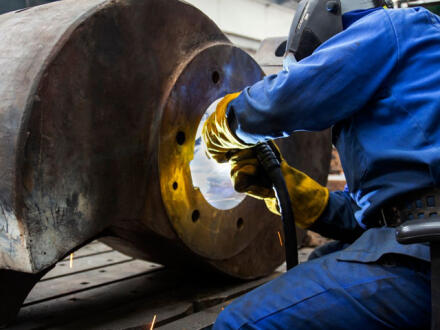
Machining training can lead to solid pay, steady demand, and work that feels real on day one. Students learn how to read blueprints, run CNC equipment, hold tolerances measured in thousandths of an inch, and make parts that end up in cars, medical devices, mining equipment, and aircraft systems. But tuition, tools, gas, and books add up fast.
That's where Nevada machinist scholarships and aid options can make a big difference. A student might stack a state scholarship, a campus award, and a workforce grant to cut a $4,800 certificate bill down to a few hundred dollars. In some cases, employer support or apprenticeship funding can cover most of the cost.
This guide breaks the search into 11 practical categories. It covers Nevada Machinist Scholarships for High School Students, Nevada Machinist Scholarships for College, Nevada Machinist Scholarships for University, and Nevada Machinist Scholarships for first-year students. It also explains where Nevada Machinist Association Scholarships may fit.
The goal is simple: help future machinists find money they can actually use. Instead of vague advice, each section points to the kind of award, who usually qualifies, what details matter, and how students can improve their odds before they hit submit.
1. Nevada Machinist Association Scholarships For Trade-Bound Students
Association-based funding is often one of the best starting points for trade students. These awards usually come from machining groups, manufacturing associations, labor organizations, or regional trade networks that want more young people entering precision manufacturing.
For a future machinist in Nevada, these scholarships can be especially useful because they often favor applicants who plan to train for a specific hands-on career. That matters. A general academic scholarship may focus on GPA alone, while a trade award might also value shop class, welding, robotics, CAD, or part-time work in a garage or machine shop.
A realistic award range is often $500 to $2,500 per student. That can cover measuring tools, first-term tuition, steel-toe boots, or a used laptop for CAM software.
Students should look for programs tied to:
- local manufacturing groups
- labor or machinist associations
- statewide workforce boards
- scholarship platforms that feature trade-specific listings, such as the trade school award
What To Look For In Association-Based Awards
The strongest association awards usually have three traits:
- Clear trade intent. The application asks what program the student will enter and why machining fits.
- Workforce need. The award exists because employers need trained people now, not someday.
- Simple proof. Students may need a transcript, short essay, and one recommendation.
A smart application often includes one concrete example. For instance, a student can explain that they held a tolerance of ±0.002 inch on a classroom mill project, or spent 120 hours in a high school manufacturing lab. Specific details beat broad claims every time.
2. Nevada Machinist Scholarships For High School Students Entering CTE Programs
Nevada Machinist Scholarships for High School Students often start before graduation. Students in career and technical education programs can qualify for money while they are still taking manufacturing, engineering, drafting, or mechatronics courses.
This route matters because early funding helps students move fast. A senior who already has support lined up can go straight into a machining certificate or associate track instead of delaying school to save cash from a retail job.
Good candidates usually have:
- a CTE or shop class record
- teacher support from a manufacturing or math instructor
- a clear training plan after high school
- evidence of attendance, reliability, and hands-on interest
Nevada families should also look at broad state aid that can free up cash for tool costs. The Nevada Promise option is relevant for students heading into eligible community college pathways, including technical routes that connect well with machining.
A useful benchmark: according to the U.S. Bureau of Labor Statistics, machinists had a median annual wage of $53,610 nationally. That makes a short training program easier to justify than a degree path with high debt and weak job placement.
For high school applicants, the best essays usually answer one question well: Why machining, specifically? "I like working with my hands" is too thin. "I built a small aluminum clamp in class and liked solving setup errors" is stronger and more believable.
3. Community College Manufacturing Scholarships In Nevada
Community colleges are a major source of Nevada Machinist Scholarships for College students. They often combine lower tuition with grants, campus scholarships, and direct workforce partnerships.
That combination can change the math fast. If a certificate costs $4,200 to $6,800 in tuition and fees, even one small institutional scholarship plus a state grant can cut the bill by half. Add used tools and bus costs, and the savings still matter.
Nevada students should pay close attention to manufacturing-adjacent programs at schools such as College of Southern Nevada and Western Nevada College. These schools are often the most practical entry point for CNC, drafting, industrial technology, or transfer pathways linked to advanced manufacturing.
When comparing campus scholarship options, students should ask:
- Does the award require full-time enrollment?
- Can certificate students apply, or only degree-seeking students?
- Is there a separate scholarship portal with a deadline months before classes start?
- Can Pell Grant money stack with institutional aid?
One missed detail can cost real money. A student who files late may lose a $1,000 campus award even if they qualify on paper.
For many future machinists, community college is the most efficient route. It keeps debt lower, offers access to labs and instructors, and can lead straight to work or to a transfer option later.
4. Nevada Machinist Scholarships For First-Year Students Starting Technical Training
Nevada Machinist Scholarships for first-year students are built for that awkward starting phase. A student has chosen the path, maybe bought boots and safety glasses, but has not yet built a college transcript or long list of shop credentials.
That means first-year awards usually focus on potential, not a long resume. Admissions files, high school attendance, short essays, FAFSA data, and career goals often matter more than college GPA.
This is also where statewide merit aid can free up room in a budget. The Guinn scholarship path is worth reviewing for Nevada students who meet the academic requirements and want to reduce out-of-pocket costs during their first year.
Strong first-year applicants often include:
- a one-page career statement
- one teacher or employer recommendation
- proof of enrollment in a technical program
- a clean timeline showing start term and credential goal
A concrete example helps. Instead of saying they want a "good career," a student could write that they plan to complete a 2-semester CNC certificate, start as a machine operator, and work toward setup or programming within 24 months.
That level of detail signals follow-through. Scholarship readers notice that. So do financial aid offices, especially when funds are limited and they need to choose between students who all look similar on the surface.
5. Workforce Development Grants For CNC And Machining Certificates
Workforce grants are not always labeled as scholarships, but for a machining student they can work the same way. These funds often support short-term training tied to in-demand jobs, and CNC machining usually fits that description well.
Nevada's public higher education system, outlined through NSHE, connects students to colleges and workforce-oriented training options across the state. That matters because many grant-funded programs sit inside public institutions, not private training ads.
Workforce development money may cover:
- tuition
- lab fees
- textbooks
- certification costs
- sometimes transportation or required gear
These grants are especially useful for adults changing careers, recent graduates who want fast entry into the workforce, and students who do not qualify for larger merit scholarships.
A practical scenario: if a machining certificate costs $5,300, a workforce grant of $3,500 can make the remaining balance manageable with a part-time job or small campus scholarship.
Students should ask each school two direct questions:
- Is there grant money for short-term technical programs?
- Does the program qualify under workforce or in-demand occupation funding?
Those questions can uncover aid that never appears in a general scholarship search. And because some workforce funds move on a first-come basis, applying early can matter more than having perfect grades.
6. Nevada Machinist Scholarships For College Students Continuing Hands-On Programs
Nevada Machinist Scholarships for College students do not stop after the first semester. Continuing students can often qualify for renewal aid or new awards once they have proven they can handle shop hours, math, and attendance.
This group includes students in machining, manufacturing technology, welding with machining overlap, industrial maintenance, and similar hands-on programs. Their biggest advantage is evidence. They can point to completed credits, shop projects, and instructor feedback.
Some scholarships prioritize persistence, especially for students balancing school with work or family duties. Others focus on underrepresented groups in technical training. For example, the women's fund option may fit students who meet the program's criteria and need support to continue in a technical field.
A strong continuing-student application can include:
- completed credit hours, such as 12 to 24 credits
- a program GPA above the minimum, often 2.5 or 3.0
- one instructor note describing shop performance
- a short explanation of next-step goals
Specific progress matters. "Completed manual lathe, intro CNC, and blueprint reading" says more than "doing well in class."
For students already enrolled, the financial aid office is often more useful than a broad internet search. Campus staff can identify departmental awards that never get much publicity but still hand out $750, $1,200, or $2,000 at a time.
7. University Engineering And Advanced Manufacturing Awards In Nevada
Not every future machinist follows a certificate-only path. Some students move into mechanical engineering, manufacturing engineering, or advanced production systems at the university level. For them, engineering and advanced manufacturing awards can support a route that still connects to shop work.
Nevada universities often house scholarships inside departments, colleges, or financial aid offices. Students looking at transfer or four-year options should review university aid pages early, including UNLV financial aid, because deadlines can arrive long before a student expects them.
These awards may favor students with:
- strong math and physics preparation
- transfer credits from community college
- project work in robotics or design
- interest in production, tooling, or manufacturing systems
The fit is clear for students who want to move beyond machine operation into process planning, CAD/CAM, quality, or production engineering. A student might start by making parts on a CNC mill, then move into optimizing cycle time, fixture design, or tolerance analysis.
A concrete example: reducing a cycle from 11 minutes to 8 minutes on a 200-part run saves 600 minutes, or 10 hours of machine time. That kind of improvement is exactly why engineering-linked manufacturing talent gets funded.
For students who enjoy both theory and the shop floor, university awards can support a broader career without losing the practical side of machining.
8. Nevada Machinist Scholarships For University Students In Related Fields
Nevada Machinist Scholarships for University students may also appear under related majors rather than the word "machinist." Students in industrial technology, engineering technology, materials, design-for-manufacturing, aviation maintenance support, or applied engineering should still search aggressively.
This matters because scholarship labels can be misleading. An award for "manufacturing innovation" or "industrial systems" might fit a student whose long-term goal is CNC programming, tooling, prototyping, or production supervision.
Students at the University of Nevada, Reno can compare aid categories through UNR scholarship resources. They should also search by college, department, and donor-funded special awards rather than relying on one general application.
Another niche source can come from community and regional organizations with technical or agricultural ties. In some cases, fields that depend on fabricated equipment overlap with machining interests, which makes options like the agriculture scholarship listing worth a look for eligible students.
A smart search strategy includes these keyword combinations:
- advanced manufacturing
- industrial technology
- engineering technology
- applied mechanics
- precision manufacturing
Students who widen the search often find more opportunities. Even two smaller awards of $1,250 each can cover books, software, and a large chunk of semester fees.
9. Employer-Sponsored Scholarships From Nevada Manufacturers And Machine Shops
Employer-sponsored aid is one of the most overlooked paths in this whole search. Local manufacturers, fabrication firms, aerospace suppliers, mining equipment shops, and family-owned machine shops sometimes fund students because hiring trained people is hard and expensive.
For an employer, a $2,000 scholarship can be far cheaper than months of recruiting. For a student, it can lead to both tuition help and a direct line to internships or a first job.
These awards may come with strings attached, but not always. Some ask for:
- part-time work during school
- a summer internship
- an interview before selection
- a promise to apply for open positions after training
Students can find these opportunities through local chambers, manufacturing associations, plant bulletin boards, instructors, and community foundations such as Nevada Community Foundation, where donor-funded education support may surface by region or field.
The strongest approach is simple. Students should make a short target list of 10 to 15 employers, then send a brief email with their program, expected completion date, and interest in machining work. A polished message plus a one-page resume can open doors that never appear on public scholarship lists.
Real shops notice seriousness. A student who mentions Mastercam exposure, blueprint reading, and weekend availability sounds much more hireable than someone who sends a generic note to fifty companies.
10. Apprenticeship-Linked Tuition Assistance For Aspiring Machinists
Apprenticeship-linked aid works well for students who want to earn while they train. Instead of paying upfront for all education, they join a work-based pathway where classroom instruction and shop experience happen together.
For aspiring machinists, this setup can reduce debt and speed up job readiness. It also solves a common problem: some students learn best when they can touch the machine, hear the spindle, and connect class theory to actual production parts.
A formal training example can be found through institutions such as NTMA Machinist Career College, which shows how industry-centered machining education lines up with employer demand.
Apprenticeship-linked support may include:
- tuition reimbursement
- employer-paid coursework
- hourly wages during training
- tool allowances
- raises tied to skill milestones
A useful benchmark is this: if an apprentice earns $18 per hour for 20 hours per week, that is $360 weekly before taxes while still building skill. Over 30 weeks, gross pay reaches $10,800, which can offset tuition, gas, and living costs far better than unpaid training.
The tradeoff is structure. Apprenticeships expect punctuality, drug-screen compliance in many workplaces, and a real commitment to completing the program. But for students who want less classroom-only learning, this path can be one of the strongest financial options available.
11. National Skilled Trades Scholarships Nevada Students Can Use For Machining
Not all good funding is Nevada-based. National skilled trades scholarships can be used by Nevada students if the program allows attendance at an approved trade school, community college, or technical college.
This is a useful backup when local options are thin. A student might apply to 8 Nevada-focused awards and add 10 national trade scholarships to widen the pipeline. That creates much better odds than relying on two or three local applications.
National scholarships often support:
- trade school tuition
- tools and safety gear
- community college career programs
- women in skilled trades
- first-generation students
- veterans or dependents
Students using a free scholarship search platform can save time by sorting for training type, state eligibility, and trade-specific categories. On a large site, filtering can turn a list of 2,000+ mixed results into a short list that actually matches machining goals.
The best applications usually reuse a core package:
- one resume
- one base essay
- one transcript file
- one recommendation request template
Then they customize the details. That keeps the process manageable.
For Nevada students, national scholarships should not replace local aid. They should stack on top of it. A local college award, one employer scholarship, and one national trade grant together can turn a difficult bill into something very doable.
Frequently Asked Questions about Nevada Machinist Scholarships
What types of scholarships are available for machinist students in Nevada?
Nevada offers various machinist scholarships including association-based awards, high school CTE scholarships, community college grants, first-year student aid, workforce development grants, university awards, employer-sponsored scholarships, apprenticeship assistance, and national trade scholarships.
How can high school students in Nevada qualify for machinist scholarships?
High school students often qualify through participation in career and technical education (CTE) programs, strong shop class records, teacher recommendations, and a clear plan for pursuing machining training after graduation. The Nevada Promise Scholarship is also a helpful state aid option for eligible students.
What should first-year students starting machining training in Nevada include in their scholarship applications?
First-year applicants should provide a one-page career statement detailing their program and goals, a teacher or employer recommendation, proof of enrollment in a technical training program, and a clear timeline showing their start term and credential objectives to demonstrate commitment and potential.
Where can Nevada students find machinist scholarships at community colleges?
Community colleges such as College of Southern Nevada and Western Nevada College offer scholarships and grants for machining and manufacturing training. Students should inquire about full-time enrollment requirements, certificate eligibility, early application deadlines, and how Pell Grants can combine with institutional aid.
What are the benefits of apprenticeship-linked tuition assistance for aspiring machinists in Nevada?
Apprenticeships offer paid work experience while training, with benefits like tuition reimbursement, employer-paid coursework, tool allowances, and hourly wages. This helps reduce debt, accelerates job readiness, and connects classroom theory directly with shop floor experience.
How can employer-sponsored scholarships help Nevada machinist students?
Local manufacturers and machine shops may offer scholarships to support training costs in exchange for internships, part-time work, or commitments to apply for jobs post-training. These scholarships can provide tuition aid and create pathways to employment, making them valuable opportunities for students.









