

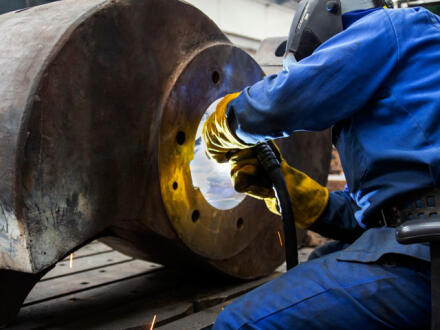
Paying for school can feel like trying to lift a steel beam alone. Tuition, tools, books, fees, and transport costs add up fast. For students who want a future in ironworking, welding, construction, steel, or related trades, the good news is simple: Ohio ironworking scholarships can cut those costs in a real way.
This list is built for high school seniors, first-year college students, community college learners, apprentices, and university students who want money for education without piling on more debt. The focus stays on scholarships connected to ironworking, steel, construction, engineering, and skilled-trade pathways in Ohio.
A useful benchmark helps here. The Education Data Initiative reports that the average cost of college can reach tens of thousands of dollars per year once tuition, housing, supplies, and fees are included. Even a $1,000 award can cover books, boots, welding gear, or several months of gas for a commuter student.
The sections below break down 11 Ohio ironworking scholarships and scholarship categories worth attention. Each one explains who it fits, what students should look for, and how it can work with other aid. For students sorting through options, the goal is clear: find the scholarships that match their stage, then apply early and stack smart.
1. Ohio Ironworking Association Scholarships for High School Students
Ohio Ironworking Scholarships for High School Students usually reward early planning. They fit seniors who already know they want a trade, construction, steel, or engineering path after graduation.
A strong application often includes:
- a transcript showing steady grades
- proof of career interest in ironworking or related work
- a short essay with a specific goal
- one or two recommendation letters from teachers, counselors, or shop instructors
For example, a student who spent 180 hours in welding lab and worked weekends with a framing crew has a clearer story than someone who writes only, "I like working with my hands." Concrete details matter.
Students in Northeast Ohio should pay close attention to chapter-based awards such as the member chapter scholarship. Local programs like this can have smaller applicant pools, which improves the odds.
Another smart move is pairing ironworking-specific awards with broader trade aid. The Ohio trade option can help students who plan to enter a hands-on career track.
A practical tip: students should keep a simple file with GPA, class rank, volunteer hours, certifications, and job history. That turns a rushed application into a 20-minute task instead of a 2-hour scramble.
2. Ohio Ironworking Scholarships for First-Year Students Entering College
Ohio Ironworking Scholarships for first-year students target the awkward gap between high school and college. This is when many students have acceptance letters but still don't know how they'll pay for books, tools, parking, and lab fees.
First-year applicants should look for awards that ask for:
- proof of college enrollment
- a declared major or training plan
- FAFSA or other financial documents
- a statement of career intent
This category matters because first-year students often face setup costs all at once. A commuter may spend $600 on books, $200 on safety gear, and $80 a month on fuel before the first exam even starts.
Students heading into construction management, welding technology, civil engineering, or structural programs can also widen the search through broader directories. A large free database of scholarship listings helps students compare awards by field and eligibility.
At bigger public campuses, financial aid offices can uncover campus-specific support that students miss during admission season. Ohio State's financial aid office outlines aid categories, timelines, and award coordination, which is useful when stacking scholarships with grants.
The best first-year applications sound focused. "They plan to become a structural ironworker and already earned OSHA training" lands better than a vague essay about wanting a good job.
3. Ohio Ironworking Scholarships for Community College and Trade-Technical Programs
Community college and trade school routes make a lot of sense for future ironworkers. They often cost less, start faster, and keep training close to the job site. That makes Ohio Ironworking Scholarships for College especially useful in two-year and technical programs.
According to the National Center for Education Statistics, public two-year schools usually cost far less than four-year campuses before housing is even counted. That price gap can mean a student finishes with several thousand dollars less in borrowing.
Trade-focused students should search for scholarships tied to:
- welding technology
- metal fabrication
- industrial maintenance
- heavy equipment or construction trades
- structural or civil tech programs
A student considering Ohio Technical College may find that shorter, skills-first training lines up well with employer demand. For someone who wants to get into the workforce quickly, that matters.
Students interested in steel careers should also review the steel intern award. Internship-linked funding can do two jobs at once: lower school costs and create a path to paid industry experience.
This section is where practical resumes help. If a student repaired farm equipment, passed a welding test, or logged 75 service hours on Habitat builds, those details show readiness for trade-technical programs better than polished buzzwords ever will.
4. Ohio Ironworking Scholarships for College Students Continuing Their Education
Students already in school should not assume the best aid chances are over. In reality, Ohio Ironworking Scholarships for College often favor students who have already proved they can handle coursework and stick with a plan.
Continuing-student scholarships may ask for:
- a college GPA, often 2.5, 3.0, or higher
- completed credit hours
- progress in a trade, construction, or engineering track
- a short update on goals and work experience
This matters because second-year and later students can show results. A first-semester promise is nice. A transcript with 32 completed credits and a 3.2 GPA is stronger.
Students on steel, metallurgical, or manufacturing paths should look at the AIST steel scholarships. These awards can fit students whose course load connects to the steel industry that supports ironworking jobs.
Another angle is department-based support. Faculty often know about small awards that never show up in broad searches. A construction materials professor may know of a donor fund with only 14 applicants last cycle. Those are the chances students want.
The best approach is simple: apply again, even if a student already won aid once. Many scholarships are renewable only if students submit updated forms, and others are open fresh each term. Persistence beats assuming the door is closed.
5. Ohio Ironworking Scholarships for University Students in Construction-Related Majors
Not every future ironworker follows a direct apprenticeship route. Some students enter university programs tied to the same industry, such as construction management, civil engineering, structural engineering, safety, or project supervision. That is where Ohio Ironworking Scholarships for University can fit.
These students often bridge field knowledge with planning skills. A graduate who understands both steel erection and scheduling software can be useful on day one.
Programs connected to engineering and transportation can open extra scholarship lanes. The Ohio engineering awards are worth a look for students in related majors, especially when structural systems or infrastructure work is part of the plan.
There are also schools with strong practical support networks. Students comparing campuses may review places like Ohio Northern University, where career launch outcomes and professional preparation are central selling points.
A specific example helps. A civil engineering student taking 16 credit hours, working 12 hours a week, and joining an American Society of Civil Engineers chapter has a strong case for aid tied to construction leadership.
For this group, essays should connect classroom study to job-site impact. If they can explain how load paths, safety planning, and steel connections affect real workers, the application sounds grounded instead of generic.
6. Union-Connected Ironworker Scholarship Opportunities in Ohio
Union-connected scholarships can be some of the most relevant options on this list. They often support students whose families have union ties or who plan to enter organized skilled trades. For some applicants, that creates a direct link between home, training, and future employment.
Common eligibility rules may include:
- parent or guardian union membership
- student interest in a union trade
- geographic chapter residence
- school enrollment and basic GPA standards
In Ohio, chapter-level programs matter because local ties can narrow the field. A scholarship open to one valley, district, or member chapter may draw 40 applicants instead of 400.
Students in the southern part of the state should consider the Ohio Valley chapter award. That kind of local scholarship can pair well with state aid and campus grants.
Union-related applications usually respond well to family and work stories. If a student grew up watching a parent leave home at 5:30 a.m. in worn leather boots to head to a steel site, that image says more than a broad statement about respect for labor.
They should also ask union halls about education funds, memorial scholarships, and apprentice support. Some opportunities never make it onto large public lists, yet still award $500 to $2,500 at a time.
7. Apprenticeship-Linked Ironworking Scholarships and Training Awards
Apprenticeship-linked aid is one of the best fits for students who want pay and training at the same time. These awards support the path many ironworkers actually take: learn in class, work on site, and build earnings while skills grow.
The U.S. Department of Labor has long highlighted registered apprenticeship as a path where workers can earn wages while training. That matters when a student wants to avoid taking on large tuition bills upfront.
Apprenticeship-related funding may cover:
- tools and harnesses
- textbooks and exam fees
- work boots and protective gear
- transportation to training centers
Transportation is a bigger issue than people think. A trainee driving 38 miles each way to class twice a week can spend hundreds of dollars over a term just on gas and vehicle wear.
Students interested in related infrastructure and planning fields may also look at the transportation engineering option. While not ironworking-only, it fits applicants whose future work touches bridges, road systems, and structural projects.
A smart application here proves commitment. Employers and selection committees like students who already hold OSHA training, basic welding credentials, or a record of showing up on time for physical work. Reliability is not flashy, but in the trades, it counts.
8. Employer-Sponsored and Industry-Partner Scholarships for Ohio Ironworking Students
Some of the best funding does not come from schools at all. It comes from employers, steel companies, contractors, supply firms, and industry foundations that want skilled workers in the pipeline.
These scholarships usually aim at a business need. If a company expects retirements or expansion, supporting students now can help fill future roles.
Employer-sponsored awards may favor students who:
- completed internships or job shadowing
- study welding, steel, or construction fields
- live near company operations
- show strong attendance and safety habits
A steel-focused example is the AIST family of awards discussed earlier. Programs tied to internships can be especially useful because they combine money with experience. A student who gets $6,000 in aid and a paid summer placement comes out far ahead of someone who only collects a check.
Industry groups can help too. The Ohio Society of Professional Engineers represents a broad engineering network that can point students toward scholarships, events, and professional contacts connected to construction and infrastructure work.
This is also a good section for students to think locally. A family-owned steel fabricator with 63 employees may sponsor one scholarship a year and barely advertise it. A polite email to a human resources office or plant manager can uncover options that search engines miss.
9. Regional and Local Ohio Scholarship Programs That Pair Well With Ironworking Awards
Students do not need to win one huge award to make college work. Often the better plan is stacking smaller local scholarships with ironworking-specific funding. Three awards of $1,500 each can cover a meaningful part of a community college bill.
Regional scholarships can come from:
- county foundations
- chamber of commerce groups
- local labor chapters
- civic clubs and memorial funds
- area employers and donor families
This works well because local committees may care about things national programs ignore, such as residency, school district ties, or service in a specific town.
A student from central Ohio attending a private school with local aid options might compare institutions like Ohio Dominican University while also applying for trade-related support elsewhere. The point is not to choose one path of aid. The point is to stack every eligible source.
A concrete scenario makes this clearer. If a student wins a $2,000 ironworking scholarship, a $1,200 county foundation award, and a $750 rotary scholarship, that total of $3,950 may wipe out books, fees, and several months of commuting.
Local applications often ask for simpler materials than large national competitions. That makes them good targets for students with limited time but strong local roots.
10. Need-Based Ohio Ironworking Scholarships for Students With Financial Barriers
Need-based aid matters because talent alone does not pay tuition. Many students who would thrive in ironworking or construction programs still face real barriers: rent, food costs, child care, car repairs, or helping family members with bills.
The National Center for Education Statistics and federal aid data have consistently shown that cost is a major reason students stop out of college. Sometimes the gap is not massive. It might be $900 for a balance hold or $450 for required tools.
Need-based Ohio ironworking scholarships usually ask for:
- FAFSA details or similar financial records
- household income information
- a short hardship statement
- proof of enrollment in an eligible program
This is where honesty helps. A student who writes, "Their alternator failed in October, and they missed 6 class days before they could afford repairs," gives reviewers a real picture.
Students should also consider schools and programs that are built around practical training and affordability. Institutions such as Williamson College of the Trades are often part of the wider conversation when families compare trade-focused education models.
Need-based applications should never sound ashamed. Financial pressure is common. The strongest essays explain the barrier, show effort, and prove that a scholarship would remove one specific obstacle standing between the student and completion.
11. Merit-Based Ohio Ironworking Scholarships for Academic and Leadership Achievement
Merit-based scholarships reward performance. That can mean grades, yes, but it can also mean leadership, reliability, competition results, and service tied to the trades.
For students in Ohio Ironworking Scholarships for University or trade programs, merit can show up in several forms:
- a 3.5 GPA in math, drafting, or shop classes
- captaincy on a skills team
- top placement in welding or fabrication contests
- leadership in SkillsUSA, FFA, or a school build project
- consistent volunteer work on community construction jobs
A good merit essay turns numbers into proof. "They led a 6-person team that built accessibility ramps for 3 homes" says more than "They are a leader."
Selection committees often like students who combine classroom discipline with hands-on grit. A person who keeps grades up while working 18 hours a week in a warehouse or on a job site looks dependable.
Merit seekers should also think beyond obvious trade labels. Construction, engineering, transportation, and manufacturing groups all fund students with strong records. That broader view raises the number of realistic applications from maybe 4 to 12 or more, which can sharply improve the odds.
In short, students should not count themselves out if they are high achievers in a practical field. Merit money is not only for future lawyers and lab scientists.
Ohio Ironworking Scholarships FAQs
What types of students are eligible for Ohio Ironworking Association Scholarships?
Ohio Ironworking Association Scholarships typically target high school seniors planning careers in ironworking, construction, steel, or engineering. Applicants should provide steady grades, proof of career interest, an essay with specific goals, and recommendation letters.
How can first-year college students find scholarships for ironworking studies in Ohio?
First-year students should look for scholarships requiring college enrollment proof, declared majors, FAFSA documents, and career intent statements. Campus financial aid offices like at Ohio State University can provide additional aid information to combine with ironworking scholarships.
Are there scholarships for trade and community college students interested in ironworking?
Yes. Ohio ironworking scholarships support community colleges and trade-technical programs related to welding, metal fabrication, and construction trades. For instance, the Steel Intern Scholarship offers opportunities that combine funding with paid industry experience.
Can university students pursuing construction-related majors receive Ohio ironworking scholarships?
University students in construction management, civil engineering, or structural engineering can qualify for scholarships such as Ohio Engineering Scholarships. Schools like Ohio Northern University provide career preparation aligned with these awards.
What financial aid opportunities exist through unions for ironworking students in Ohio?
Union-connected scholarships often favor students with family union ties or who plan to enter union trades. Programs like the Ohio Valley Member Chapter Scholarship focus on local applicants and support education for future ironworkers.
How do apprenticeship-linked scholarships benefit Ohio ironworking students?
Apprenticeship scholarships support those earning wages while training, covering expenses like tools, textbooks, protective gear, and transportation. Students with OSHA training or welding credentials have stronger applications for such awards.




