

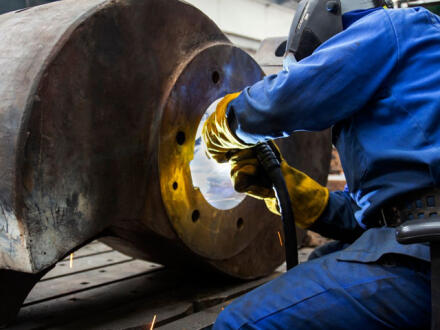
Welding training in Tennessee can lead to solid pay, fast entry into the workforce, and several school options. But tuition, tools, gas for the commute, and certification fees can add up quickly. For many students, Tennessee welding scholarships are the difference between starting on time and putting school off for another semester.
The good news is that funding does exist for high school seniors, community college students, university students, and adults entering the trades. Some awards come from state aid programs. Others come from trade groups, employers, local foundations, and national welding organizations. A few cover only tuition. Others can help with books, equipment, or living costs.
This guide breaks down 10 practical funding paths students in Tennessee should look at first. It covers Tennessee Welding Scholarships for High School Students, Tennessee Welding Scholarships for College, Tennessee Welding Scholarships for University, and Tennessee Welding Scholarships for first-year students. It also points out where deadlines, GPA rules, and training format can affect eligibility.
For students who feel overwhelmed by the search, organized scholarship platforms can cut the busywork. On Studentscholarships.org, many applications can be matched and started quickly, which helps students spend less time hunting and more time building a realistic school plan.
1. Tennessee College Of Applied Technology Scholarships For Welding Students
Tennessee Colleges of Applied Technology are often the first stop for students who want affordable welding training. That makes them a strong source for Tennessee welding scholarships and grant-based aid.
TCAT campuses usually combine several funding streams:
- Federal Pell Grants for eligible students
- Tennessee state aid
- Campus foundation awards
- Workforce grants tied to high-demand jobs
For context, the maximum Federal Pell Grant is $7,395 for one award cycle, according to the U.S. Department of Education. For some low-income students, that can cover a large share of a short-term welding program.
Students should ask each TCAT financial aid office four direct questions:
- Is the welding program Pell-eligible?
- Are there campus scholarships only for technical students?
- Does the school participate in Tennessee workforce grants?
- Are tools, helmets, or testing fees covered?
A practical example helps. A student attending an accelerated trade program such as the one at ATI's welding track may face costs beyond tuition, including gloves, jackets, and certification testing. Those extra items can push the total bill up by $600 to $1,500.
Students who want a faster search process often compare campus awards with outside listings like the JFLF welding award, which supports arc welding education. That kind of outside application can stack with school-based aid if the campus allows it.
2. Tennessee Welding Association Scholarships Worth Tracking Each Year
Trade associations can be easier to overlook than state aid, but they matter. Tennessee Welding Association Scholarships and similar industry awards often look for students who already show commitment to the craft.
These scholarships may favor applicants who have:
- Completed welding classes in high school
- Entered a postsecondary welding program
- Earned basic AWS certifications
- Participated in SkillsUSA or shop competitions
Association-backed funding tends to be smaller than a full grant, but even a $500 to $2,500 award can cover books, boots, and lab fees. Those are real costs. A decent auto-darkening helmet alone can run $120 to $300.
Students should track application timing closely. Many trade-group awards open in late winter or spring and ask for a short essay, transcript, and instructor recommendation.
National trade networks also feed into local opportunity. For example, the AWS national scholarships can apply to students pursuing welding training, and local sections sometimes promote region-specific awards alongside them.
A strong application usually includes one concrete story. Instead of saying a student "likes welding," it works better to explain that they spent 140 classroom hours learning SMAW and GMAW, built a trailer frame, and now want to qualify for structural welding work. Specifics stick.
3. Community College Awards For Tennessee Welding Scholarships For College Students
Community colleges are a major lane for Tennessee Welding Scholarships for College students. They often offer the best balance of lower tuition, recognized credentials, and local employer connections.
Tennessee students should look at colleges with technical and workforce ties, including schools such as Walters State Community College and Southwest Tennessee Community College. A public community college route can cost thousands less than a private option, especially for commuters.
Funding at this level often comes from:
- Institutional scholarships
- Tennessee Lottery-funded aid
- Foundation awards
- Need-based federal grants
- Department-specific scholarships
The Tennessee Education Lottery Scholarship is one of the most important programs to review. For eligible Tennessee residents, lottery-based aid can reduce annual costs by several thousand dollars, depending on school type and enrollment status.
Community college welding students should also ask whether short certificates qualify for the same aid as associate degree programs. Sometimes they do, and sometimes they don't. That one detail can change the full budget.
A realistic example: if tuition and fees total $4,800, books cost $900, and gear adds $700, a student faces $6,400 before gas or rent. Even one campus scholarship plus lottery aid can close a big part of that gap.
4. University-Connected Skilled Trades Aid For Tennessee Welding Scholarships For University Students
When people hear "university," they do not always think "welding." But some students enter related fields through industrial technology, engineering technology, manufacturing, or construction management programs. That is where Tennessee Welding Scholarships for University students can show up.
Universities may connect trade-minded students to aid through:
- Applied technology departments
- Workforce development centers
- Alumni-funded scholarships
- Scholarships for transfer students from community colleges
Public institutions and private schools both deserve a look. A student aiming for broader industrial training might compare options at Tennessee State University or a smaller campus such as Tennessee Wesleyan University if a related program fits long-term goals.
The tricky part is program naming. A school may not list "welding" in the scholarship title, but an industrial or technical student could still qualify. That is why students need to read department criteria line by line.
Some niche awards matter here too. The Tennessee IAI scholarship can be relevant for students in technical or industrial pathways, depending on eligibility rules.
A concrete case: a student transfers after earning a welding certificate, then pursues manufacturing management. If the university offers a $2,000 transfer award and a $1,500 departmental scholarship, the move from shop floor training to leadership prep becomes much more affordable.
5. High School Senior Scholarships For Students Entering Welding Programs
High school seniors should start earlier than they think. Many of the best Tennessee Welding Scholarships for High School Students close before graduation day.
This group should focus on three categories first:
- State-funded merit or need-based aid
- Local community foundation scholarships
- Trade and employer scholarships for seniors entering technical programs
The Tennessee HOPE Scholarship is one of the first places to look for eligible Tennessee students. State-managed aid information is also tracked through the Tennessee Higher Education Commission, which oversees major student assistance programs.
Students should build a simple file with:
- Transcript
- FAFSA confirmation
- Resume of shop, CTE, or work experience
- One recommendation from a welding, ag, or CTE teacher
- A short essay with a career goal
Numbers help an application feel real. For example, a stronger essay says the student completed 3 welding courses, logged 96 shop hours, and wants to earn enough to avoid borrowing $5,000 for the first year.
This is also the stage where Studentscholarships.org can save time. A student juggling classes, part-time work, and senior deadlines benefits from a platform that reduces the number of separate searches.
6. Tennessee Welding Scholarships For High School Students Through CTE And Dual Enrollment Pathways
Career and technical education programs give students a head start, and they can improve scholarship odds. That makes CTE one of the strongest pipelines for Tennessee Welding Scholarships for High School Students.
Students in CTE or dual enrollment often already have proof of effort. They may have:
- Shop hours on record
- Instructor evaluations
- OSHA or safety training
- Early college credits
- Competition results from SkillsUSA
That paper trail matters. Scholarship committees like evidence. A student who placed in a regional welding event or completed 6 dual-enrollment credit hours stands out more than a student with only general interest.
Regional and skills-based scholarships can overlap with broader construction and trade funding. For example, East Tennessee students in construction-related pathways may find relevant local options through the AGC of East Tennessee award.
Students should also ask counselors whether dual enrollment changes their future aid package. In some cases, completed credits shorten the program by one term. If that cuts one semester of tuition and commuting, the savings can reach $2,500 to $4,000.
A simple example: a senior completes intro welding before graduation, enters TCAT with advanced standing, and avoids buying a second set of beginner lab materials. That is not flashy, but it is money kept in the bank.
7. First-Year Student Funding Options For New Welding Majors In Tennessee
The first year is where many students hit the biggest money shock. Tuition is only part of it. New welding majors often need boots, gloves, jackets, hand tools, and testing fees in the first few weeks.
That is why Tennessee Welding Scholarships for first-year students should be searched as a separate category. New-student funding can come from:
- Freshman merit awards
- Need-based grants
- Career program starter scholarships
- Employer donations to college foundations
- Emergency completion grants
Some programs also support related industries, not just welding by name. Steel and fabrication awards matter here. A student entering a welding or metals path might qualify for the AIST Steel Scholarships or the Steel Intern Scholarship, depending on program fit.
A first-year budget can get specific fast:
- Tuition and fees: $4,200
- Books: $850
- PPE and tools: $780
- Gas for a 24-mile commute: $1,120 across two terms
That total reaches $6,950 before rent or food. Students who map those numbers early usually apply more aggressively and miss fewer deadlines.
Ways First-Year Applicants Can Stand Out
First-year applicants do not need a long resume. They need clear evidence.
The best applications usually include:
- A direct career goal, such as pipe welding, fabrication, or maintenance work
- A short story about a project, like repairing a gate or building a trailer rack
- One trusted recommendation from a shop, ag, or science teacher
- Proof of follow-through, such as attendance, certifications, or work hours
A helpful benchmark: a student who worked 18 hours per week in a part-time job while keeping a solid GPA has already shown time management. Scholarship readers notice that.
They should also avoid vague essays. "I work hard" says very little. "I saved $1,340 from weekend shifts to buy my first welding hood" says a lot.
8. Employer-Sponsored And Union-Backed Welding Scholarships In Tennessee
Employers do not hand out scholarships just to be nice. They need workers. That makes employer-sponsored and union-backed aid one of the most practical funding paths on this list.
Manufacturing firms, fabrication shops, utilities, ship repair contractors, and construction groups may support students who plan to work in the region after training. In some cases, the award ties to an internship or post-graduation job offer.
Students should ask local employers these questions:
- Do they reimburse tuition after one term?
- Do they fund apprentices or interns?
- Do they donate to local college foundations?
- Do they cover AWS certification testing?
Industry-linked scholarships outside Tennessee can still be useful if they accept U.S. trade students. For example, the Dennis' Welding tradesperson award and the Donald F. Hastings scholarship reflect the kind of trade-focused support students should track.
Union routes can be strong too. A sponsored apprentice may earn while training, which changes the math completely. If a student earns $19 per hour for 32 hours per week, that is $608 weekly before taxes while building skills.
That path is competitive, but it is powerful. It turns training from a bill into a paycheck.
9. National Welding Scholarships Tennessee Students Can Use At In-State Schools
Students should not limit the search to Tennessee-only awards. Many national scholarships can still be used at in-state schools, and that greatly expands the pool.
This matters because welding is a national workforce need. The American Welding Society has reported ongoing demand for trained welders and related skilled professionals across the country. When a field has labor shortages, more scholarship dollars usually follow.
National options may come from:
- Welding associations
- Metal and steel foundations
- Manufacturer-sponsored programs
- Memorial technical scholarships
One strong example is the Glenn W. Oyler technical scholarship, which reflects the donor-funded technical aid that can help trade students. Students should read award terms closely to confirm eligible schools, majors, and enrollment status.
A smart student can combine aid sources. For example, a Tennessee resident might stack a $1,500 national award, $3,000 in state aid, and $1,000 from a campus foundation. That is $5,500 from three places, not one.
How To Match National Awards With Tennessee Programs
The key is fit, not volume. Sending 25 weak applications usually works worse than sending 8 strong ones that actually match the program and career goal.
Students should compare each national award against:
- School type: TCAT, community college, or university
- Program length: certificate, diploma, or degree
- Enrollment load: full-time or part-time
- Career interest: structural, pipe, manufacturing, or maintenance welding
A student using a broad scholarship search page like this scholarship directory can sort opportunities faster, then cross-check rules with the school's financial aid office.
The best matches usually have one thing in common: the student can explain exactly why the award fits the training plan.
10. Local Foundation, Workforce, And Regional Grant Opportunities For Welding Training
Local money is often the most ignored money. Yet regional foundations and workforce groups can be perfect for welding students because they want local residents trained for local jobs.
These opportunities often come from:
- Community foundations
- County scholarship funds
- Workforce development boards
- Chamber of commerce programs
- Industry associations tied to construction or manufacturing
A good example is the Middle Tennessee foundation scholarship pool, where students may qualify for multiple awards through one application. That setup can save hours.
Workforce agencies matter too. Tennessee regularly emphasizes high-demand fields, and welding often fits that category because it connects to construction, transportation, utilities, and manufacturing. A single regional grant of $2,000 can cover most tool and fee costs for an entry-level program.
Students should search by county and commuting radius, not just by "welding." A scholarship for residents of one city, children of plant workers, or students in industrial programs may still apply.
One concrete scenario: a student in Rutherford County finds a $1,200 local foundation award, a $900 workforce grant, and $700 from a school emergency fund. None of those pieces is huge alone. Together, they cover $2,800, which might pay for one full term plus gear.
Tennessee Welding Scholarships: Frequently Asked Questions
What types of scholarships are available for welding students in Tennessee?
Tennessee offers welding scholarships through state aid, trade associations, colleges like TCATs, community colleges, universities, local foundations, and national welding organizations. These scholarships can cover tuition, tools, books, and even living expenses.
How can high school students in Tennessee qualify for welding scholarships?
High school students can qualify by completing welding classes or CTE programs, participating in competitions like SkillsUSA, earning certifications, and applying early for state-funded or local foundation scholarships such as the Tennessee HOPE Scholarship.
Are there specific welding scholarships for Tennessee community college students?
Yes, community colleges like Walters State and Southwest Tennessee offer scholarships funded by institutional aid, Tennessee Lottery scholarships, foundation awards, and federal grants, often supporting welding certificates and associate degree programs.
Can university students in Tennessee pursuing technical fields access welding-related scholarships?
Students in industrial or engineering technology programs at universities like Tennessee State University or Tennessee Wesleyan University may find scholarships through applied technology departments, workforce centers, and alumni funds supporting related skilled trades education.
What should first-year welding students in Tennessee consider when searching for scholarships?
First-year students should seek freshman merit awards, career program scholarships, need-based grants, and employer-sponsored aid to help cover tuition, tools, PPE, and certification fees, being sure to demonstrate clear career goals and include specific project experience in applications.
How do employer-sponsored and union-backed welding scholarships work in Tennessee?
Employers and unions offer scholarships tied to commitments like internships or jobs after training. They may reimburse tuition, fund apprentices, or cover certification costs, providing practical funding for students planning to work in local welding-related industries.






