

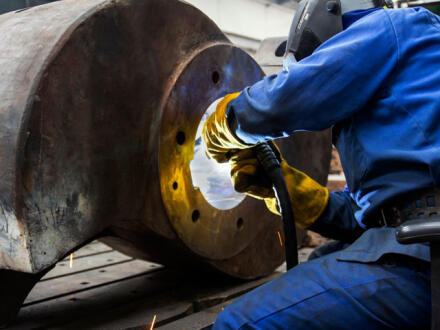
Welding training can lead to solid pay, steady hiring, and work people can actually point to at the end of the day, bridges, ships, rail parts, pressure vessels, and shop-built metalwork. But tuition, tools, PPE, books, testing fees, and gas for the commute can pile up fast. A single starter setup with a helmet, jacket, gloves, boots, and hand tools can easily push past $600, even before program tuition enters the picture.
That's why Rhode Island welding scholarships matter. For students comparing trade programs, community college options, and engineering-adjacent degrees, the right funding mix can trim thousands from the total bill. And that mix usually comes from more than one place: state-focused scholarships, school aid, union support, employer tuition help, and national welding awards.
This guide walks through 10 Rhode Island welding scholarships and funding sources that students should look at closely. It covers options for high school seniors, first-year students, current college students, and university students in related technical fields. It also points out where deadlines and rules usually change, because scholarship details can shift from one cycle to the next. For students using a free match platform, broad scholarship lists such as student aid listings can help surface welding-friendly awards that don't always show up in a quick search.
1. Rhode Island Foundation Scholarships With Career And Technical Education Potential
The Rhode Island Foundation manages a large pool of scholarship funds, and that matters because many students miss awards that are not labeled "welding" but still fit career and technical education goals. The foundation has administered hundreds of funds over time, with criteria that can include Rhode Island residency, financial need, school choice, field of study, or community service.
For welding students, the smart move is to search for awards that fit these filters:
- Career and technical education
- Trades or applied learning
- Need-based aid
- Rhode Island resident awards
- First-generation or community service criteria
A student entering a one-year welding certificate may qualify even if the scholarship page never says "SMAW" or "GMAW." That's the trick. Funding often follows the student profile, not just the exact major title.
Concrete example: a Providence senior with a 3.1 GPA, Pell eligibility, and 140 volunteer hours may be more competitive for a local foundation award than for a national welding prize with a tiny acceptance rate. Students who have done service projects can also compare options like the youth service award, especially if their welding path starts right after high school.
Students should read each fund's education-level rule carefully. Some allow certificate programs, while others require a degree-granting school.
2. Community College Of Rhode Island Aid For Welding And Skilled Trades Students
For many students, the Community College of Rhode Island is the most direct route to affordable training. Tuition at a community college level is often far lower than private technical schools, and school-based aid can cut it further. Through CCRI, students can stack federal aid, institutional scholarships, payment plans, and workforce support.
That makes this one of the strongest Rhode Island welding scholarships for college planning, even when the money comes through several channels instead of one named welding award.
Students should ask financial aid and program staff about:
- Institutional scholarships for technical students
- Pell Grant eligibility
- Workforce or short-term training assistance
- Emergency grants for tools, books, or transportation
- Part-time enrollment rules
A practical number helps here. If a student receives a $3,698 Pell Grant for one term and adds a $1,000 local scholarship, that can cover a meaningful chunk of tuition and supplies at a public institution. That is often more useful than chasing one big national award and getting nothing.
Students in Rhode Island skilled-trades pipelines may also find related local options such as the contractor trade scholarship. Even when an award is not welding-only, it may fit students training for fabrication, construction support, or metalworking roles.
3. New England Tech Scholarships For Welding And Manufacturing Pathways
New England Tech often comes up when students want a hands-on path with a clear job focus. Private technical schools can cost more than public options, so scholarship hunting matters even more here. A $2,500 award at a higher-tuition school can make a bigger difference than the same amount at a lower-cost campus.
Students looking at welding and manufacturing pathways should review every layer of aid:
- Merit scholarships
- Need-based institutional grants
- Program-specific trade awards
- State and federal aid
- Employer reimbursement for working students
This section matters for students who want short training-to-job timelines. A student working 24 hours per week in a fabrication shop may be able to combine school aid with employer help and reduce out-of-pocket costs by several thousand dollars across one academic cycle.
It also helps to widen the lens beyond welding title words. Scholarships tied to manufacturing, industrial technology, fabrication, and technical education can still apply. For students comparing broader academic routes, schools like Providence College show how different Rhode Island institutions structure aid, even though a traditional liberal-arts campus is not the usual welding destination.
The key question is simple: Does the school allow aid stacking? If the answer is yes, students should build a package instead of relying on one source.
4. Rhode Island Welding Scholarships For High School Students Exploring Trade Programs
This is the stage where students have the most time to build a strong application. Rhode Island Welding Scholarships for High School Students often come from local groups, community funds, school counselors, and scholarships that reward service, leadership, or technical interest rather than a formal welding enrollment already in progress.
A high school student can raise odds with clear evidence:
- CTE shop classes or metalworking coursework
- Attendance at skills competitions
- Part-time work in construction, maintenance, or a shop
- Teacher recommendations with hands-on examples
- A short statement with a real training plan
Specificity helps. "They built a steel cart with MIG welds that held 280 pounds in a school lab test" is far stronger than "they like working with their hands." Scholarship readers remember facts.
Students should also look at Rhode Island-specific awards that fit general college or training entry. Options such as the local media scholarship and the 4-H education awards can work for students whose welding goals connect with agriculture, community work, or public-interest service.
For families, the best move is to start 6 to 9 months before graduation. That window gives time to gather transcripts, recommendation letters, FAFSA details, and proof of enrollment plans.
5. Rhode Island Welding Scholarships For First-Year Students Starting A Certificate Or Degree
First-year students often miss aid because they assume scholarship season ends after senior year. It doesn't. Rhode Island Welding Scholarships for first-year students can come from campus aid offices, local donors, and private scholarships that require proof of postsecondary enrollment.
This is a strong category for students who can now show actual commitment. Once enrolled, they can submit:
- A student ID or acceptance letter
- Program start date
- Instructor feedback from lab work
- Grades from the first term
- Budget details showing remaining need
A first-term student with a 3.4 GPA, perfect lab attendance, and a note from an instructor about safe torch handling is already stronger on paper than they were in high school. They have evidence now.
Some Rhode Island students should also scan more general local scholarship pages such as the admissions officers award. While not welding-specific, these funds can help cover the same tuition bill. That is what matters.
Students entering a certificate program should confirm one thing early: Does the scholarship accept non-bachelor pathways? Some do, some don't. That single rule can save hours of wasted application time.
For readers balancing commuting costs, even a $750 award can offset fuel, parking, and basic PPE for a term.
6. Rhode Island Welding Scholarships For College Students Needing Program-Specific Support
Once students are in school, expenses get more specific. They may need coupons for plate steel, replacement gloves, testing fees, or money for certifications. That is where Rhode Island Welding Scholarships for College students become especially useful. Program-specific support can plug the exact gap that makes a student think about dropping a course.
Common cost points include:
- Welding helmets and lens replacements
- FR jackets and gloves
- Steel-toe boots
- Certification or exam fees
- Transportation to labs or worksites
A realistic budget example: helmet $180, jacket $65, gloves $24, boots $140, safety glasses $12, and consumables or shop fees around $100. That totals $521 before one tuition payment. For a student working part-time at $16 per hour, that equals more than 32 work hours before taxes.
Students should ask instructors whether department funds, alumni gifts, or trade-partner awards exist. These smaller awards may be $500 to $1,500, but they often have fewer applicants than national scholarships.
Those needing broader college help can compare local awards such as the need-based college fund. The label may sound general, yet general money still pays welding bills.
This is also the point where attendance and safety records matter. In lab-heavy programs, instructors notice who shows up ready to work.
7. Rhode Island Welding Scholarships For University Students In Engineering And Fabrication-Adjacent Fields
Not every future welding professional sits in a welding-only program. Some study mechanical engineering, industrial technology, marine systems, or fabrication-adjacent fields at a university. Rhode Island Welding Scholarships for University students can apply when their work overlaps with materials, joining processes, structures, or manufacturing.
That matters in Rhode Island, where marine work, defense-related manufacturing, and structural metal fabrication all connect technical design with shop-floor execution. A university student who studies weld fatigue, corrosion, or structural performance may be a strong fit for certain scholarships even without "welding" in the major title.
Institutions such as the University of Rhode Island and Rhode Island College give students access to engineering, technology, math, and applied science pathways that can support fabrication careers. And groups like NSPE-RI reflect the state's professional engineering network, which can be useful when students look for industry-aligned awards or mentors.
A concrete example: a student completing a senior project on welded joint stress in aluminum structures may spend 120 lab hours and produce test data that makes a scholarship essay stand out. That is much more memorable than a generic statement about liking engineering.
For Rhode Island Welding Scholarships for University searches, students should use these terms together:
- welding
- manufacturing
- fabrication
- materials engineering
- structural design
8. Rhode Island Welding Association Scholarships And Industry-Sponsored Awards To Watch
Rhode Island Welding Association Scholarships can be harder to track because industry-backed awards do not always live in one tidy database. Sometimes they appear through trade groups, local associations, training partners, or event announcements. That means students have to watch a few channels instead of waiting for one perfect search result.
These awards are worth the effort because industry sponsors often care about practical traits:
- Shop safety habits
- Instructor references
- Attendance
- Career plans in welding or fabrication
- Willingness to work in-state after training
An industry scholarship might be $1,000, plus donated PPE or testing support. That package can be more valuable than the dollar amount alone if it covers an AWS exam, welding jacket, gloves, and a helmet.
Students should also keep national-to-local crossover opportunities in mind. For example, the AWS scholarship listing can matter to Rhode Island applicants, especially those with strong shop performance and a clear training plan.
Because not every award is public for long, students should ask instructors a plain question every month: "Have any employer or association scholarships opened?" That tiny habit can surface opportunities with only 20 to 50 applicants, which is a much better odds picture than giant national contests.
9. Employer-Sponsored Tuition Assistance From Rhode Island Manufacturers And Union Pathways
This is one of the most overlooked funding sources on the list. Some Rhode Island employers will help pay for training if they need welders, fitters, or entry-level fabrication workers. In many cases, they would rather invest $2,000 to $5,250 in tuition help than lose months trying to hire experienced people in a tight labor market.
Employer support can come in a few forms:
- Upfront tuition payment
- Reimbursement after passing grades
- Paid apprenticeship classroom hours
- Tool stipends
- Union-sponsored training support
The trade-off is usually commitment. A company may require the student to stay for 12 months after training or repay some portion of the benefit if they leave early. That is not bad by default, but it needs careful reading.
A strong real-world setup looks like this: a student works 30 hours per week in a metal shop, gets $3,000 in tuition reimbursement, and receives a $400 tool allowance after completing the first term. That can erase a huge chunk of cost.
Employer pathways also pair well with outside scholarships, including focused trade awards such as the welding training award. Students who want to work right after training should ask HR and supervisors whether reimbursement applies to certificates, night classes, or AWS test prep.
10. National Welding Scholarships Rhode Island Students Should Not Overlook
National scholarships matter because Rhode Island is a small state. Limiting the search to local awards can leave money on the table. Students should apply both locally and nationally, then stack what they can. Even one outside award of $2,500 can cover a large share of training costs.
National welding and skilled-trades scholarships often favor applicants who show clear direction, not fancy writing. They want to know what the student will study, what work they hope to do, and why the training matters.
Another example is the tradesperson award, which shows how trade-centered opportunities can sit outside a student's first search results. That is why broad searching pays off.
Application Tips That Help Welding Students Stand Out
A strong welding application feels concrete. It gives the reviewer proof.
Students should include:
- Exact program name and start date
- One or two welding processes studied, such as MIG or TIG
- A specific career goal, like pipe welding, shipyard work, or structural fabrication
- Measured examples, such as a project completed in 18 lab hours or 95% attendance
- One instructor quote if allowed
Weak essay: "They enjoy welding and want to help people."
Stronger essay: "They completed 3 fillet-weld practice plates per week for 9 weeks and plan to test for entry-level shop work after finishing the certificate."
Where To Verify Deadlines, Eligibility, And Program Updates
Scholarship rules change. So do school program pages, FAFSA processing timelines, and award amounts. Students should verify details at the original source before applying.
The best places to confirm updates are:
- School financial aid pages
- Scholarship provider application pages
- Academic department staff
- State or local foundation websites
- Guidance counselors and workforce advisors
Students using a free match tool can save time by keeping a list of deadlines, essay prompts, and documents in one place. A spreadsheet with 8 columns, award name, amount, deadline, GPA rule, residency, school type, essay status, and recommendation status, usually prevents missed steps.
Rhode Island Welding Scholarships - Frequently Asked Questions
What types of financial aid are available for welding students in Rhode Island?
Welding students in Rhode Island can access funding through state-focused scholarships, community college aid, industry-sponsored awards, employer tuition assistance, and national welding scholarships, often combining multiple sources to cover tuition, tools, and supplies.
How can high school students in Rhode Island improve their chances of getting a welding scholarship?
High school students should highlight technical coursework, participation in skills competitions, relevant work experience, strong teacher recommendations, and a clear training plan. Applying 6 to 9 months before graduation is recommended to collect transcripts and letters of recommendation.
Are there specific scholarships for welding students attending Community College of Rhode Island?
Yes, the Community College of Rhode Island offers several institutional scholarships and financial aid options including Pell Grants, workforce support, and emergency grants for tools or transportation, which can significantly reduce the cost of welding training.
Can university students studying engineering or fabrication-related fields qualify for welding scholarships in Rhode Island?
Yes, students in related fields like mechanical engineering or industrial technology can qualify for scholarships focusing on manufacturing, materials engineering, or structural design, especially when their projects or studies include welding or fabrication components.
What role do employer-sponsored tuition assistance programs play in funding welding education in Rhode Island?
Employers and union pathways often provide tuition reimbursement, tool stipends, or paid apprenticeship hours to train welders and fabricators. These programs usually require a work commitment after training but can offset thousands of dollars in costs.
Where can Rhode Island welding students find information about local and national scholarship opportunities?
Students should consult the Rhode Island Foundation, school financial aid offices, local trade associations, and websites like studentscholarships.org. Checking with instructors monthly about new employer or association scholarships also helps discover less-publicized funding.







