

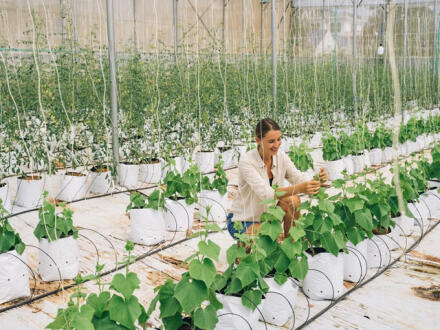
Food science sits at the crossroads of chemistry, biology, nutrition, agriculture, and product development. It can lead to jobs in food safety, quality assurance, research, manufacturing, and public health. The catch is simple: college costs money, and many students who would thrive in this field need help covering tuition, books, housing, lab fees, or travel.
That's where Alabama Food Science Scholarships can make a real difference. A smart scholarship plan can stack school-based aid, statewide awards, association funding, and national STEM support. For a student paying $10,500 in annual tuition and another $1,200 for books and supplies, even one $2,000 award can ease pressure fast.
This list is built for high school students, first-year applicants, current college students, and university students aiming for research or leadership roles. It focuses on seven scholarship paths that fit food science and closely related majors such as biology, chemistry, agriculture, nutrition, microbiology, and life sciences.
The goal is practical: help students spot the right award at the right stage. Some scholarships are broad STEM awards. Others are Alabama-specific or tied to a campus, department, or professional group. Together, they can reduce costs and help a student build a stronger launch into a food science career.
1. Alabama Food Science Scholarships For High School Students Planning Ahead
For seniors, the best Alabama Food Science Scholarships for High School Students often start with broad merit and local foundation awards. Food science is a smaller major than nursing or business, so students usually widen the search to STEM, agriculture, life science, and regional scholarships.
A strong first move is to target Alabama-based merit programs and community funds. Those awards can later combine with campus aid once the student commits to a college.
Examples worth watching include:
- in-state merit options for students with strong grades and test scores
- regional community awards that support graduating seniors across multiple scholarship funds
- location-based aid such as central Alabama awards for local applicants
This route matters because local scholarships are often less crowded. A national scholarship may draw 5,000 applicants, while a county or foundation award might draw fewer than 200. That changes the odds in a student's favor.
A practical example: a senior from Gadsden interested in food safety could apply for a local community award, a university merit scholarship, and a STEM scholarship at the same time. If each award covered $1,500 to $4,000, the student could chip away at tuition before the first lab class even starts.
Who Should Apply And When To Start
Students should start in junior year, not spring of senior year. That gives time to build grades, join science clubs, line up recommendation letters, and write a sharper essay.
The strongest fit includes students who:
- plan to major in food science or a related field
- have taken chemistry, biology, or agriculture classes
- can show leadership through FFA, 4-H, science fairs, or part-time work
- need help with tuition, fees, meal plans, or housing
The Alabama Commission on Higher Education keeps statewide college-planning tools through the state higher education office. That can help families compare costs and aid options before deadlines pile up.
A useful timeline looks like this:
- August to October: build a scholarship list and request transcripts
- November to January: draft essays and ask for recommendations
- January to March: submit the heaviest batch of applications
- April to May: compare offers and ask financial aid offices about stacking rules
Students who start early usually write better applications. They also avoid the last-minute scramble that leads to weak essays and missed documents.
2. Alabama Food Science Scholarships For First-Year Students Entering College
Alabama Food Science Scholarships for first-year students often come from the university, not just outside groups. Once a student is admitted, campus merit aid, honors scholarships, and major-adjacent STEM awards become much easier to identify.
This matters because first-year students face a full cost picture. Tuition is only part of it. A realistic first-year budget can include orientation fees, residence hall costs, a meal plan, lab materials, and transportation. At many schools, those extras can add several thousand dollars beyond sticker tuition.
Students entering agriculture, chemistry, biology, nutrition, or life science tracks should review scholarship pages at Alabama universities with related programs. For example, Auburn financial aid outlines school-based scholarships and aid processes that can matter for students interested in food, biosystems, or agricultural science pathways.
Broad Alabama merit awards also belong in the mix. A student with top academics may qualify for the presidential academic award or similar first-year packages tied to GPA and admission status.
A good rule: if a scholarship says "STEM," "life science," or "agriculture," food science students should not assume they are excluded. In many cases, they fit perfectly.
How First-Year Applicants Can Stand Out
First-year applicants stand out when they connect past work to future food science goals. A generic essay about "liking science" blends in. A specific story about testing pH in canned salsa during an FFA project is far more memorable.
The strongest applications often show three things:
- Academic proof: strong grades in chemistry, biology, math, or dual-enrollment science
- Career direction: a clear goal like food safety, product development, sensory science, or quality control
- Evidence of follow-through: internships, volunteer work, research posters, or job experience
A simple example works well. A student who spent 120 hours in a grocery deli, noticed temperature logs, and wrote about preventing spoilage tells a sharper story than a student using vague claims.
Applicants should also customize each essay. If a scholarship values leadership, they should show numbers: captain of a 14-member team, treasurer for a club that raised $2,300, or organizer of a canned-food drive that collected 860 pounds.
That kind of detail makes Alabama Food Science Scholarships for College applications easier to trust.
3. Alabama Food Science Scholarships For College Students Already In A Related Major
Once students are enrolled, Alabama Food Science Scholarships for College often become more targeted. Departments, professors, and advisors can point students to awards that never show up in a broad internet search.
This stage is ideal for students already majoring in:
- food science
- nutrition
- biology
- chemistry
- microbiology
- agricultural science
- animal science
- public health
At this point, GPA and performance in college classes matter more than high school achievements. A student who earns a 3.4 GPA in general chemistry, microbiology, and statistics can become a stronger scholarship candidate than someone who entered with a flashy high school resume but weak college grades.
Industry-adjacent scholarships also start to open up. Students whose coursework connects to food production or animal agriculture may fit programs like cattlemen's scholarships, especially if they plan to work in food systems, meat science, or supply chain quality.
Another useful route is school and mission-based aid. Some students may qualify for foundation-managed scholarships that support Alabama students across many institutions and majors.
Here's the practical angle: a sophomore who already proved they can handle lab-heavy classes is less risky to fund. That matters to scholarship committees.
Students should ask three specific questions during advising appointments:
- Which scholarships are only open after the first semester?
- Which awards require faculty nomination?
- Which internships or student groups make an applicant stronger next cycle?
A 15-minute conversation can uncover funding that a general scholarship portal would miss. That is especially true in specialized fields like food microbiology, quality systems, and sensory evaluation.
4. Alabama Food Science Scholarships For University Students Pursuing Advanced Opportunities
For upper-level undergraduates, Alabama Food Science Scholarships for University students often connect to what they do outside class. Research experience, leadership, internships, and capstone work can move an application from decent to excellent.
This is the point where food science starts looking like a profession, not just a major. A student might be running moisture tests in a lab, helping with HACCP documentation, or assisting a professor on foodborne pathogen research.
Universities with broad science and agriculture ecosystems can be especially useful here. Students at institutions such as Alabama A&M University or the University of South Alabama may find support through research labs, departmental nominations, and campus scholarship offices linked to STEM and health-related fields.
A concrete example: a junior working 8 hours a week in a microbiology lab can use that experience in scholarship essays. Instead of saying they are "passionate about food safety," they can describe plating samples, recording colony counts, and explaining why contamination control protects consumers.
Committees like that level of proof. It shows the student already understands the work.
Scholarships Tied To Research, Leadership, And Internships
Scholarships tied to advanced opportunities reward students who have gone beyond lectures and exams. In food science, the strongest signals are often research output, campus leadership, and work-based learning.
Useful markers include:
- presenting a poster at an undergraduate research event
- serving as officer in a science club or FFA alumni chapter
- completing a plant, lab, or QA internship
- working with extension, nutrition outreach, or product testing
Numbers help here too. A student who led a 6-person lab team, completed a 10-week internship, or logged 140 quality-control hours gives a committee something concrete.
National STEM-focused support can also fit advanced Alabama students. Programs like AFCEA STEM aid may apply if the student's coursework and career path connect to technical science fields.
For women in Alabama pursuing university study, women's academic funding can also be part of a broader financial strategy when eligibility lines up.
Students should keep a running file with:
- research abstracts
- unofficial transcripts
- internship evaluations
- leadership roles
- a resume updated every semester
That file can cut application time from 4 hours to 45 minutes when deadlines hit all at once.
5. Alabama Food Science Association Scholarships And Industry-Connected Awards
Association-based awards are easy to miss, but they can be some of the best Alabama Food Science Association Scholarships options for students who want industry access along with money. These awards may come from professional associations, commodity groups, trade organizations, or science societies.
The money matters, of course. But the extra value is often networking. A scholarship tied to an association may include conference access, mentorship, internship leads, or introductions to employers in processing, safety, packaging, and product development.
For food science students, that can mean real career traction. The U.S. food manufacturing sector employs more than 1.7 million workers, according to the National Association of Manufacturers, and employers regularly look for graduates who understand compliance, sanitation, and quality systems.
Students should think broadly about "industry-connected." It can include:
- agriculture and livestock groups
- nutrition and dietetics organizations
- microbiology and chemistry associations
- state science teacher or STEM networks
- regional scholarship associations with career tie-ins
A student interested in dairy quality might fit one set of groups. Another focused on seafood safety along the Gulf Coast might fit a different one. Same field, different route.
What To Look For In Association-Based Funding
The best association-based funding offers more than a one-time check. Students should read past the award amount and look for features that create momentum.
Strong signs include:
- renewability: an award that can continue for 2 to 4 years
- member access: reduced-price conferences or professional events
- mentorship: direct contact with scientists, inspectors, or plant managers
- internship links: a path to paid summer work
- niche fit: support for meat science, food safety, nutrition, packaging, or agriculture
For example, a $1,500 scholarship with a paid internship can beat a $2,500 standalone award. If that internship pays $18 per hour for 12 weeks at 30 hours a week, that's $6,480 in added value before taxes.
Students should also use broad search tools to avoid missing these smaller listings. A large scholarship database like this scholarship hub can help students sort by major, region, and eligibility type while they build a wider list.
The bottom line is simple: association money often comes with doors attached.
6. Departmental And School-Specific Food Science Scholarships In Alabama
Departmental and school-specific scholarships are often the most relevant awards for students already admitted to an Alabama college. They are also some of the least discussed outside campus.
These scholarships may be housed in:
- a food science or nutrition department
- a college of agriculture
- a biology or chemistry department
- an honors college
- a financial aid office with special STEM funds
At some schools, students do not need a separate application for every award. One departmental form can feed multiple scholarship pools. That matters because it lowers the time cost and raises the number of awards a student can be considered for.
Students should search campus pages, then email the department directly. A short message to an advisor or scholarship coordinator can uncover deadlines, nomination-based awards, or donor-funded scholarships not well advertised.
Campuses such as the University of North Alabama and Alabama State University may have school-level opportunities for science students, even when the award title does not say "food science" outright.
Another smart play is to combine campus and major-adjacent aid. A student in chemistry with a food analysis focus might qualify for school science funding plus outside STEM support.
Concrete example: a student receives a $3,000 departmental award, a $2,000 honors scholarship, and a $1,200 local scholarship. That stack covers $6,200, which might wipe out books, fees, and a large share of housing.
Students should ask departments these exact questions:
- Is there one application or several?
- Are transfer students eligible?
- Do internships increase scholarship priority?
- Can outside awards reduce need-based aid?
Those answers help students avoid nasty surprises after an award letter arrives.
7. National Food Science Scholarships Alabama Students Should Not Overlook
National scholarships deserve a place on every Alabama student's list. They are more competitive, yes, but they can offer larger award amounts and stronger resume value.
This matters because many food science students fit broader national categories. They may qualify through life science, biology, chemistry, agriculture, women in STEM, rural student status, or research interest. If a scholarship does not say "food science," that does not mean it is off limits.
Examples can include life science awards such as the annual life science scholarship and other discipline-based programs like SSA awards, depending on a student's academic profile and eligibility.
National applications usually ask for sharper materials:
- a strong personal statement
- a resume with measurable results
- one or two recommendation letters
- a transcript that shows success in hard science courses
A student who can describe a specific project stands out. For example, "They reduced sample labeling errors from 9 to 1 during a 6-week lab project" is much better than "They worked hard in a lab."
Big pools mean tougher odds, but bigger upside. Even one $5,000 award can replace a semester's tuition at some public institutions.
How To Combine State, School, And National Awards
The most effective scholarship strategy is stacking. Students should not chase only one big award and ignore smaller ones. A better plan mixes state, school, and national funding.
A sample stack could look like this:
- School award: $3,500 from a departmental or merit source
- State or regional award: $2,000 from an Alabama foundation
- National STEM award: $4,000 from a science-related scholarship
- Local civic award: $1,000 from a hometown donor group
That total reaches $10,500. For many public-college students, that can cover a major share of annual tuition.
Students should track four details in a spreadsheet:
- deadline
- essay topic
- documents required
- whether the award is stackable with other aid
They should also rank applications by payoff and fit. A 90-minute application for a $3,000 award with 150 applicants may be a better use of time than a 6-hour application for a $1,000 award with 4,000 applicants.
That is how students turn Alabama Food Science Scholarships for University and national funding into a workable college plan.
Alabama Food Science Scholarships - Frequently Asked Questions
What types of scholarships are available for Alabama students pursuing food science?
Alabama food science students can access merit scholarships, university-specific awards, association-based funding, departmental grants, and national STEM scholarships that support majors in biology, chemistry, agriculture, nutrition, and related fields.
When should high school students start applying for food science scholarships in Alabama?
Students should begin researching and applying for scholarships by their junior year to build a strong application, secure recommendation letters, and avoid last-minute submissions, especially focusing on local and STEM-related awards early.
How can first-year college students in Alabama improve their chances of winning food science scholarships?
First-year students should highlight strong grades in science courses, connect extracurricular projects like FFA or internships to food science goals, and customize scholarship essays to demonstrate leadership and clear career direction in food safety or product development.
What strategies help Alabama college students stack multiple scholarship awards?
Students should apply for a mix of school, state, local, and national scholarships, track deadlines and requirements, and prioritize awards based on fit and application effort to combine funding that covers tuition, fees, and other college expenses effectively.
Are there scholarships linked to food science industry associations in Alabama?
Yes, scholarships from professional groups and trade associations offer financial aid plus networking, internships, and mentorship opportunities that can advance careers in food safety, quality assurance, and related food science fields.
Which Alabama universities offer targeted scholarships for food science majors?
Institutions like Auburn University, Alabama A&M University, University of North Alabama, Alabama State University, and University of South Alabama provide departmental and merit scholarships supporting food science and allied majors through campus financial aid and specialized awards.







