

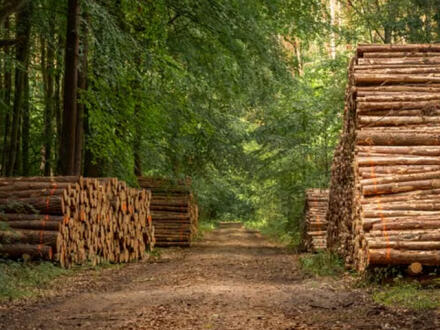
Forest business management sits at a useful crossroads. It blends forestry, land use, conservation, finance, operations, and people skills into one career path. For students in Tennessee, that mix can lead to jobs in timber procurement, consulting, urban forestry, mill operations, land management, and natural resource planning.
The hard part is paying for the degree. Tuition, books, housing, and field gear add up fast. At a public four-year school, one year of in-state tuition and fees can run into the thousands before a student even buys a single pair of work boots or pays for fuel to reach a field site.
That is why Tennessee Forest Business Management Scholarships matter. They can lower out-of-pocket costs, reduce loan pressure, and help students say yes to internships, research, and hands-on training. Some awards are built for forestry students. Others fit business, agriculture, conservation, or rural leadership goals that overlap with forest business management.
This guide walks through 10 scholarship and funding paths students should know. It covers options for high school students, first-year students, college students, and university students, plus association awards, employer funding, and stackable aid. The goal is simple: help students spot practical money sources early and apply with a better plan.
1. Tennessee Forestry Foundation Scholarships For Future Forest And Natural Resource Leaders
Students interested in forest business management should start with Tennessee groups that already care about forests, land stewardship, and rural leadership. Foundation-backed scholarships often reward students who plan to work in conservation, forestry, or natural resources after graduation.
A strong example is the Tennessee Forestry Foundation. Awards tied to forestry foundations often favor students with a clear connection to the field: FFA work, forestry competitions, outdoor leadership, land management projects, or volunteer conservation service. That matters because scholarship committees usually want proof, not just interest.
A student with 84 volunteer hours planting stream buffers or helping with invasive species removal will usually stand out more than a student who only writes that they "love nature."
Useful signs a foundation scholarship is a good fit:
- The student has forestry-related service or leadership
- The essay shows a career goal tied to land or timber management
- The application includes specific local impact
- Recommendation letters come from agriculture or science teachers
Students in FFA should pay close attention. Agriculture leadership experience often overlaps well with forest business goals, and programs such as Tennessee FFA awards can strengthen a broader funding strategy.
For many applicants, these awards are not huge on their own. But a $1,000 or $2,500 local scholarship can cover books, lab fees, chainsaw safety gear, or a month of rent near campus. That kind of targeted help makes a real dent.
2. University Of Tennessee Institute Of Agriculture Scholarship Opportunities In Forestry And Related Business Fields
The University of Tennessee system is one of the most important places to look for Tennessee Forest Business Management Scholarships for University students. The University of Tennessee, Knoxville connects students to majors and support systems that line up with forestry, natural resources, agribusiness, and land management.
Within the Institute of Agriculture, students may find scholarships tied to departments, donor funds, farm background, academic merit, or intended career path. This matters because a student does not always need a scholarship with "forest business management" in the title to qualify.
A forestry student who also studies economics, supply chain, or agricultural business may fit several pots of money at once. That overlap is where smart students often find extra funding.
Students should search in three layers:
- University-wide merit aid
- College or institute scholarships
- Department-level awards in forestry, agriculture, or business
At large public universities, departmental awards can range from a few hundred dollars to several thousand. Even a $1,500 departmental award can cover a full semester of textbooks, mapping software subscriptions, and field course expenses.
Students using scholarship search tools can widen the net with related categories. A broader scholarship database often surfaces matches that a department page alone might miss.
The best move is to apply early, then contact the college office with a short, direct question: does the student's program combine forestry and business enough to qualify for related awards? That one email can open doors.
3. Tennessee Forest Business Management Scholarships For High School Students Exploring Forestry Careers Early
High school is not too early. In fact, it is often the best time to build a scholarship profile. Students who start in grades 9 through 11 can shape class choices, leadership activities, and essay themes long before deadlines hit.
This category includes Tennessee Forest Business Management Scholarships for High School Students, plus agriculture, conservation, and rural leadership awards that feed into forestry careers. Students from FFA, 4-H, STEM academies, environmental clubs, and school business programs often have a strong angle.
A good early strategy is to connect one activity to one measurable result. For example, a student might explain how a school greenhouse project tracked inventory costs, produced 216 native seedlings, and taught both plant science and budgeting. That sounds much stronger than a generic statement about "learning responsibility."
High school students should also look at broad Tennessee aid sources that can later stack with forestry-specific money. State-linked options such as the Tennessee HOPE route often become part of the larger funding mix once a student enrolls in college.
h3. Typical Eligibility Requirements For High School Applicants
Most high school applicants will see the same core requirements across programs. The details change, but the pattern is familiar.
Common requirements include:
- A GPA between 3.0 and 3.5
- A transcript with math and science coursework
- One to three recommendation letters
- An essay of 250 to 1,000 words
- Proof of Tennessee residency for state-based awards
- Leadership, service, or career interest in forestry, agriculture, or business
Some programs also want FAFSA data, though not all do. Others ask for ACT or SAT scores, especially for first-time freshmen.
Students should keep a simple folder with transcripts, activity lists, service hours, and one polished base essay. That alone can cut application time by 50% or more when deadlines bunch up in late winter and spring.
4. Tennessee Forest Business Management Scholarships For First-Year Students Starting A Forestry Or Business Degree
First-year students often miss money because they assume all aid was decided at admission. That is not true. Many Tennessee Forest Business Management Scholarships for first-year students open after acceptance, through colleges, departments, foundations, and local donors.
This stage matters because colleges want to keep new students enrolled. Financial aid offices know that even a gap of $1,200 can push a freshman to delay school, commute farther, or skip needed supplies. Small awards can prevent that.
First-year students should focus on these sources:
- Freshman scholarship competitions
- College-specific donor funds
- Business school awards that support management interests
- Natural resources or agriculture scholarships for entering majors
A student interested in the management side of forestry should not ignore business-related awards. For example, a local option such as the Knoxville business award may fit students whose goals include timber markets, operations planning, or forest products management.
The strongest first-year applications usually explain both halves of the major. Instead of saying "I want to study forestry," students can say they want to manage land assets, improve harvest planning, or work on wood supply logistics. That sharper language helps reviewers picture an actual career path.
And yes, first-year students should still apply even if they already received merit aid. Stacking a $3,000 scholarship on top of campus aid can cover housing deposits, course fees, and a laptop without extra loans.
5. Tennessee Forest Business Management Scholarships For College Students Advancing In Two-Year Or Four-Year Programs
Students already in college have one big advantage: they can prove performance with real grades, real projects, and real campus involvement. That makes Tennessee Forest Business Management Scholarships for College applicants especially competitive when they tell a concrete story.
A sophomore with a 3.42 GPA, a summer internship, and a cost analysis project from an intro business class has much more to work with than a student applying straight from high school. Reviewers like evidence.
For students in two-year or four-year programs, strong scholarship themes include:
- Academic improvement over time
- Transfer plans into a university forestry or agribusiness program
- Work experience in landscaping, surveying, logging, or farm operations
- Leadership in campus agriculture or environmental clubs
Community and regional foundations can also matter here. The Middle Tennessee scholarship pool may fit students whose profiles cross over into local service, family background, or donor-set criteria.
Students at transfer-friendly campuses such as MTSU often benefit from reviewing multiple academic routes before locking in a major. A student might start in business, agriculture, or environmental science, then move toward forest operations or land management with less lost credit than expected.
One practical tip: update the résumé every semester. Add exact figures. If a student led a campus recycling drive, say it collected 1,140 pounds, not "a lot of material." Specific numbers make scholarship essays feel real.
6. Tennessee Forest Business Management Scholarships For University Students Pursuing Forestry, Land Management, Or Agribusiness
Upper-level university students should think bigger than a single scholarship search. At this stage, Tennessee Forest Business Management Scholarships for University students often come from a mix of academic departments, research programs, alumni funds, and field-specific donor awards.
Students in forestry, land management, agribusiness, or related majors can gain an edge by showing how their coursework connects to business results. A capstone on timber sale planning, for example, sounds stronger when it mentions estimated stand value, transport distance, or labor cost assumptions.
Good evidence for these applications includes:
- GIS or inventory projects with measured outputs
- Internships with state agencies or private timber companies
- Research on soil, water, markets, or forest health
- Leadership in student chapters tied to natural resources
Need-based and values-based scholarships also matter. Programs like the Students of Integrity award can complement academic funding when a student shows strong ethics, service, and leadership.
University students should also look across institutions, not just within one campus. Schools such as East Tennessee State University and Tennessee State University may open related paths through business, environmental, agricultural, or public service programs that support similar career goals.
A student who combines a 3.6 GPA, one summer internship, and 120 fieldwork hours has a much stronger scholarship case than a student who submits only class grades. Committees want signs that the applicant can do the work, not just pass exams.
7. Tennessee Forest Business Management Association Scholarships And Industry-Backed Awards To Watch
Association scholarships are easy to miss because they are often smaller, more specialized, and posted outside regular campus aid pages. But that is exactly why they matter. A niche scholarship with 38 applicants can be far less crowded than a campus-wide award with 1,200 applicants.
Tennessee Forest Business Management Association Scholarships may come from forestry groups, logging associations, wood products organizations, conservation networks, or business trade groups with ties to land-based industries. Some do not use the exact forest business title, but the fit is still there.
Students should pay close attention to awards tied to:
- Professional membership
- Conference attendance
- Essay contests
- Field skills or safety training
- Career interest in forest operations or procurement
Industry-backed scholarship committees often value professionalism. A clean résumé, prompt email reply, and direct career statement can matter as much as a small GPA difference.
Students with construction or operations interests should also note related trade awards, such as the East Tennessee AGC option, because forest roads, harvesting logistics, and site work often overlap with broader operations management skills.
h3. Where Professional Associations Usually Post Annual Scholarship Updates
Association updates usually appear in predictable places. Students who track them monthly miss fewer deadlines.
The most common places are:
- Official association websites
- State chapter Facebook or LinkedIn pages
- College department bulletin pages
- Extension newsletters
- Conference registration pages
- Scholarship search platforms
Students using a free matching platform from StudentScholarships.org can cut search time sharply because it pulls many opportunities into one place. For a student balancing classes and part-time work, saving even 2 hours per week on scholarship hunting is a real advantage.
8. State And Regional Agriculture, Conservation, And Natural Resources Scholarships That Fit Forest Business Management Goals
Not every useful award says "forestry." Many state and regional scholarships support agriculture, conservation, rural service, and natural resources. Those can still fit a forest business management plan very well.
This matters because forestry sits inside a larger system. Forest managers deal with wildlife, water, roads, markets, equipment, and landowner goals. Scholarship committees in related fields often understand that overlap.
Good categories to search include:
- Agriculture leadership scholarships
- Conservation and stewardship awards
- Rural community scholarships
- Natural resource management funding
- State student aid programs
The Tennessee Higher Education Commission plays a key role in state-level aid and student assistance, so students should track state eligibility rules closely. A missed residency form or GPA threshold can cost thousands.
Lottery-based aid is another important layer. For many Tennessee students, the education lottery award becomes part of the baseline package that can combine with private scholarships.
Regional universities may also expand options. A smaller campus such as Tennessee Wesleyan University can sometimes offer a more personal scholarship process, which helps students whose strengths show better in interviews, service history, or faculty recommendations than in one test score.
A solid rule: if a scholarship supports land use, agriculture, conservation, or rural enterprise, students in forest business management should read the fine print before ruling it out.
9. Employer-Sponsored And Timber Industry Scholarships For Students Interested In Forest Operations And Management
Employer-sponsored scholarships can be some of the best practical options because they often connect money with real jobs. Timber companies, mills, forest consulting firms, nurseries, and equipment dealers may offer awards to build a future workforce.
That makes sense. Employers need graduates who can understand both woods work and business decisions. They want people who can talk about stand conditions in the morning and cost control in the afternoon.
Students should look for employer-funded awards tied to:
- Internships or co-ops
- Work commitments after graduation
- Rural or field-based experience
- Operations, safety, or equipment knowledge
A student who spent 11 weeks working for a logging contractor, helped track fuel use, and learned why hauling distance changes profit margins has a strong story for this kind of funding.
National scholarships can also support students with forestry-related goals. The Foresters program is worth attention because service-minded applicants with leadership experience may fit well, even when their long-term path includes business management in natural resources.
Students with military family ties or service connections should not ignore broader funding channels either. Awards such as the Tennessee Guard scholarships can help cover tuition while the student pursues a land or operations-focused degree.
The best approach is simple: ask local employers directly whether they sponsor students, reimburse coursework, or support interns. Plenty of opportunities never get promoted widely.
10. Merit, Need-Based, And Departmental Aid Students Can Stack With Forestry Scholarships In Tennessee
Stacking aid is where many students make the biggest gains. A forestry scholarship alone may not close the gap, but several smaller awards together often can.
For example, a student might combine a $3,000 merit award, a $2,000 private scholarship, a $1,500 departmental grant, and state aid. That $6,500 total can wipe out a large chunk of tuition or housing costs at an in-state school.
The main stackable categories are:
- Merit scholarships based on GPA or test scores
- Need-based grants tied to FAFSA results
- Departmental aid from agriculture, forestry, or business units
- Local civic and foundation scholarships
- Identity or background-based awards
Students should read every award letter carefully because some colleges reduce institutional aid when outside scholarships come in, while others do not. The fine print matters.
Broad category scholarships can still support a forestry path. A student with business interests might fit the FSU business scholarship listing, while a student with retail work experience or family ties to food supply operations might match the grocers education award.
One strong habit is to build a funding spreadsheet with five columns: source, amount, deadline, renewal rules, and status. Students who track 12 to 20 applications in one sheet usually make fewer deadline mistakes and spot stacking chances faster.
Tennessee Forest Business Management Scholarships FAQs
What types of scholarships are available for Tennessee students interested in forest business management?
Students can find scholarships through forestry foundations, university departments, associations, employer sponsorships, and state programs. Options include awards for high school, first-year, college, and university students, often rewarding leadership, conservation work, academic merit, and career goals related to forestry and business.
How can high school students in Tennessee prepare early for forest business management scholarships?
High school students should focus on forestry-related activities like FFA, environmental clubs, or agriculture projects, keep strong GPAs, collect recommendation letters, and write essays highlighting measurable impacts. Early preparation helps build a competitive scholarship profile and opens pathways to awards such as the Tennessee FFA Foundation Scholarships.
Are there scholarships in Tennessee that support students combining forestry with business studies?
Yes. Many scholarships, including those offered by the University of Tennessee Institute of Agriculture, support students studying forestry alongside business, agribusiness, or land management. Applying to university-wide, college-specific, and departmental awards can increase funding opportunities for these interdisciplinary paths.
What role do employer-sponsored scholarships play in funding forest business management degrees in Tennessee?
Employer-sponsored scholarships from timber companies, mills, and forest consulting firms help students by linking financial aid with real-world job experience. They often require commitments like internships or work after graduation and are ideal for students with field and operations experience.
How can students maximize their financial aid through stacking different scholarships and grants?
Stacking smaller awards—merit scholarships, need-based grants, departmental aid, and local foundation scholarships—can cover a significant portion of education costs. Tracking deadlines, renewal rules, and award conditions in a spreadsheet helps students combine multiple funding sources effectively.
Where can students find updated information about Tennessee forest business management scholarships and related aid?
Students should regularly check official association websites, college department pages, extension newsletters, and scholarship search platforms like StudentScholarships.org. Additionally, leveraging resources from universities such as the University of Tennessee, Knoxville and state bodies like the Tennessee Higher Education Commission can provide current scholarship opportunities.






