

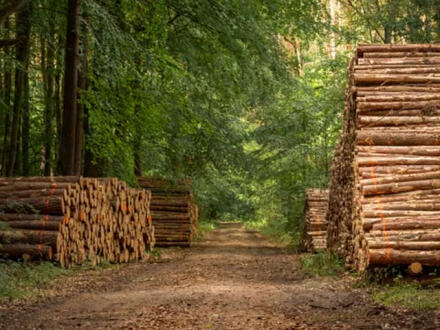
Paying for a forestry degree can feel like trying to carry a log uphill with one hand. Tuition, books, housing, field gear, and travel for labs add up fast.
That's why Idaho Forest Resources Management Scholarships matter. They can reduce out-of-pocket costs, lower loan debt, and make it easier for students to stay focused on classes instead of working extra shifts.
This guide breaks the topic into 7 practical scholarship paths. It covers awards for high school seniors, first-year students, current college students, and people aiming for Idaho university programs tied to forestry, natural resources, conservation, and land management.
The goal is simple: help students spot the right fit faster. A student who applies to 8 well-matched scholarships instead of 2 random ones usually has a much better shot. Even one $1,000 award can cover a semester of books, gas, and basic field supplies.
Readers will also get application tips, deadline tracking ideas, and examples of where industry-backed funding often comes from. And because scholarship hunting gets messy fast, this article points to practical tools and Idaho-specific options that can save real time.
For students who want to work in forests, watersheds, wildfire prevention, timber operations, GIS, or wildlife habitat, the money is out there. The trick is knowing which scholarships match which stage of school.
1. Start With Idaho Forest Resources Management Scholarships Open To High School Students
High school seniors should start early because this is where many first scholarships appear. A student who begins in September instead of March can easily find 10 to 15 more eligible awards before deadlines close.
For Idaho Forest Resources Management Scholarships for High School Students, the strongest candidates usually show three things:
- interest in forestry, conservation, or natural resources
- Idaho ties through school, residence, or community work
- proof they can follow through on deadlines and essays
Good starting points often include broad Idaho scholarships that can later stack with forestry-specific aid. Students comparing statewide options often include the Idaho Opportunity award and the GEAR UP Idaho program in the same search spreadsheet.
Forestry interest does not need to look fancy. It can be real and local.
A strong high school example might include:
- 42 volunteer hours clearing trails at a county park
- 2 seasons in FFA land judging or ag science
- a science project on wildfire fuels or tree health
- part-time work on a ranch, nursery, or landscaping crew
That kind of record tells a scholarship committee the student already likes outdoor work. And that matters because forest resources management programs often include field labs, data collection, plant ID, and hands-on land use work.
Students from farm, ranch, logging, or conservation backgrounds should say so clearly. The sensory details help. A line about measuring lodgepole pine diameter in cold morning air is more memorable than saying they "love nature."
Who Qualifies And When To Apply
Eligibility rules vary, but most high school-focused awards look at GPA, Idaho residency, enrollment plans, and career intent. Some require a minimum 2.5 GPA. Others become more competitive closer to 3.2 or 3.5.
Application timing matters as much as grades. Many students miss scholarships not because they are weak applicants, but because they start too late.
A practical timeline looks like this:
- September to November: build a scholarship list and ask for recommendation letters
- December to February: draft essays and gather transcripts
- February to April: submit Idaho and school-specific applications
- April to June: respond to award notices and financial aid offices
Students active in agriculture or leadership groups should also review the Idaho FFA scholarship page. Those with 4-H backgrounds may find a fit through the Idaho 4-H college scholarship.
The Idaho Department of Education is also useful for statewide planning because it helps students track graduation and college-readiness steps. That matters when a scholarship asks for proof of academic preparation.
The best move is simple: apply before the student feels "ready." A rough but honest essay submitted on time beats a perfect essay that never leaves the laptop.
2. Look For Idaho Forest Resources Management Scholarships For First-Year Students
First-year students sit in a sweet spot. They are new enough to qualify for freshman-focused aid, but they already have a declared program, college ID number, and admission record.
That makes Idaho Forest Resources Management Scholarships for first-year students especially valuable. They often reward students who have already committed to a forestry or natural resources path.
A recent graduate entering college can become more competitive by showing clear direction. Scholarship committees like specifics.
For example, one student may write that she wants to work in wildfire fuels reduction, complete 6 credits of field methods, and intern with a timber company after her first summer. That is stronger than saying she wants "a job outdoors."
Some first-year students also benefit from general Idaho awards that support the transition into college. In many search lists, applicants pair forestry-related awards with the Governor's Cup scholarship because it can help lower the first-year financial gap.
Money pressure often hits hardest in the first two semesters. Students may need:
- steel-toe boots or field clothes
- lab and course fees
- a laptop capable of GIS software
- fuel for commuting to field sites
Those costs can reach $800 to $1,600 beyond tuition, depending on the program. A small scholarship can cover that whole gap.
Best Fit For Recent Graduates Entering Forestry And Natural Resources Programs
The best-fit student is usually someone entering a program tied to forestry, forest operations, ecology, conservation science, natural resources, rangeland, or environmental technology. The title on the major does not always need to say "forest resources management" word for word.
Recent graduates should look for scholarships that value overlap fields such as:
- forest engineering technology
- fire science with land management interest
- wildlife habitat management
- hydrology or watershed work
- GIS and remote sensing for natural resources
Community colleges can be part of this path too. A student planning to start local and transfer later may find useful options through College of Eastern Idaho, especially if the goal is to finish in a four-year natural resources program.
Strong first-year applications usually include:
- an acceptance letter or enrollment proof
- a transcript with science and math classes
- 1 resume with work, service, and clubs
- 1 essay that explains why forests matter in Idaho
If a student has even 24 hours of outdoor service or one semester of ag, biology, or environmental coursework from dual credit, that can help. Committees want signs the student won't quit when classes get muddy, cold, technical, or early.
3. Compare Idaho Forest Resources Management Scholarships For College Students Already Enrolled
Once students are already in college, the scholarship search changes. They now have a college GPA, professor contacts, and actual program experience. That gives them more material to work with.
For Idaho Forest Resources Management Scholarships for College, enrolled students should compare awards based on four filters:
- eligibility by major or department
- GPA cutoff
- renewable versus one-time funding
- whether internships, clubs, or research matter
This is where being specific pays off. A sophomore with a 3.4 GPA, 68 volunteer hours, and one summer on a fuels crew usually stands out more than a student with only generic campus involvement.
Students should also separate scholarships into two piles: awards they are likely to win and awards that are stretch options. A balanced list might include 4 realistic scholarships, 2 reach scholarships, and 2 broad state awards.
Already-enrolled students often do well when they connect class work to career goals. For example, if a student has completed dendrology, soils, or GIS, the essay can explain how those classes sharpened interest in timber inventory, watershed restoration, or forest planning.
This is also the stage when non-forestry Idaho scholarships can still support a forestry degree. Some students widen the pool by including awards like the Idaho Advocates scholarship when their budget gap remains large.
Practical comparison questions help:
- Does the scholarship require full-time enrollment?
- Does it allow transfer students?
- Does it prefer juniors and seniors?
- Does it require a faculty recommendation?
- Does it ask for unpaid service in conservation work?
Students should keep one master document with every essay prompt and every deadline. Reusing a strong 450-word career statement can save 3 to 5 hours per application, as long as the student edits it for each committee.
The main point is this: enrolled students have more proof than high school seniors. They should use it. Class projects, lab work, field notes, and internship hours all count as evidence that they belong in forestry.
4. Target Idaho Forest Resources Management Scholarships For University Programs With Forestry Pathways
Students often search for scholarships first and majors second. That can work, but it usually works better the other way around. Pick the likely program path, then target the scholarships that match it.
For Idaho Forest Resources Management Scholarships for University, the strongest strategy is to align three things:
- the student's intended major
- the school's forestry or natural resources pathway
- the scholarship's stated purpose
Idaho students often look at four-year programs that connect to forests, fire, watersheds, restoration, wildlife, and land management. A university may house these areas under different departments, so reading program pages closely matters.
The University of Idaho is a major reference point because it offers strong agriculture, natural resources, and environmental study options connected to Idaho's land base. A student aiming for forest operations, ecosystem science, or resource planning should compare program requirements before writing any essay.
Here is a quick way to think about fit:
| Student Goal | Best Program Clue | Scholarship Angle |
|---|---|---|
| Work in timber or harvest planning | Forestry, operations, engineering tech | Industry workforce need |
| Fight wildfire risk | Fire, fuels, natural resources | Public safety and land stewardship |
| Protect streams and habitat | Ecology, hydrology, fisheries | Conservation impact |
A student who matches these pieces well can make the essay feel clean and convincing in under 500 words.
How To Match Scholarships To Idaho Universities And Related Majors
Start with the department, not the financial aid page. Read the course list. If a program includes mensuration, silviculture, GIS, soils, and field camp, then a scholarship essay can point to those exact classes.
That level of detail matters. It shows the student has done the assignments.
Next, check the school's aid office and state guidance. The Idaho State Board of Education helps students understand broader postsecondary policy and planning across Idaho. Then students can compare campus-specific aid, transfer rules, and degree maps.
Students should also think about related majors that still fit forestry careers. These often include:
- environmental science
- range management
- geospatial analysis
- wildlife resources
- civil or environmental engineering with watershed focus
A student who starts in natural resources and later narrows into forestry is still on a valid path. In fact, some employers like students with mixed skills. A graduate who understands both forest ecology and GIS can fill a very practical need.
For budgeting, students should map costs by campus. If tuition, housing, and gear create a $7,200 gap, that student knows exactly how many scholarships to chase and how large each award needs to be.
5. Prioritize Idaho Forest Resources Management Association Scholarships And Industry-Sponsored Awards
Association scholarships and industry-funded awards are often the best fit for forestry students because the money comes from people who actually need future workers. They are not just giving funds away. They are investing in the next set of foresters, technicians, and land managers.
That makes Idaho Forest Resources Management Association Scholarships especially worth attention. These awards may come from professional groups, timber companies, utility companies, regional forest associations, equipment suppliers, or donors with a direct link to outdoor resource work.
Why does that matter? Because industry-backed committees often like applicants who understand the job itself. They respond well to students who can explain the difference between liking the woods and wanting a career in forest management.
A good application might mention:
- cruising timber in steep terrain
- using GPS points for stand mapping
- interest in road layout, mills, habitat work, or reforestation
- willingness to work seasonal field jobs
Some students also widen their list with forestry-adjacent awards on scholarship platforms, including the Foresters scholarship listing and the Alaska forest association award. Even when a scholarship is regional rather than Idaho-only, it can still match a student studying forest resources management.
Industry-sponsored awards can be competitive, but they often attract fewer random applicants. That alone can improve odds.
Where Association Funding Usually Comes From
Association funding usually comes from a few clear sources:
- member dues from professionals or companies
- endowments created by retired foresters or families
- proceeds from events, auctions, or fundraisers
- direct gifts from businesses tied to timber, energy, or land use
For example, a utility-related award can still fit forestry students if the work connects to rights-of-way, vegetation management, watershed protection, or environmental compliance. That's why some Idaho students also review the Idaho Power memorial scholarship when building a broad application list.
The Idaho Community Foundation is also relevant because many local scholarships flow through community and family funds. Students with a rural background, county ties, or family work history in natural resources may find a better match than they expect.
A concrete example helps here. If a local association gives 3 awards of $2,500 each, that is $7,500 total. A student who applies to 6 similar industry-backed awards is not chasing fantasy money. They are pursuing a real, measurable funding lane.
6. Build A Strong Application With Forestry Experience, Academics, And Career Goals
A strong application does not need perfect grades or a dramatic life story. It needs proof, focus, and a clean match between the student and the scholarship.
For forestry-related awards, committees usually look for three pillars:
- experience in outdoor, land, ag, or resource work
- academics that show the student can handle college
- career goals that sound real and informed
Experience can come from more places than students think. It might be trail work, FFA, 4-H, wildfire volunteer support, ranch labor, nursery work, heavy equipment exposure, or a summer spent flagging roads in the dust and heat.
Academics matter because forestry programs are not just hiking. Students may face biology, chemistry, statistics, mapping, economics, and technical writing. A 3.0 GPA with strong science classes can carry weight.
Career goals should sound concrete. This works well: "He wants to work in forest planning in north Idaho, spend two summers in field internships, and earn GIS certification." It gives the committee a picture.
Students should build every application around a small evidence pack:
- 1 polished resume
- 1 core essay of 450 to 650 words
- 2 recommendation letters
- unofficial transcript
- activity list with hours and dates
Numbers make the story stronger. "She logged 86 volunteer hours removing invasive plants" is stronger than "she helps outdoors." "He worked 18 hours a week at a lumber yard" says more than "he has job experience."
Essay openings matter too. The best ones are specific. Cold sawdust on gloves, orange flagging tape in brush, smoke in late summer air, or the sound of water running under a culvert, those details feel lived-in.
Students using a broad scholarship platform can save time by keeping all materials in one place. On a site built for quick matching and easy applications, that can cut repeat form-filling to under 2 minutes for some listings, which makes it easier to apply to more awards without burning out.
Weak applications usually fail for simple reasons: vague goals, missing documents, or generic essays sent to every committee. Fix those three problems, and the odds improve fast.
7. Use Scholarship Search Platforms To Track Deadlines And Find New Idaho Opportunities Faster
A good scholarship search platform does two jobs at once. It helps students find awards, and it helps them avoid forgetting the awards they already found.
That second part is huge. Missing one deadline by 24 hours can cost more than a month of part-time wages.
Students looking for Idaho Forest Resources Management Scholarships for College and university-level aid should use one main tracking system, not scattered screenshots and sticky notes. A searchable platform can speed up the work, especially when it includes filters by state, field of study, and school level.
This is where students often do better with a mix of sources:
- one scholarship platform for broad discovery
- one spreadsheet or tracker for deadlines
- one folder for essays, transcripts, and recommendations
Search tools also help students find adjacent opportunities. A forestry major may qualify for scholarships tied to agriculture, conservation, engineering technology, or rural leadership. That wider net can turn 5 possible applications into 14.
Students who need campus-based aid details can compare school offices too. The Boise State aid office and the Idaho State financial aid page show how schools organize grants, scholarships, and aid timing. Even if a student does not attend those schools, the structure helps them understand what documents colleges commonly request.
A practical weekly search habit works better than a marathon once a semester. Thirty minutes every Tuesday is enough for many students.
Quick Ways To Stay Organized And Avoid Missing Awards
Students can stay organized with a very plain system. Fancy apps are optional.
A reliable method looks like this:
- color-code deadlines: red for 7 days, yellow for 14 days, green for 30 days
- name files clearly:
LastName_Essay_500Wordsworks better thanfinalfinal2 - store one master list with award name, amount, due date, and status
- set 2 reminders per scholarship: one at 14 days and one at 3 days
They should also track results. After 12 applications, patterns appear.
For example:
- scholarships asking for career detail may get better responses
- local awards may have less competition
- essays with field examples may outperform generic personal stories
Students using a scholarship platform that combines search, matches, and career guidance can cut wasted time. If a student saves 20 minutes per application across 15 applications, that is 300 minutes, or 5 full hours, recovered for school or work.
The biggest mistake is waiting until "free time" appears. It usually doesn't. Students who block one recurring hour each week tend to submit more applications, miss fewer deadlines, and build a stronger funding stack over time.
Idaho Forest Resources Management Scholarships - Frequently Asked Questions
What are Idaho Forest Resources Management Scholarships and who are they for?
These scholarships help reduce costs for students interested in forestry, natural resources, and conservation in Idaho. They target high school seniors, first-year students, and college students enrolled in related programs with ties to Idaho.
How can high school students improve their chances of winning forestry scholarships in Idaho?
High school applicants should show genuine forestry interest, Idaho residency, and meet application deadlines. Activities like volunteer trail work, FFA participation, or science projects on forest topics strengthen their application. Early preparation starting in September is crucial.
Which scholarships are best suited for first-year forestry students in Idaho colleges?
First-year students should apply to scholarships requiring declared forestry or natural resources programs, such as the Idaho Governor’s Cup Scholarship. Combining forestry-focused awards with broader Idaho scholarships maximizes support for field gear and lab fees.
What should college students currently enrolled in forestry programs consider when searching for scholarships in Idaho?
Enrolled students should filter scholarships by major eligibility, GPA requirements, and renewability. Using specific coursework and internship experiences in essays, like GIS or fuels crew work, helps tailor applications. Maintaining a master list for deadlines and essays improves efficiency.
How do industry-sponsored scholarships, like those from the Idaho Forest Resources Management Association, benefit forestry students?
Industry scholarships invest in future workforce needs. Applicants demonstrating practical forestry skills, such as timber cruising or GPS mapping, align well with these awards. Examples include the Foresters Competitive Scholarship Program and the Idaho Power Company Memorial Scholarship.
What are effective strategies for managing scholarship applications for Idaho forestry programs?
Using a dedicated scholarship platform to track deadlines, storing application materials in one place, and setting reminders prevents missed opportunities. Regular weekly sessions for scholarship searches and applying to a mix of probable and stretch awards improve success rates and reduce stress.







