

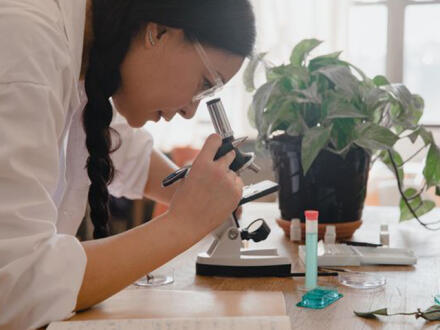
Students looking for Michigan Microbiology Scholarships usually find one hard truth fast: the money rarely sits in one neat bucket. It is scattered across universities, state grants, science colleges, local foundations, and professional groups. That sounds annoying, but it also creates more ways to pay for a microbiology degree.
For students in Michigan, that matters. A biology or microbiology path can lead to work in clinical labs, biotech, food safety, public health, and research. According to the U.S. Bureau of Labor Statistics, microbiologists had a median annual wage of $87,500. That makes the degree valuable, but tuition, lab fees, housing, and books can still hit hard.
This guide breaks down 10 Michigan Microbiology Scholarships for High School Students, college students, and university applicants that are actually worth time and effort. Some are direct microbiology awards. Others are smart funding paths for STEM students who plan to study bacteria, viruses, immunology, genetics, or lab science.
The goal is simple: help students spot real options, prioritize the best fits, and avoid missing money that is hiding in plain sight. Each section explains who these awards fit, where students can find them, and what makes an application stronger. For many applicants, stacking Michigan Microbiology Scholarships for College with grants and department aid can reduce yearly costs by $2,000 to $12,000 or more.
1. University Microbiology Department Scholarships In Michigan
Department-based awards are often the closest match for students who want Michigan Microbiology Scholarships for University study. These scholarships usually come from biology, microbiology, biomedical science, or molecular science departments. They may reward GPA, lab promise, research interest, or service inside the department.
At large public universities, students should look beyond the main financial aid page. Department websites often post smaller awards that attract fewer applicants. A $1,500 department scholarship with 40 applicants can be easier to win than a campus-wide award with 4,000 applicants.
Michigan schools with strong science ecosystems may offer these opportunities through biology or life science units, including places such as Michigan State University, where students can combine major-specific aid with broader institutional support.
Students should focus on:
- Major-specific eligibility tied to microbiology or biological sciences
- Faculty recommendations from lab or lecture instructors
- Research interest statements with specific topics like antimicrobial resistance or virology
- Credit-load rules, since many awards require full-time status
A practical example: a sophomore microbiology student with a 3.6 GPA, one semester in a lab, and a short statement about foodborne pathogen research may be more competitive than a student with a higher GPA but no clear academic direction.
For students already enrolled at a Michigan university, the best move is to ask the department coordinator one direct question: Which scholarships are only listed inside the department? That one email can uncover funding that never appears in broad scholarship searches.
2. College Of Science And STEM Scholarships That Support Microbiology Majors
Not every useful award says "microbiology" in the title. Many strong Michigan Microbiology Scholarships for College come through colleges of science, health science, or STEM excellence programs. These scholarships often support students in biology-heavy majors, including microbiology, biochemistry, genetics, and biomedical sciences.
This category matters because science colleges may have larger budgets than individual departments. A college-level STEM award can cover $2,000, $5,000, or even full tuition in rare cases. Some also include paid mentoring, summer research placements, or conference support.
Students should look for scholarships that prioritize:
- First-generation college students in STEM
- Women in science and technology
- Students from rural Michigan counties
- High-achieving incoming freshmen in laboratory sciences
- Underrepresented students entering biological research fields
For example, a student interested in microbiology and public health might qualify for science-college aid plus gender-focused STEM funding such as the Michigan Council of Women in Technology scholarships, depending on the program fit.
Some institutions also bundle merit money with science enrollment. At schools such as Western Michigan University, STEM students may find both admissions scholarships and college-based support on top of federal aid.
A good application here usually shows more than grades. Review committees want proof that the student will stay in STEM. Specific details help:
- AP Biology lab work
- Dual-enrollment chemistry
- Science fair results
- Shadowing in a hospital lab
- Volunteer work in health settings
That kind of record turns a generic application into one with a real scientific direction.
3. Michigan Microbiology Scholarships For High School Students Planning Ahead
The best time to look for Michigan Microbiology Scholarships for High School Students is often before senior spring. Waiting until college acceptance letters arrive can shrink the pool. Many awards open in fall, and some close as early as December or February.
High school students who plan to study microbiology should target scholarships tied to STEM interest, not just declared majors. Since many seniors have not officially entered a microbiology program yet, they need to show intent through coursework and activities.
Strong signals include:
- AP or IB science classes such as biology, chemistry, or environmental science
- Science Olympiad, HOSA, or research competitions
- Hospital, clinic, or public health volunteering
- Essays that mention specific interests like infectious disease, vaccines, or lab diagnostics
Michigan students in youth development programs may also find broader aid through options like the Michigan State University 4-H scholarship, especially if they can connect agricultural science, food systems, or animal health to microbiology.
Concrete example: a high school senior from Grand Rapids with a 3.8 GPA, one county science fair project on water contamination, and 60 volunteer hours at a local hospital can present a strong microbiology story even without college lab experience.
Students should build a simple scholarship folder with:
- Unofficial transcript
- Resume
- List of activities and dates
- Draft personal statement
- Two teacher contacts
That prep can cut application time from 90 minutes to 20 minutes per scholarship. For students using broader search tools, the scholarship directory can help surface additional STEM and Michigan-based options without starting from scratch every time.
4. Merit Scholarships For First-Year Students Entering Michigan Universities
Merit aid is one of the biggest funding paths for Michigan Microbiology Scholarships for first-year students. These awards usually come from admissions offices and are based on GPA, course rigor, class rank, or test scores when schools still consider them.
The useful part? Merit scholarships are often automatic or semi-automatic. That means students may only need to apply for admission by a priority deadline. Missing that date can cost $4,000 to $10,000 per year in potential aid.
Many first-year students should compare:
- Automatic merit awards
- Competitive honors scholarships
- STEM cohort scholarships
- Scholarships tied to early application deadlines
State and institutional aid can also stack. For instance, students reviewing the Michigan Achievement Scholarship application should compare it with university merit packages because one award may reduce unmet need while another lowers tuition directly.
At some campuses, broad merit opportunities also sit next to donor-funded awards such as the University of Michigan General Motors scholarship, which can matter for students entering science and technical fields.
A strong first-year applicant usually has a pattern, not just one good number. A 3.9 GPA, AP Chemistry, dual-enrollment statistics, and a short essay about interest in antibiotic resistance tells a clearer story than grades alone.
Students should always confirm:
- Deadline for priority admission
- Whether FAFSA is required for merit review
- Renewal GPA rules
- Full-time enrollment minimums
Those four details often decide whether a scholarship lasts one semester or all four years.
5. Need-Based Scholarships And Grants For Michigan Microbiology Students
Need-based aid matters because even strong merit students can still face big gaps. For Michigan Microbiology Scholarships, this path includes federal Pell Grants, state grants, institutional need-based awards, and private scholarships that use family income or financial hardship as part of eligibility.
The starting point is the FAFSA. Schools use it to calculate aid eligibility, and many private programs ask for the same financial picture. The Federal Student Aid system reported that millions of students receive need-based federal support each year, and for many low-income families, this forms the base layer of a college funding plan.
Michigan students should pay close attention to state-linked options such as the Michigan Competitive Scholarship. Awards like this can be especially useful when paired with campus aid and smaller outside scholarships.
Students dealing with major family hardship may also qualify for specialized support. One example is the Kids' Chance of Michigan scholarship, which serves students affected by a parent's work-related injury or death.
Need-based applications get stronger when students explain real circumstances with clean facts:
- Household income changes
- Job loss within the family
- Medical bills totaling $8,400 or another exact amount
- Caregiving duties for siblings or relatives
- Housing instability or transportation costs
Students should also review each campus aid page. The MSU Office of Financial Aid is one example of how universities publish grant details, timelines, and appeal options.
A financial aid appeal can matter. If family circumstances changed after tax filing, a professional judgment review may increase aid by hundreds or thousands of dollars.
6. Community Foundation Scholarships With STEM Or Life Science Eligibility
Community foundations are one of the most overlooked funding sources for microbiology students in Michigan. These groups manage local donor funds, and many support residents from one county, one city, or even one high school. That local filter can improve odds a lot.
Instead of competing against applicants across the whole state, a student might compete against 35 seniors in one county. That changes the math fast.
Many community foundation scholarships are not labeled as microbiology awards, but they still fit students in life science tracks. Common eligibility themes include:
- STEM majors
- Health careers
- Community service
- County residency
- Graduates of a named local high school
Students in northeast Michigan, for example, may find options through the Community Foundation Northeast Michigan scholarships. Students in other parts of the state may benefit from local opportunities such as the Michigan Gateway Community Foundation scholarships.
A useful tactic is to search by:
- Home county
- Parent employer foundation
- High school alumni fund
- Health-care related donor scholarships
Concrete example: a student from Monroe County planning to study microbiology might qualify for a general STEM scholarship worth $1,250, a memorial fund worth $800, and a local service scholarship worth $500. Together, that is $2,550 from one geographic area.
These applications often reward local involvement. Blood drives, food pantry work, tutoring, or church volunteering can matter almost as much as test scores.
7. Michigan Microbiology Association Scholarships And Related Professional Awards
Professional associations can be a strong fit for students who already show serious interest in laboratory science. While true Michigan Microbiology Association Scholarships may be limited in number, related awards from health, science, and medical groups can still support microbiology students if the career link is clear.
This path works well for students interested in:
- Clinical microbiology
n- Infectious disease testing
- Public health labs
- Medical laboratory science
- Hospital-based diagnostics
National groups matter too. The American Society for Microbiology is the largest single life science membership organization focused on microbial sciences, and its student resources, networking, and award listings can help applicants find research and training support beyond tuition aid.
In Michigan, students may also find adjacent professional scholarships in health-care sectors. For example, the Michigan American Legion Auxiliary Medical Career Scholarship may fit students whose microbiology path connects to patient care, lab medicine, or allied health. Another related option is the MIHA scholarship, which supports students in health administration and adjacent health systems pathways.
The key is alignment. If a student wants to work in a hospital microbiology lab processing cultures, identifying pathogens, and supporting infection control, that story fits many health-focused scholarship committees.
One precise edge: students should mention certifications, lab coursework, or career goals with names. Saying "they want to work in clinical microbiology testing for bloodstream infections" is stronger than saying "they like science."
Specificity wins attention.
8. Research Scholarships, Summer Programs, And Lab Funding Opportunities
Some of the best microbiology funding does not look like a scholarship at first. Research stipends, paid summer programs, and lab assistant funding can reduce college costs while building a stronger resume.
For microbiology students, this can be huge. A summer research award of $4,000 may cover rent, books, and part of fall tuition. It also gives the student lab hours, faculty references, and sometimes a poster presentation for future scholarship applications.
Students should look for:
- Undergraduate research grants
- Summer Research Opportunity Programs
- Paid lab assistant roles
- Travel funds for science conferences
- Supplies funding for independent projects
At research-focused institutions such as Michigan Technological University, students may find undergraduate research pathways tied to faculty labs, STEM initiatives, or campus grants. Schools like Northern Michigan University also publish academic program and support information that can help students compare campus fit and funding potential.
A concrete scenario: a junior microbiology student joins a water-quality lab for 10 weeks, earns a $4,800 stipend, presents a poster on bacterial contamination, and uses that experience to win another $2,000 departmental award the next year.
Students should ask faculty these questions early:
- Is the research paid?
- Are there donor funds for undergraduate assistants?
- Does the department pay for conference travel?
- Can first-year students join a lab?
Even unpaid research can lead to paid opportunities later, but students should prioritize funded roles when possible. For low-income students, paid lab work is often the difference between "good experience" and "actually possible."
9. Transfer Student Scholarships For Community College To University Pathways
Transfer pathways are a smart route for students who want a microbiology degree without paying four years of university prices. Starting at a Michigan community college can cut costs sharply. According to the College Board, public two-year tuition is typically far lower than public four-year tuition, often by several thousand dollars per year.
That means transfer scholarships matter. Many universities offer awards for students entering with 24 to 60 credits, solid GPAs, and a clear academic path into science majors. For students following a biology-to-microbiology route, this can be one of the best ways to reduce debt.
Students should target:
- University transfer merit scholarships
- Phi Theta Kappa-related awards
- STEM transfer grants
- Department scholarships open after transfer admission
Some broader Michigan awards can still matter during this stage. For example, students comparing options may review support like the Joseph B. Olivieri Michigan scholarship when their academic or eligibility profile fits.
A transfer student with a 3.7 GPA, General Biology I and II completed, Chemistry I completed, and 42 transferable credits is often in a strong position if deadlines are met.
The biggest mistake is waiting too long. Transfer scholarships can close months before enrollment, and some require separate applications even after admission.
How To Build A Strong Application For Michigan Microbiology Scholarships
A strong application is clear, specific, and easy to verify. Scholarship readers often review dozens or hundreds of files. The best applications make it easy to say yes.
Students should include:
- A focused essay with one microbiology goal, such as food safety, infectious disease, or vaccine research
- A clean resume with dates, hours, and results
- One strong recommendation from a science teacher or professor
- Exact numbers such as GPA, credits earned, or volunteer hours
Example: "They completed 86 hours of hospital volunteering and want to study antimicrobial resistance in clinical labs." That sentence works because it gives proof and direction.
Students using search platforms can save time by filtering for state, major, and award type through tools like personalized scholarship matches, then cross-checking each opportunity on the official sponsor page.
Where To Find Verified Michigan Microbiology Scholarships For College And University Students
Verified scholarships usually come from four places: university aid offices, department pages, state programs, and established nonprofit foundations. Students should be cautious with listings that ask for payment, social security details too early, or vague eligibility language.
A reliable search process looks like this:
- Start with the college financial aid office and department site.
- Search Michigan state grants and merit programs.
- Review community foundation databases by county.
- Use scholarship platforms to widen the net.
- Confirm deadlines and eligibility on the official source.
Students comparing campuses may also review schools such as Ferris State University when looking at transfer-friendly science options and institutional aid. The best results usually come from stacking sources, not relying on one big scholarship.
For many students, a realistic package might include $3,500 in state aid, $2,000 in university merit aid, $1,200 from a local foundation, and $1,000 from a STEM award. That is $7,700 from four different paths, which is far more common than landing one giant check.
Michigan Microbiology Scholarships FAQs
What types of scholarships are available for microbiology students in Michigan?
Michigan offers a variety of scholarships for microbiology students, including department-specific awards, STEM college scholarships, need-based grants, community foundation funds, and professional association scholarships, all tailored to support studies in microbiology and related life sciences.
How can high school students prepare to apply for Michigan Microbiology Scholarships?
High school students should build a strong profile with AP science classes, participation in science competitions like Science Olympiad, volunteering in health settings, and drafting focused essays on microbiology interests to improve chances for STEM scholarships even before declaring a major.
Are there scholarships specifically for first-generation or underrepresented STEM students in Michigan?
Yes, many colleges of science and STEM programs in Michigan prioritize scholarships for first-generation college students, women in science, rural residents, and underrepresented groups pursuing microbiology and related life sciences to promote diversity in STEM fields.
What role do research and paid summer programs play in funding microbiology degrees?
Paid research opportunities and summer programs provide stipends that offset college costs while offering valuable lab experience and faculty networking, making them excellent funding sources alongside traditional scholarships for microbiology students.
Can transfer students pursuing microbiology in Michigan receive scholarships?
Transfer students from community colleges to universities often qualify for transfer scholarships, including merit-based awards and STEM transfer grants, which reduce costs as students continue their microbiology education at four-year institutions.
Where can students find reliable Michigan Microbiology Scholarships and ensure they apply to legitimate programs?
Students should begin with university aid offices, department websites, Michigan state grant programs, and local community foundations, and cross-verify details on official sites to avoid scams, using platforms like studentscholarships.org for trusted listings.






